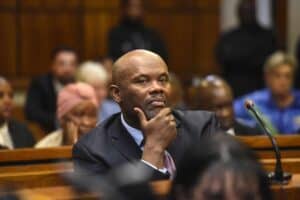
Since its establishment, the commission has heard evidence from more than 100 witnesses and has made a number of recommendations and referrals for further investigation.
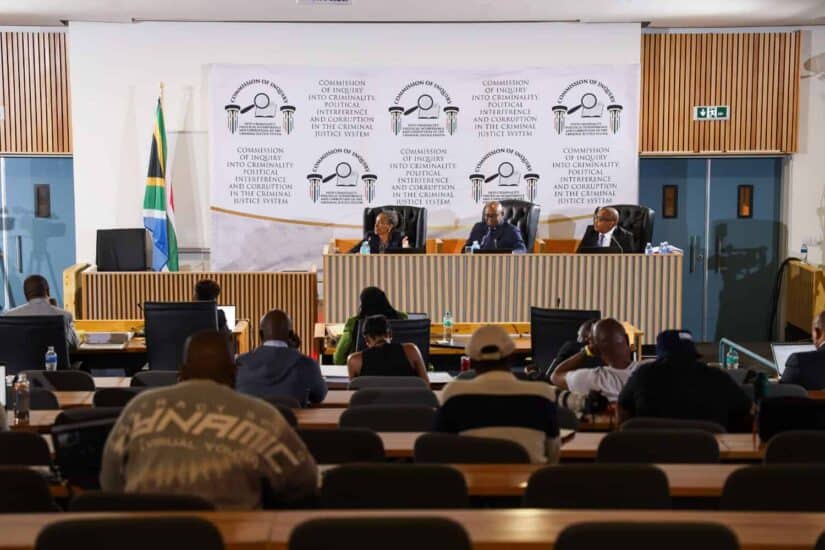
General overview at the Madlanga Commission of Inquiry at Brigitte Mabandla Judicial College in Pretoria on 22 September 2025. Picture: Gallo Images/Luba Lesolle


In the year since President Cyril Ramaphosa established it, the Madlanga commission has exposed widespread alleged rot and corruption.
The commission is probing allegations of criminality, corruption and political interference in the South African Police Service (Saps) police and the criminal justice system.
Madlanga Commission
The commission delivered its interim report to President Cyril Ramaphosa on 17 December, three months after the first hearing took place on 17 September.
It was established by President Cyril Ramaphosa, following Lieutenant-General Nhlanhla Mkhwanazi’s explosive media briefing
Allegations
Mkhwanazi has been in the spotlight following an explosive briefing on 6 July 2025 in which he alleged political interference in police operations, claiming that Police minister Senzo Mchunu and Deputy National Commissioner for Crime Detection, Shadrack Sibiya, had meddled in police operations.
The allegations are being probed at the Madlanga Commission of Inquiry and Parliament’s ad hoc committee
A parliamentary ad hoc committee has also been set up to investigate Mkhwanazi’s claims, operating separately from the judicial commission.
Witnesses
Since its establishment, the commission has heard evidence from more than 100 witnesses and has made a number of recommendations and referrals for further investigation.
With a year since the commission was established, spokesperson Jeremy Michaels called the hearings “demonstrable progress” in uncovering criminality, political interference and corruption across South Africa’s criminal justice system.
Consequences
Michaels said the commission has already produced real consequences.
“Numerous individuals who have appeared before the commission have been arrested, are facing criminal charges, have appeared in court, have been suspended, or resigned from their jobs,” Michaels said.
The inquiry, chaired by Justice Mbuyiseli Madlanga with co‑commissioners Advocates Sesi Baloyi SC and Sandile Khumalo SC, has heard 110 witnesses over 174 days of hearings, ranging from SAPS officers to NPA officials, MPs, and even a Cabinet Minister. The hearings have generated 26 352 pages of transcripts and more than 105 000 pages of documentary evidence.
Tribute
Michaels paid tribute to those who testified despite risks, recalling the assassination of Marius van der Merwe, known as Witness D, who was murdered in front of his family after testifying.
“We also remember the sacrifices made by countless brave individuals who have come forward to assist the commission, sometimes at great risk to personal safety,” he said.
According to Michaels, the commission has also fielded nearly 1 900 hotline calls and 4 500 emails from the public, though most fell outside its mandate.
Michaels said it has also dealt with in‑camera applications, litigation attempts, and even a recusal bid against an evidence leader – all dismissed or withdrawn.
Independence
Michaels emphasised the commission’s independence and resolve.
“In the period ahead, the commission will continue to diligently conduct its inquiry without fear, favour, or prejudice.”
The commission thanked everyone who made its work possible over the last year.
“The commission is truly appreciative of the support it is getting from the South African public,” Michaels added.