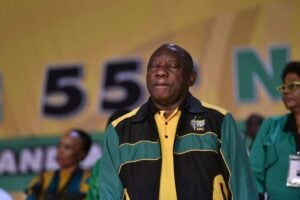
With ANC humbled by electorate and moment of truth ahead experts predict it will be completely out of power in 2029.
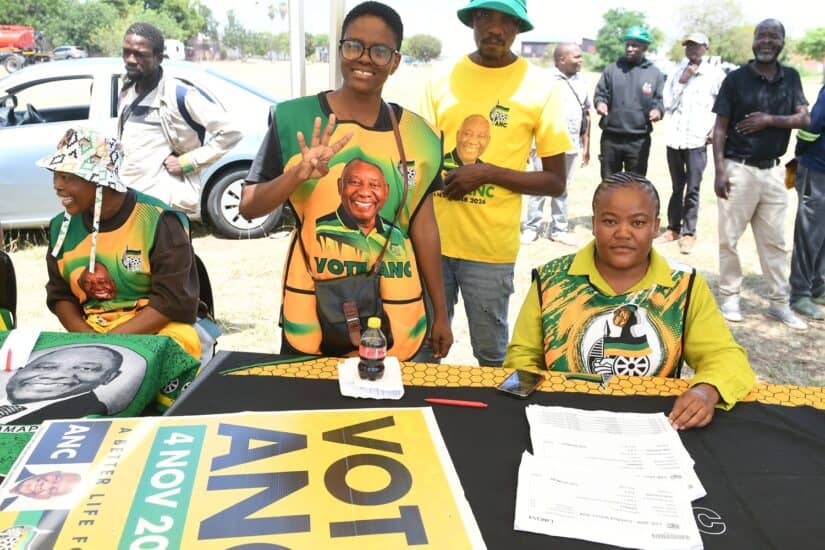
Voters have repeatedly warned the ANC about poor service delivery and incompetence, but the message went unheeded, say analysts. Picture: Gallo Images


With the ANC humbled by the electorate and a moment of truth ahead for the party, experts predict it will be completely out of power in 2029 and lucky to be in official opposition.
North-West University analyst Piet Croucamp said the ANC is heading straight for the bottom in the next general election, possibly becoming the third-largest party in the country.
ANC’s election humbling
He put it at around 15%, where Jacob Zuma’s uMkhonto weSizwe party is currently sitting following the 2024 general election.
Croucamp said voters gave the ANC a second chance over the years, hoping it would improve, but it failed to read their message in past elections.
Now, people scrambled for alternatives after the ANC kept disappointing them.
Croucamp highlighted how ANC support has declined by huge margins over the past several elections, down from former president Thabo Mbeki’s almost 70%, or two-thirds majority in 2004, to President Cyril Ramaphosa’s 57% in 2019, 40% in 2024, and now 30% in last week’s local polls.
“Remember all liberation parties tend to gradually lose support and then lose power completely after 30 years. The ANC should have known that,” Croucamp said.
DA and ActionSA grown at party’s expense
When the final results were announced on Sunday, it became clear the DA and ActionSA have grown at the ANC’s expense as voters sought alternatives.
Even its own ally, the South African Communist Party, which contests independently, has benefited from the ANC decline, winning wards previously controlled by the ANC in some municipalities nationwide.
ANC secretary-general Fikile Mbalula conceded defeat, calling the outcome “catastrophic” before the final results were out.
He said the ANC expected the poor results because its own survey indicated it would get between 34% and 30%.
In eThekwini, Mbalula gave the ANC no chance against Zuma, whom he described as a “mountain” and an “iron that does not bend”.
Faces ‘total wipeout’ in metros
Independent political analyst Ralph Mathekga said the ANC faced a “total wipeout” in the metros, calling it a “deserved outcome because of the state of local government”.
“At the end of the day, the ANC had also allowed corruption and misgovernance to be the order of the day,” Mathekga said.
“Even where the ANC is still holding in a province like Limpopo, it will still be punished because voters are seeing through its failures in governance.”
ANC voter turnout was poor and those who came did not use their ballots to save the party, while the DA’s voters came out in large numbers.
“It is not surprising that the ANC lost almost throughout. The message is that the ANC has only two years to put its house in order, otherwise, voters will come back in 2029 to punish it further. In fact, there had to be consequences, but it took time,” Mathekga said.
SA in deeper crisis under ANC
The results show that South Africans have realised the country is in a different and deeper crisis under the ANC, and they feel it warrants a different course of action. Hence, they have begun to vote differently.
“It seemed everywhere that voters were keen to push the party out,” Mathekga said.
Negotiations for coalition governments are underway, but the ANC will be talking from a weak position after the elections. This will force the party to concede more than it used to because it has lost not only political power, but also bargaining power.
In a recent article, political analyst Zamikhaya Maseti called the ANC’s dismal performance a “Sandinista moment”.
He said last week’s electoral outcome must be understood as presenting the ANC with its “Sandinista moment”.
‘Sandinista moment’
“The ANC’s electoral performance of 30.76% represents more than an electoral humiliation. It raises a fundamental historical question: [is SA] witnessing the deconsolidation of the National Democratic Revolution, or the beginning of its derailment?” he said.
Maseti likened the ANC’s plight to the 1990 defeat of Daniel Ortega’s Sandinista National Liberation Front in Nicaragua, which overthrew the Somoza dictatorship in 1979.
“The Sandinistas had entered government carrying the enormous moral authority of a victorious revolutionary movement. Yet, 11 years after their revolutionary triumph, the electorate withdrew its mandate,” Maseti said.
“That defeat occurred amid economic crisis, prolonged conflict and foreign intervention. Nevertheless, it demonstrated an uncomfortable historical truth.
“The legitimacy acquired through the struggle for liberation does not automatically guarantee the continuing consent of the liberated.”