
Ramaphosa said the Madlanga Commission must be allowed to do its work 'thoroughly and without fear, favour or interference'.
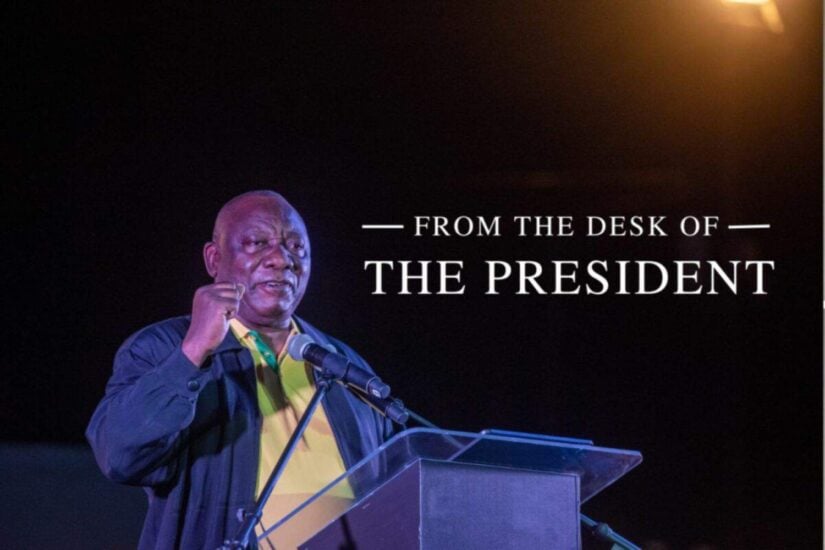
President Cyril Ramaphosa. Picture: The Presidency


President Cyril Ramaphosa has thrown his weight behind the ongoing judicial commission of inquiry into criminality and political interference in the criminal justice system, warning that South Africa cannot build public confidence in the police unless corruption is rooted out.
Opening his weekly letter on Monday, Ramaphosa said the Madlanga Commission must be allowed to do its work “thoroughly and without fear, favour or interference.”
Community safety
Ramaphosa said for most people, the South African Police Service (Saps) is the first they turn to when their safety is threatened, when there is an emergency or when they need to report a crime.
“South Africans are entitled to know the truth. They are entitled to know that those entrusted with fighting crime are not themselves working with criminals.”
Saps corruption
The president described allegations of infiltration, corruption and political meddling in parts of the Saps as “deeply disturbing,” but cautioned against allowing the actions of a corrupt few to define the thousands of officers who serve with honesty and courage.
“For every incompetent or corrupt Saps member, there are many thousands more who are not. Most Saps members serve with honour and embody the values of the badge they wear,” he said.
Ramaphosa acknowledged the crisis of confidence in policing, citing survey data showing victims often do not report crimes because they believe police “would not do anything about it.”
“Trust is one of the most important weapons we have in the fight against crime. Confidence cannot be demanded. It has to be earned,” he warned.
Challenges
Ramaphosa said the country’s law enforcement apparatus faces a number of challenges.
“Apart from the revelations emerging from the Madlanga Commission, the Saps is also under-resourced in some areas and lacks some of the skills needed to combat new forms of crime”
Ramaphosa outlined the government’s plan to strengthen the Saps through Project 11,000, which will see 5,500 new constables entering training academies. But he emphasised that numbers alone are not enough.
“Policing requires something more. It requires character. It requires discipline. And, above all, it requires integrity.”
Criminals
Ramaphosa said psychometric and integrity testing now form part of the first phase of recruitment, underscoring the need for officers who can be trusted with extraordinary powers.
“There can be no place in the Saps for criminals. There can be no place for corruption. And there can be no place for political interference in the work of the police,” he declared.
He also paid tribute to the 12 officers who lost their lives in the line of duty over the past year, describing them as “colleagues, friends and family members whose bravery reminds us of the risks thousands of officers take every day so that the rest of us may be safer.”
Responsibility
Ramaphosa made a call for collective responsibility
“We cannot defeat crime unless the police have the confidence and cooperation of the public. We honour those who have fallen. We support those who continue to serve.”
Ramaphosa said the country will continue building a police service that is professional, capable, honest, and worthy of the trust of the South African people.