


Nearly five decades after Biko's death in police custody, the question of accountability returned to the courts.
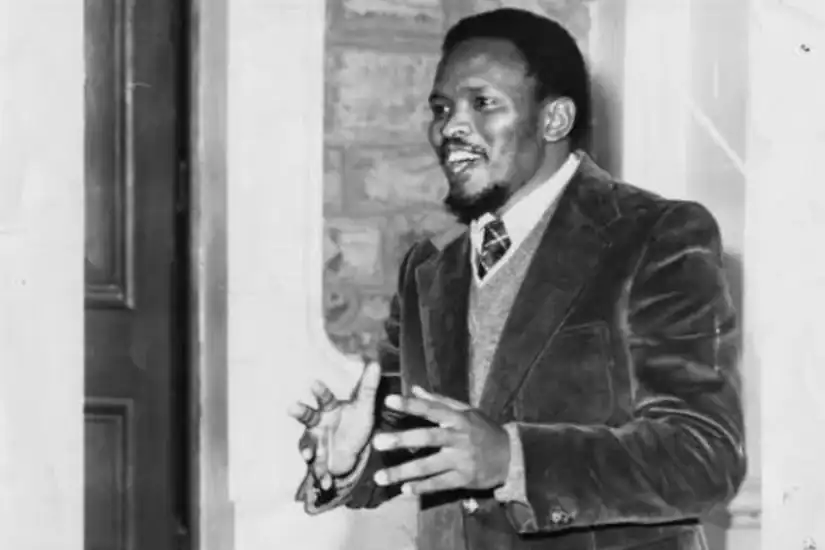
The late Stephen Bantu Biko. Picture: File


The inquest into the death of anti‑apartheid activist Stephen ‘Steve’ Bantu Biko was nearly thrown into jeopardy after his family’s application for funding to secure legal representation was rejected by Legal Aid South Africa.
Nearly five decades after Biko’s death in police custody, the question of accountability returned to the courts as the reopened inquest resumed in the Gqeberha High Court on Monday, 24 August 2026.
Funding
The proceedings were delayed by the funding dispute until the Department of Justice stepped in to cover the costs, a move described as necessary to secure the continuation of the historic case.
Biko’s son, Nkosinathi, told the media the family was relieved by the Justice Department’s assistance.
“We spent the first half of the day dealing with resources. There should never be a situation of this kind where, at the moment when we are supposed to commence with proceedings, we are dealing with a question of resources. It is undignified.
“I am glad Mrs Biko was not here; I deliberately kept her away from that kind of conversation. She bears no burden for the attainment of justice for the death of her husband,” he said.
Tortured
Biko, founder of the Black Consciousness Movement, died in September 1977 after being tortured while detained by apartheid Security Branch police. The original inquest controversially concluded that no one was responsible for his death.
The National Prosecuting Authority (NPA) reopened the inquiry in September 2025, identifying two surviving former police officers as persons of interest.
The reopened inquest is expected to revisit the circumstances of Biko’s detention, interrogation, and fatal injuries, with testimony and evidence aimed at establishing responsibility for his death.
Apartheid abuse
Biko’s death became one of the most notorious cases of apartheid‑era abuse, symbolising the brutality of the regime and drawing international condemnation.
He was arrested with comrade Peter Jones at a roadblock near Grahamstown, now Makhanda, on 18 August 1977. He was accused of violating banning orders that restricted his movement to King Williamstown, now Qonce.
Biko was taken to Walmer Police Station in Port Elizabeth, now Gqeberha, where he was allegedly tortured while shackled with leg irons and kept naked in a cell. Officers reportedly only sought medical assistance after 24 days in custody, when he was foaming at the mouth.
Death
On 11 September, Biko was loaded unconscious, naked and shackled into a police vehicle and transported 1 200km to a prison hospital in Pretoria. He died the following day, aged 30.
“The cause of Biko’s death was recorded as extensive brain injury caused by centralisation of blood circulation and intravascular blood coagulation, acute kidney failure and uremia,” NPA spokesperson Luxolo Tyali said.
Inquest
A formal inquest was held in November 1977, but no one was held accountable. The reopened inquiry now seeks to address unresolved questions about his final days and whether criminal liability can be established nearly half a century later.
The case is regarded as a landmark effort to confront apartheid‑era atrocities through the courts, with hearings set to examine evidence, witness accounts, and official records that may shed new light on the events leading to Biko’s death.



