Lamola pushes back against being singled out on xenophobia at continental summit.
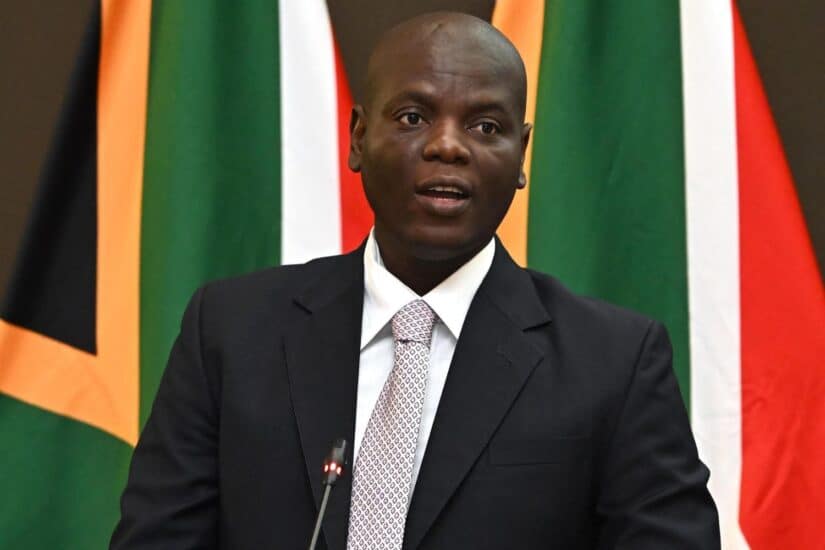
International Relations Minister Ronald Lamola. Picture: Dirco.


Minister of International Relations and Cooperation, Ronald Lamola, has rejected attempts to single out South Africa over migration and xenophobia concerns during a heated question-and-answer session at a media briefing.
He was briefing the media on Wednesday on South Africa’s preparations to host the 46th SADC Summit of Heads of State and Government in Durban on August 16-17, 2026.
Lamola says migration discussions should be continental
The minister indicated that Ghana’s proposal to discuss South Africa’s xenophobia at the African Union’s mid-term review meeting in October was not approved by the AU Executive Council.
According to Lamola, any discussion on this matter must take a wider continental approach.
“We raised our view that any discussion on this matter must be comprehensive, deal with the push and pull factors, the root causes of illegal migration, all of them – climate change, economic peace and stability, and democracy- in a comprehensive manner.
“There is no discussion that will be helpful that will just focus on South Africa because we are not the only country facing a migration challenge,” he stated.
The minister emphasised that 45% of the African continent lives outside their countries, not by choice but out of necessity.
Lamola argued that isolating South Africa would create an unproductive forum.
“If we just want to put it on the agenda and say xenophobia in South Africa, what will happen is that South Africa will be almost like in some kind of court or inquiry, where we must go there and defend ourselves,” he explained.
The minister suggested that such an approach would result in a “zero-sum game” with no beneficial outcomes.
The minister referenced the 2015 AU decision calling for a continent-wide conference on migration.
According to Lamola, this resolution already exists and simply needs implementation.
“We don’t have a complex task. It’s already there. It’s just to dust it off from the shelves and put it on the table for implementation,” he stated.
Root causes demand attention
Lamola stressed that addressing migration required tackling underlying issues.
“You cannot treat the symptom of the problem. You must treat the root cause of the problem to come up with a solution,” he said, pointing to climate change, unemployment, and peace and security as driving factors.
He referenced deaths in the Mediterranean Sea and the recent mass migration incident in Spain’s Ceuta enclave as evidence that migration remained a widespread continental and global challenge requiring coordinated responses.
Regional leadership during pivotal moment for SADC
Speaking about the summit, Lamola said it represents a significant moment for southern African regional integration.
“South Africa is honoured to be the host of the 46th Ordinary State Summit of Heads of State and Government… at a significant moment for the region, with South Africa serving as its interim chair of SADC following developments after the 45th Ordinary Summit in Madagascar,” he said.
The formal summit program commenced on August 4, 2026, at the Inkosi Albert Luthuli International Convention Centre, with technical and preparatory meetings leading up to the heads of state gathering.
The meeting will focus on industrialisation, infrastructure development, and agricultural transformation.
Lamola outlined that senior officials, finance ministers, and council representatives would progressively prepare decisions for adoption.
“Ministers will consider recommendations from the senior officials and adopt policy decisions for submissions to the summit,” he explained.
Lamola further noted that key issues include industrialisation, infrastructure, regional trade, food security, health, peace and security, and institutional reforms.
Constitutional values guiding international engagement
The minister said South Africa’s approach to international relations continues to be anchored in constitutional principles.
“Our constitution stands as both a symbol of South Africa’s strength over division and a testament to our unwavering commitment to human rights, constitutionalism, multilateralism, and international solidarity.”
This framework guides South Africa’s participation in multilateral bodies and regional forums.
The country will use the SADC platform to articulate its approach to migration management, emphasising regional cooperation.
According to Lamola, “South Africa will underscore its commitment to managing migration in a lawful, orderly, human and effective manner, consistent with the constitution and the international obligations.”