'For decades, a small group of people have treated our federations as if they own them. That era is ending,' said sports minister Gayton McKenzie.
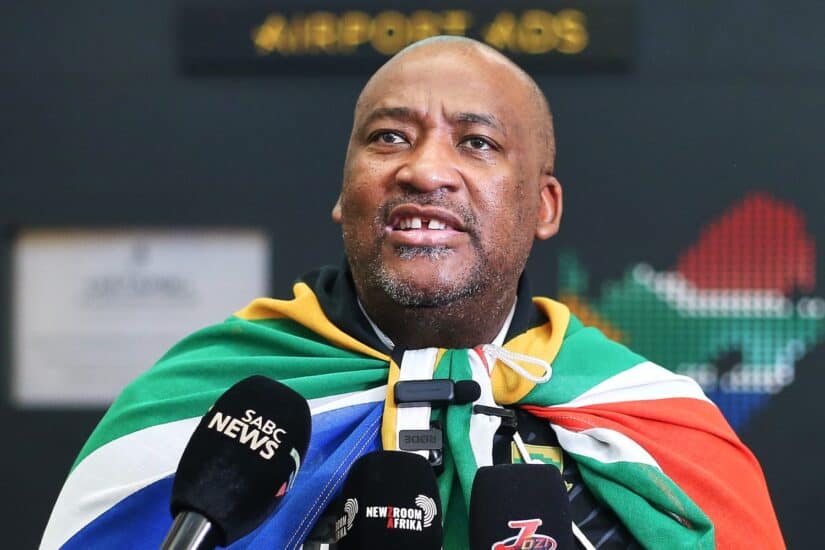
Sports minister Gayton McKenzie. Picture: Daniel Hlongwane/Gallo Images


Government is not only cracking down on national sports federations, but is also in the final steps of amending the National Sport and Recreation Act, in order to hold governing bodies more accountable for ongoing issues within their various codes.
Gayton McKenzie, minister of the Department of Sport, Arts and Culture, said on Tuesday that failing sports bodies needed to be taken to task.
While international rules prevented the government from “interfering” in sport, McKenzie said he and his department had met with leaders of multiple global bodies – including World Swimming, World Athletics, World Netball, World Boxing and Fifa – in an attempt to ensure national federations were being run in line with local and international rules and laws. This intervention had resulted in the permanent or temporarily removal of multiple individuals.
In recent months, SA Sports Confederation and Olympic Committee (Sascoc) president Barry Hendricks had been suspended, Swimming South Africa (SSA) president Alan Fritz and chief executive Shaun Adriaanse had both been suspended, Athletics South Africa (ASA) president James Moloi had been sacked and ASA deputy president John Mathane had resigned.
In the midst of an apparent administrative crisis in Olympic sports, the nation had also been left in shock in the wake of a mass exodus of elite stars who had revealed they were switching allegiance to other countries. They included swimmers Tatjana Smith (Netherlands), Matthew Sates (Australia) and Rebecca Meder (New Zealand), as well as track sprinter Benjamin Richardson (Ireland).
“This corruption, this maladministration must stop, and the world bodies are acting after meeting with us,” McKenzie said during a press conference in Cape Town.
Changing the laws
Meanwhile, government was working on allowing tax deductions for sponsors who backed sport federations, in order to assist in resolving concerns around a lack of funding which had resulted in multiple national athletes and teams having to fund themselves for international championships.
McKenzie said they were also working on ensuring Lotto money reached more athletes and not “middle men”.
“Part of the problem is the law itself. The National Sport and Recreation Act, as it stands, makes it far too hard to act against a federation that is failing,” he said.
“So I’ve put together a team to amend the Act, and they are 90% done, to make consequence management easier. We cannot allow these people to get away with it.
“We have also already started the process of enforcing parts of the Act that have been ignored for years, such as the duty of federations to inform the minister in writing when they are in dispute, and for us to track those disputes.”
McKenzie also warned that administrators in other sports were being monitored, and action could be taken to ensure the various federations were following correct governance protocols.
“For decades, a small group of people have treated our federations as if they own them. That era is ending,” he said.
“There is now accountability in South African sport, and it’s there for everyone to see.”