A magic combination.
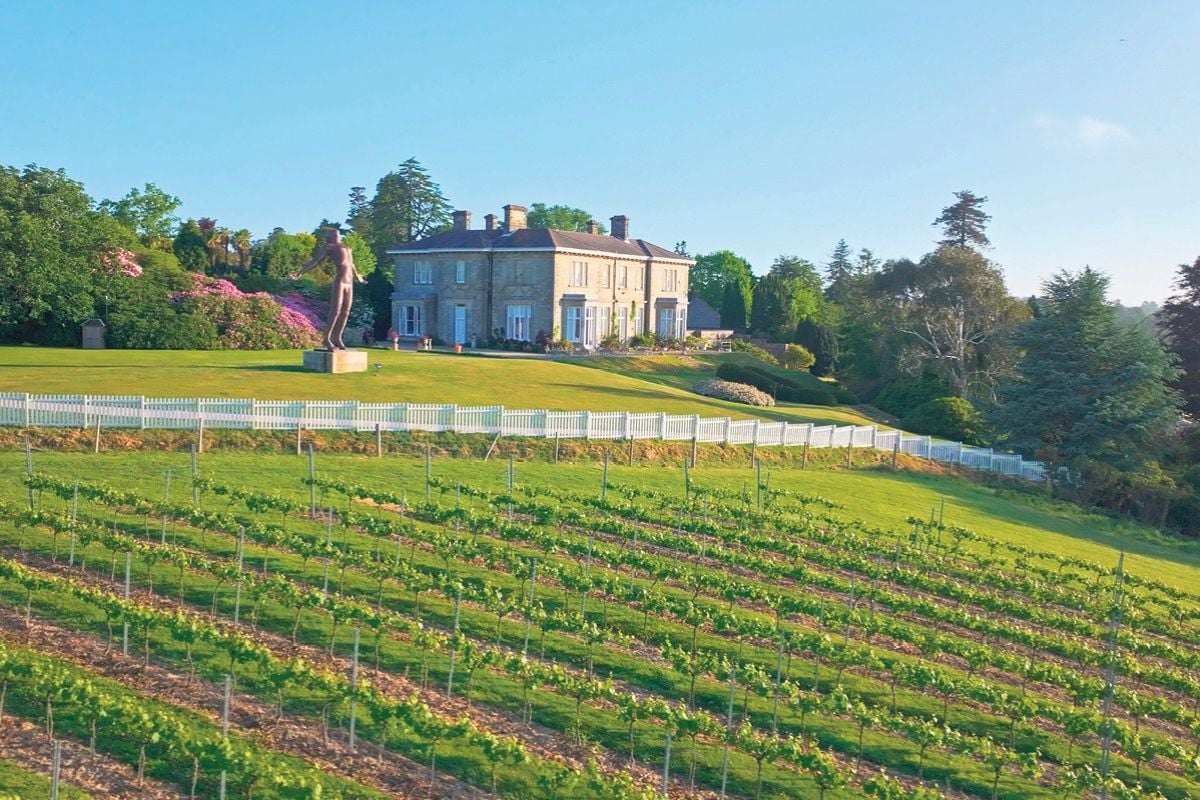
LARGE AS LIFE. Leonardslee House presides over young vines in the Sussex sunshine, with South African sculptor Anton Smit’s monumental figure keeping watch on the lawn. Picture: Brian Berkman and supplied


The woman who gives us directions in Horsham does not realise we are South African until we speak.
Within minutes, she has abandoned her own errands entirely, walking us all the way to the market and pointing out our return bus stop before waving us on our way.
“There are a lot of South Africans in Horsham,” she says with a warm smile.
It is a small act of kindness, but one that tells you something essential about this corner of West Sussex – a place where southern African stories have quietly woven themselves into the English countryside.
It may be counterintuitive to holiday in the northern hemisphere in winter rain and cold but it offers an experience of festive celebration we don’t see at home.
Halloween morphs into Christmas and anytime spent in London and the UK countryside will be rewarded with exceptional sights, scenes, sounds and warming traditional flavours. Stories too.
Nowhere is that more true than at Leonardslee Lakes and Gardens, where Penny Streeter OBE – born in the then Rhodesia, now based in Cape Town – is applying a Cape Winelands sensibility and story-telling to England’s fast-emerging wine tourism scene.
The result is something that feels genuinely new: South African warmth and flair grafted onto one of England’s most beautiful historic estates.
Streeter’s life story reads like a masterclass in resilience. She left Zimbabwe as a teenager as war intensified, arriving in England with her parents and very little else.
The security and certainty of a privileged childhood vanished almost overnight.
What followed was a long succession of reinventions – failed businesses, a period running a cabaret lounge in Johannesburg during the turbulent early ’90s, and a return to England as a single mother of four, living in temporary accommodation with water coming through the walls.
To make ends meet, she worked as a DJ at children’s parties alongside her mother.
Today, Streeter owns two award-winning wine estates: Benguela Cove in Bot River near Walker Bay, and Leonardslee Wine Estate in West Sussex, together with Leonardslee Lakes and Gardens and Mannings Heath Golf.
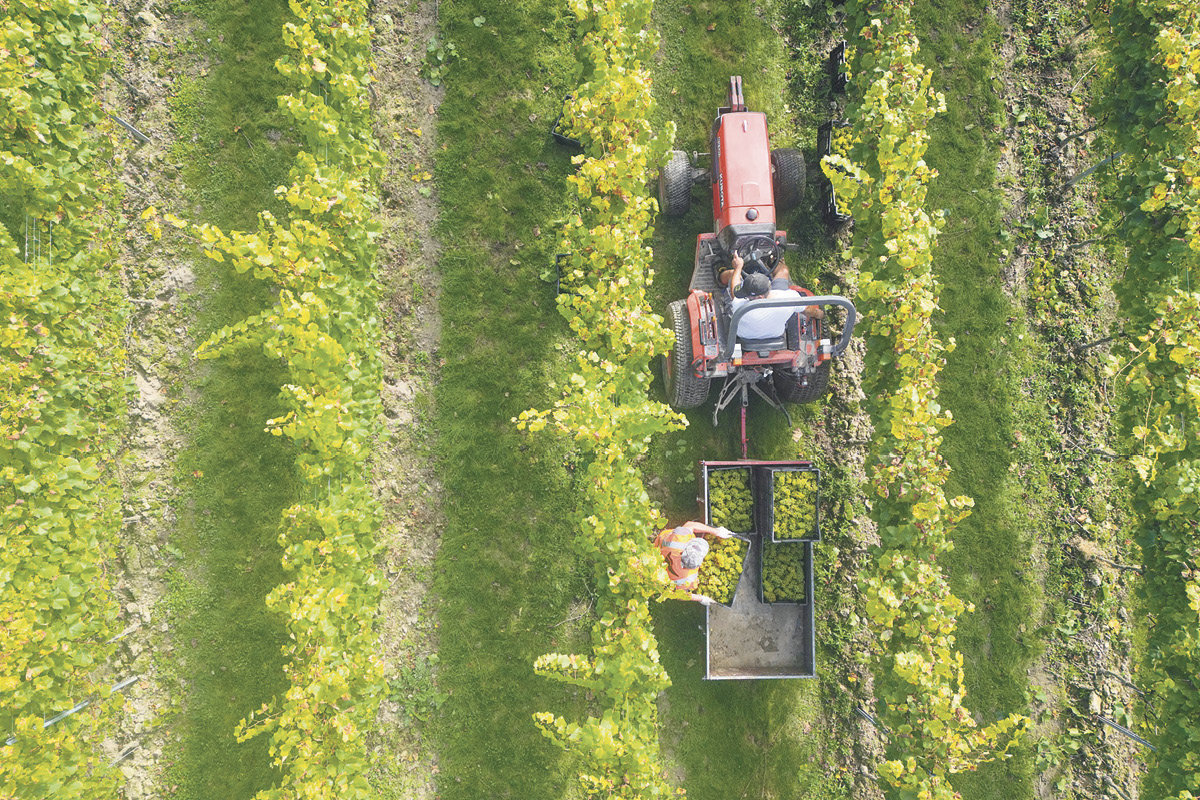
Her most ambitious challenge has been convincing the English their sparkling wines can stand serious comparison with Champagne. She is making a compelling case.
Arriving at Mannings Heath Golf, The Vineyard Hotel and Kitchen feels like stepping back a century.
There are no pavements; narrow country lanes are shared with Range Rovers and riders on horseback.
The hotel occupies a handsome Tudor-style building with beautiful oak detailing and traditional lead-pane windows.
Sunlight cuts through the glass in lines that divide the ceiling beams and timber-clad walls into something close to theatre.
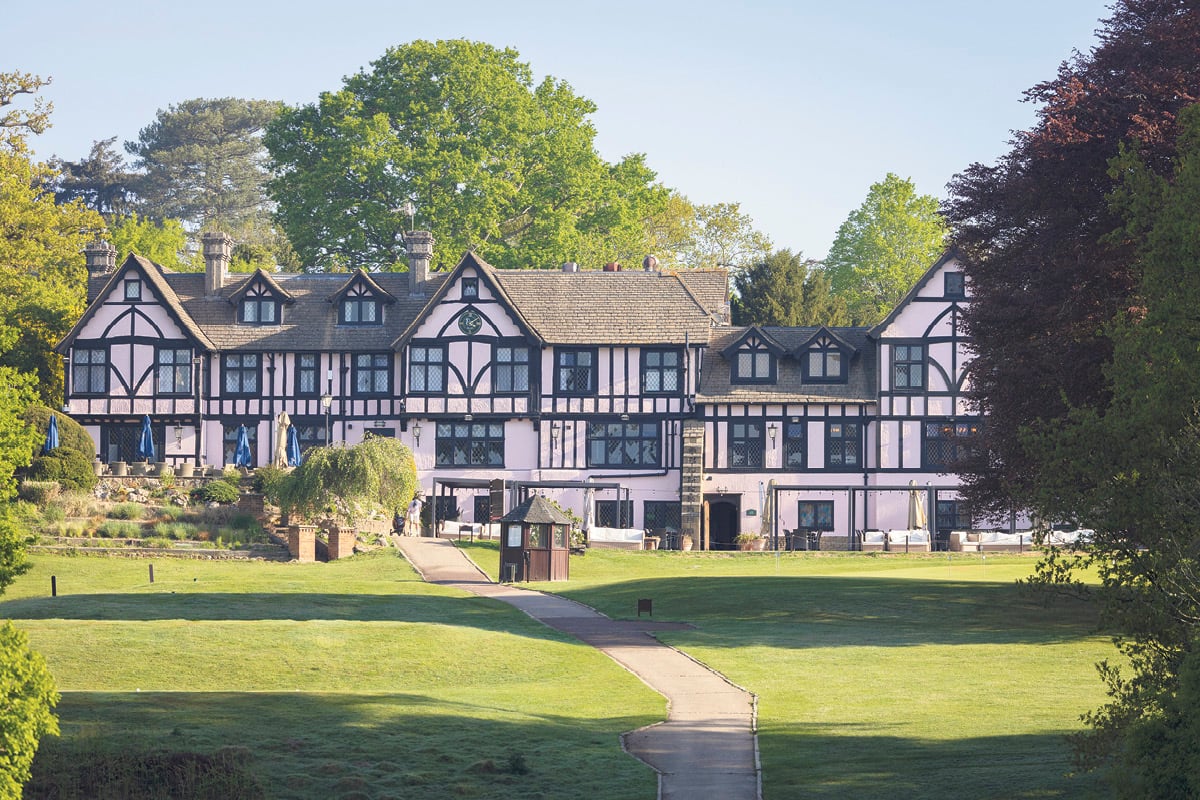
Although Leonardslee Wine Estate and Leonardslee Lakes and Gardens and Mannings Heath Golf operate as a single business, they occupy separate sites about 5km apart – close enough to explore both during a Sussex stay.
At Leonardslee, the gardens are quintessentially English: ancient woodland, seven lakes, and Grade I listed grounds spanning 97ha.
Wallabies, introduced to the estate in 1889, can still be spotted along Bluebell Bank.
Ancient oaks and rhododendron-filled valleys root the place firmly in Sussex soil.
Yet the spirit of the place is unmistakably South African.
Where English wine tourism has traditionally favoured polite formality, Leonardslee embraces the warmth and accessibility of Cape wine culture: sabrage ceremonies, wine education without pomposity, and the seamless weaving together of food, accommodation and entertainment into a single, generous experience.
“We wanted to normalise the tasting experience, moving away from the pomposity of wine tasting,” Streeter says.
“England was still behind the curve.
You need multiple revenue streams to really make these businesses work.”
The wines produced here are not an afterthought.
South African winemaker Johann Fourie, whose career spans Benguela Cove and KWV, oversees winemaking across both estates.
By early 2025, Leonardslee’s Brut Reserve had taken gold at the WineGB Awards and been recognised for its sustainability credentials.
More tellingly, it was selected to be served at the British Embassy in Paris for the king’s birthday celebrations – no small honour for an English sparkling wine.
The estate label carries a swallow – a bird that migrates 16 000km annually between South Africa and the UK.
“We always see them as we’re picking the last grapes, heading back to Africa,” says managing director Barry Anderson, himself a South African who spent 25 years building wine brands in Bot River before Streeter recruited him to Sussex.
“That’s Penny.”
Four smaller swallows on the label represent her children; the colours are drawn from the bird’s own plumage.
It is a quiet, beautiful piece of storytelling.
For those with serious appetites, the estates operate at multiple registers.
The Spike Bar at Mannings Heath Golf is a relaxed sports retreat popular with golfers, while The Vineyard Kitchen, located in the hotel, serves everything from a proper à la carte breakfast through to dinner.
But for something truly memorable, a short drive leads to Restaurant Interlude at Leonardslee House.
Chef Jean Delport, who followed Streeter from South Africa, has earned one Michelin star, three AA Rosettes, and the title of AA Hospitality’s Best Restaurant with Rooms in England for 2025-26.
He is only the second chef in the history of “Great British Menu” to have had two dishes served at its 20th anniversary banquet.
Jo, who manages the Vineyard hotel and serves breakfast with genuine warmth, recommends Horsham for a day out.
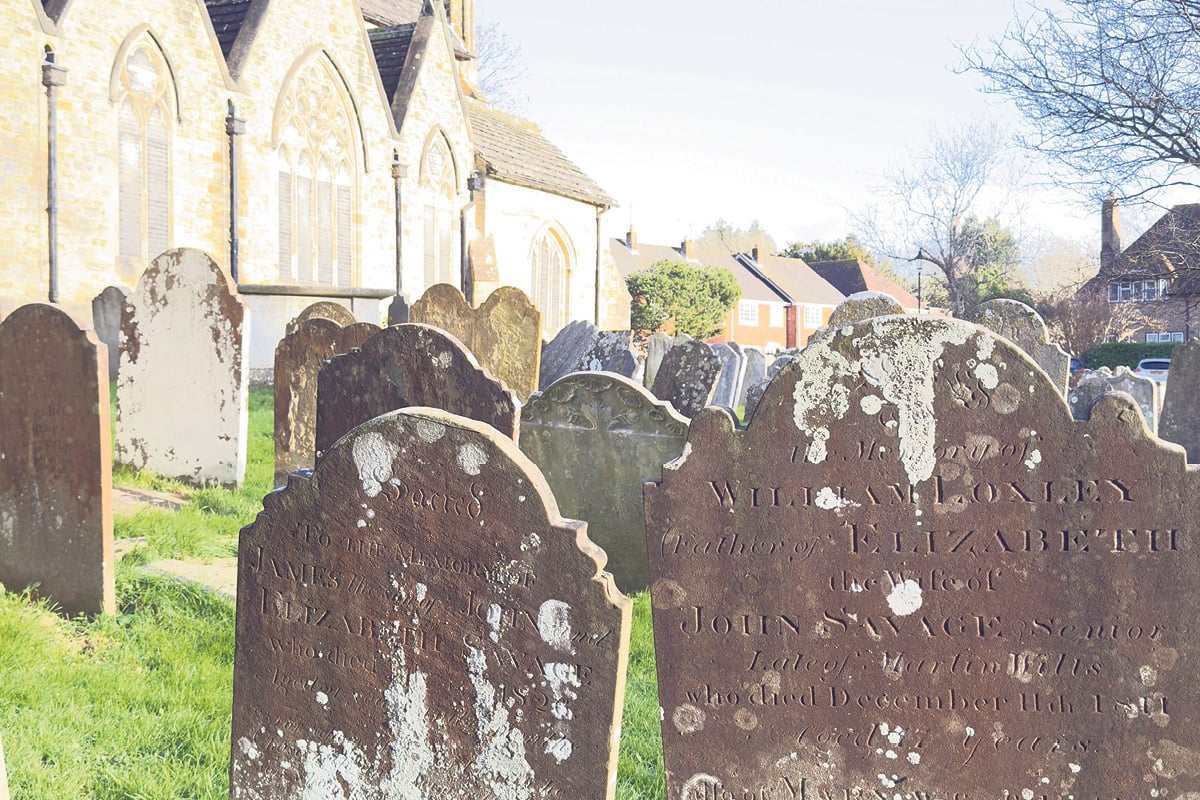
The number 17 bus from Mannings Heath winds through countryside that could illustrate a period drama: hedgerows, stone walls, and churches with lushly overgrown graveyards.
The 20-minute ride costs £3 (about R65) each way, or £10 for an all-day pass.
Fellow passengers greet one another. The driver enlists someone to help with directions. It is that kind of place. Horsham delivers on every promise.
In the Carfax, the handsome town square with its bandstand, an orchestra plays in festive jumpers, a rock duo covers Alanis Morissette and Radiohead, and Morris dancers perform rhythmic stick dances in traditional costume as part of its December celebrations.
The market offers food, gin, cheese and artisan crafts.
Two of the stalls are South African-themed, and a sign announces a soon-to-open biltong shop in the nearby Swan Walk shopping centre. Dogs are everywhere.
The old stone church of St Mary’s and its atmospheric graveyard offer a quieter counterpoint – names on the tombstones softened by centuries of English weather.
A narrow alleyway, too tight for a pram, threads past brick houses with tiny gardens. It is magical, in that particularly English way.