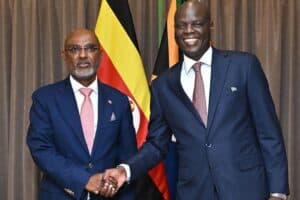
Activists allege that Standard Bank were "greenwashing" their image through sustainable advertising while funding oil projects.
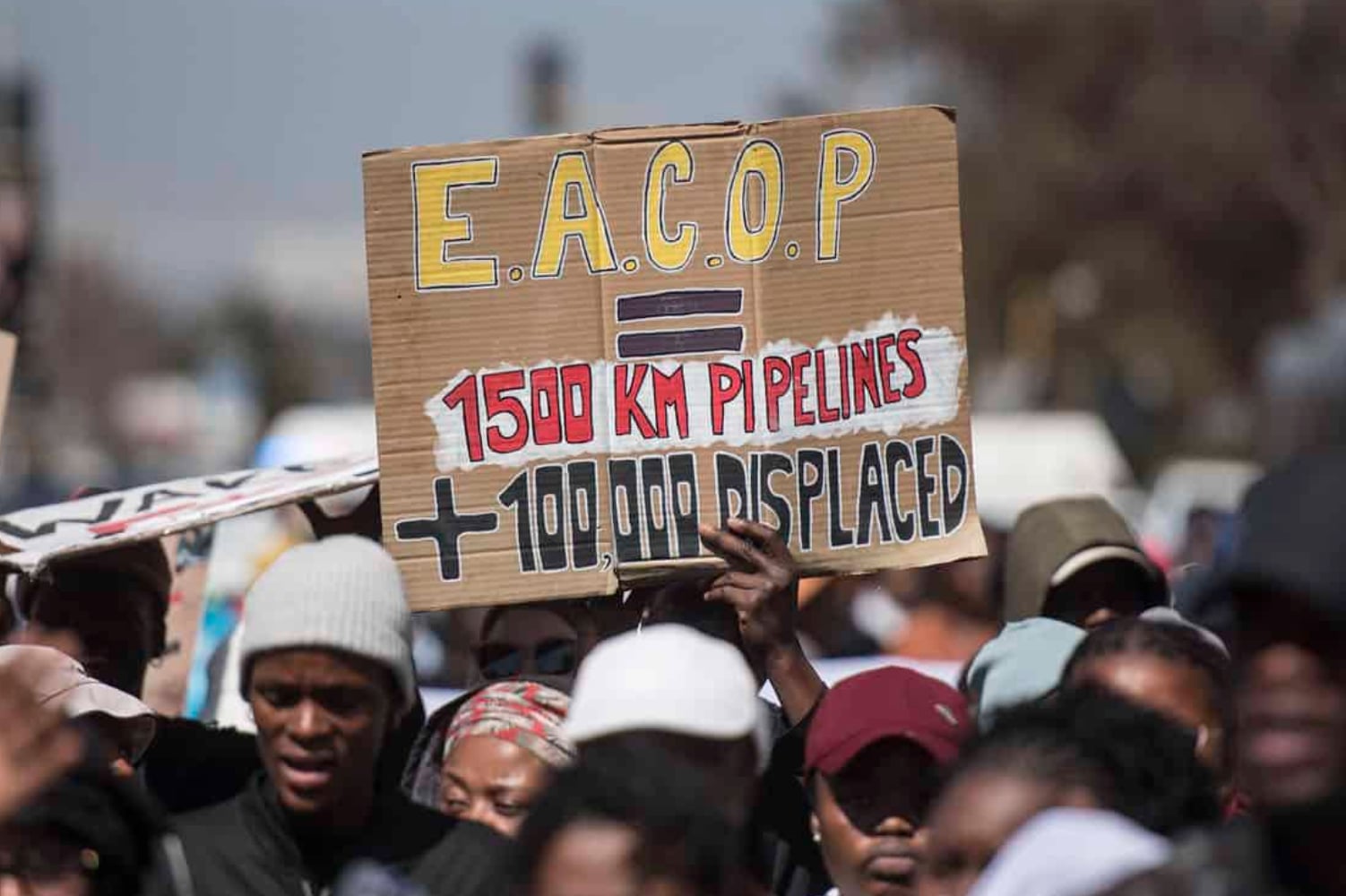
Environmental protesters demonstrate against the East African Crude Oil Pipeline project in August 2025. Picture: Michel Bega / The Citizen


Environmental activists are accusing one of South Africa’s major banking brands of misrepresenting its stance on green issues.
Lawyers for Human Rights, representing Fossil Free South Africa (FFSA), lodged a complaint with the South African Advertising Regulatory Board (SAARB) over what it believes are contradictions between Standard Bank’s advertising and its actions.
Standard Bank is one of several financiers of the East African Crude Oil Pipeline (EACOP), a UD$4 billion infrastructure project linking oil fields in Uganda, with ports on the Tanzanian coast.
Environmental groups have protested the project since its inception, highlighting the threat it poses to the Rift Valley’s rich biodiversity and tribal lands.
The complainants believe Standard Bank’s advertising portrays it as a socially responsible company, arguing that its EACOP involvement materially tarnished that image.
‘Greenwashing matters’
Standard Bank had committed to achieving net-zero carbon emissions for its lending and investment portfolio by 2050, while supporting Africa’s just energy transition.
FFSA, Lawyers for Human Rights and the StopEACOP Coalition stated that more than 70 local and international banks and insurers had distanced themselves from the pipeline projects
“We are asking the SAARB to test whether the environmental image Standard Bank sells to the public can actually survive scrutiny against the reality of the projects it finances.
“Standard Bank wants the South African public to associate its brand with wind turbines, renewable energy, sustainable finance, and a just transition. Yet, they are helping finance a massive new crude-oil pipeline through East Africa,” said FFSA campaign coordinator Kholwani Simelane.
Ugandan Human and Environmental Rights Lawyer Brighton Aryampa accused the bank of using advertising to manipulate perceptions.
“Greenwashing matters because advertising shapes how the public understands where money is flowing. The question is whether the overall story being presented to the public is an honest one,” stated Aryampa.
The StopEACOP Coalition has led the ground-level protest actions since before 2024, placing potential loss of land, livelihoods, and local ecosystems above projected economic benefits.
“For people living along the EACOP corridor, this is not an abstract debate about corporate language.
“Financial institutions should not be able to present themselves elsewhere as champions of climate action and environmental stewardship without being accountable for what their money is making possible,” StopEACOP Coalition coordinator Zaki Mamdoo.
Project 93% complete
The SAARB confirmed that it had received a complaint related to Standard Bank and EACOP late on Wednesday night, stating it was still sorting through the particulars.
SAARB CEO Gail Schimmel stated that the entity aimed to resolve complaints within 30 days, but a preliminary inspection of the complaint against Standard Bank would suggest it may take longer.
“We get all the material [then] we assess the complaint to see if it raises something that we have jurisdiction over and is not frivolous.
“If it meets our requirements, we will formally investigate, which involves getting comments from the advertiser. The Directorate then makes a decision,” Schimmel explained to The Citizen.
The EACOP project is a joint venture between Total Energies and the governments of Uganda, Tanzania, and China.
As of October, the project was at 93% completion, with operations due to start in early 2027.
Total Energies had previously stated that widespread consultations with local communities were successfully held and that the economic benefits would be widespread.
“The exploitation of these resources will considerably impact the development of the Ugandan and Tanzanian economies, where more than 20% of the population lives on less than UD$2 per day.
“With nearly US$2 billion in investments, the projects will create nearly 80 000 direct and indirect jobs
“A substantial portion of the profits from resource exploitation will be reinvested locally, particularly to promote energy access for village populations,” Total Energies previously told The Citizen.
‘International frameworks and standards’
Standard Bank stated on Wednesday that it could not yet elaborate as it had not been presented with the details of the complaint, but stressed that its commitment to Africa’s renewable future should not be separated from its support for Africa’s energy needs and economic development.
“Our approach recognises that Africa’s pathway to net zero must be inclusive, balanced and responsive to the realities of the continent’s development requirements.
“We are one of Africa’s leading financiers of renewable energy and sustainable infrastructure, and continue to grow our support for projects that advance the continent’s transition to a more sustainable future,” Standard Bank told The Citizen.
The banking giant added that while it did finance fossil fuel projects, its renewable commitments were roughly eight times larger, and that all projects underwent stringed social, ethical and governance assessments.
“This reflects our commitment to supporting the energy transition while also recognising the current energy and development needs of the markets in which we operate.
“We apply recognised international frameworks and standards when evaluating projects, and consider a range of factors, including environmental impacts, social considerations, human rights, governance requirements and economic development objectives,” Standard Bank concluded.