Consumers ultimately to foot the bill.
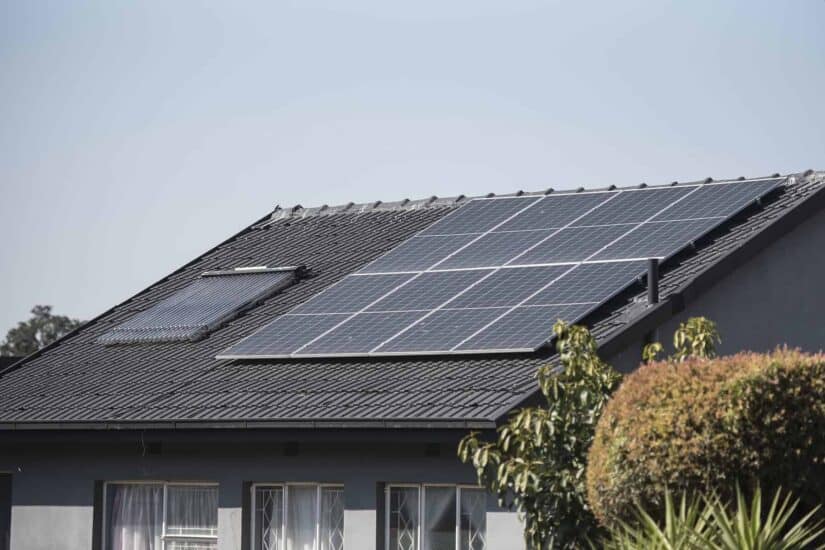
A house with solar panels on its roof in Johannesburg. Picture: Michel Bega


Eskom is expected to pay R4 billion in the current financial year to compensate solar and wind farms for deemed energy due to instructions to them to curtail generation when there is a surplus of energy on the grid.
This amount is expected to increase year after year as more consumers install solar systems and use their own electricity during the day instead of Eskom generation.
This is according to Keith Bowen, senior manager: market operator at the National Transmission Company of South Africa (NTCSA), which is still part of Eskom.
Bowen participated in a panel discussion on this type of generation curtailment, hosted by consultancy Cresco and law firm Fasken in Sandton.
Deon Conradie, an electricity pricing expert, warns that consumers will ultimately pay for this through higher electricity tariffs.
Although the amount is currently not material compared to the R383 billion that energy regulator Nersa allows Eskom to recover from consumers through electricity tariffs, there is a significant risk that it could spiral out of control, much like the power utility’s earlier spending on diesel to avoid load shedding, Conradie says.
The diesel example – spending up from R320m to R24bn
In the 2018 financial year, Eskom spent about R320 million on diesel to supplement available electricity during peak periods using its open-cycle gas turbines (OCGTs). This is what these plants were designed for.
As load shedding began to bite and the turbines were increasingly used to keep the lights on, expenditure soared to almost R24 billion in the 2024 financial year. This had a significant impact on electricity tariffs.
Conradie warns that something similar could happen with curtailment.
The rush to install solar power is accelerating as power interruptions increase due to the deterioration of local electricity distribution networks, while a large number of solar farms are currently under construction and are expected to come online in about two years.
The problem is that Eskom now has too much electricity during the day as more consumers use solar power rather than the electricity it supplies.
Curtailment – paying for nothing
Eskom does not switch off its coal-fired power stations because they need to be ready to meet demand when the sun sets and consumers once again need Eskom electricity to cook and heat water for bathing.
To balance supply and demand – a technical necessity, as failure to do so could cause the entire grid to collapse – the system operator then instructs solar and wind farms to curtail their generation.
Eskom must, however, still pay them as if it had accepted the electricity.
It also loses the revenue it would have generated from selling the units had it taken the electricity.
The number of instructions to curtail generation has increased dramatically since late last year as the number of solar installations has grown, and this trend is expected to continue.
Risk to investment decisions
Eskom’s obligation to compensate independent power producers (IPPs) is however limited to those that form part of the government’s renewable energy procurement programme (Reipppp).
In the case of private offtakers, the curtailment risk is dealt with contractually between the parties, according to Olga Suchkova, associate director at Cresco.
“It lies at the heart of financing decisions,” she added during the panel discussion.
Any bank wants certainty about a project’s revenue stream before signing off on financing. It needs to know whether the money it advances for the project can be repaid.
Mamoso May, CEO of Artemis Group Holdings, which plays in the renewable energy space, agreed that this issue is influencing investment decisions more than ever before.
She said there needs to be clarity on the matter over the entire lifespan of a project, adding that it also affects the secondary market.
There is, however, no uniform approach in private-sector contracts – and who carries the risk largely depends on the parties’ respective negotiating power.
According to Danielle van der Vaart, a partner at Fasken, parties are now very aware of the risks posed by curtailment.
When older contracts were concluded five or 10 years ago, nobody anticipated that it would become such a significant issue.
An increasingly complex matter
Rob Futter, director and advisory partner at Cresco, pointed out that the time of day when generation is curtailed is also important, as it can affect the tariffs applicable at the time.
This makes managing the issue increasingly complex.
He also called on the NTCSA to be more transparent about these instructions, to provide greater certainty for all parties and dispel any doubts about whether curtailment is being applied fairly.
Other options?
According to the panel, the problem could be addressed by building more gas-fired power stations, as these can be ramped on and off at short notice to regulate imbalances between supply and demand on the grid.
However, the government’s latest attempt to procure such capacity failed because there is no clarity on where the gas would come from.
The other option is to provide for more battery storage, but it will take at least another two years for this capacity to come online.
Bowen made a case for reducing electricity tariffs during the middle of the day to incentivise users to shift their usage from peak to off-peak, thereby reducing the off-peak surplus.
However, obtaining Nersa’s approval for changes to the tariff structure could take “up to 10 years,” he said.
He also advocates a less conservative approach to operating Eskom’s coal-fired power stations. “But it comes at a price.”
He explains that Eskom previously ramped generation up and down at its Majuba power station throughout the day because the coal it used was transported over a distance and was therefore very expensive. When demand for electricity was low during the day, the utility gave preference to other power stations.
“But this damaged the plant because it was not designed for that.”
This article was republished from Moneyweb. Read the original here.