
Go behind the scenes of National Geographic's 'Lion', where Faith Musembi spent four years following Kio and a pride of lions in Kenya.
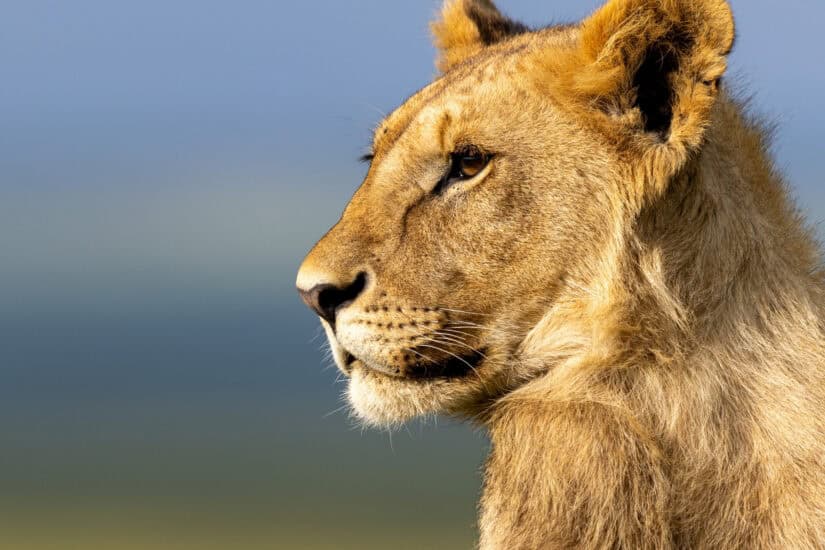
Lion star Kio. Picture National Geographic


There’s just no telling what would happen when you’re making a show, and your star is a lion.
There’s no script, no contract in place to guarantee an award-winning performance, and you never know when he may get into a fight, wander off or survive the African savannah at all.
It’s an investment into the unknown when you make a documentary.
But sometimes it pays off handsomely.
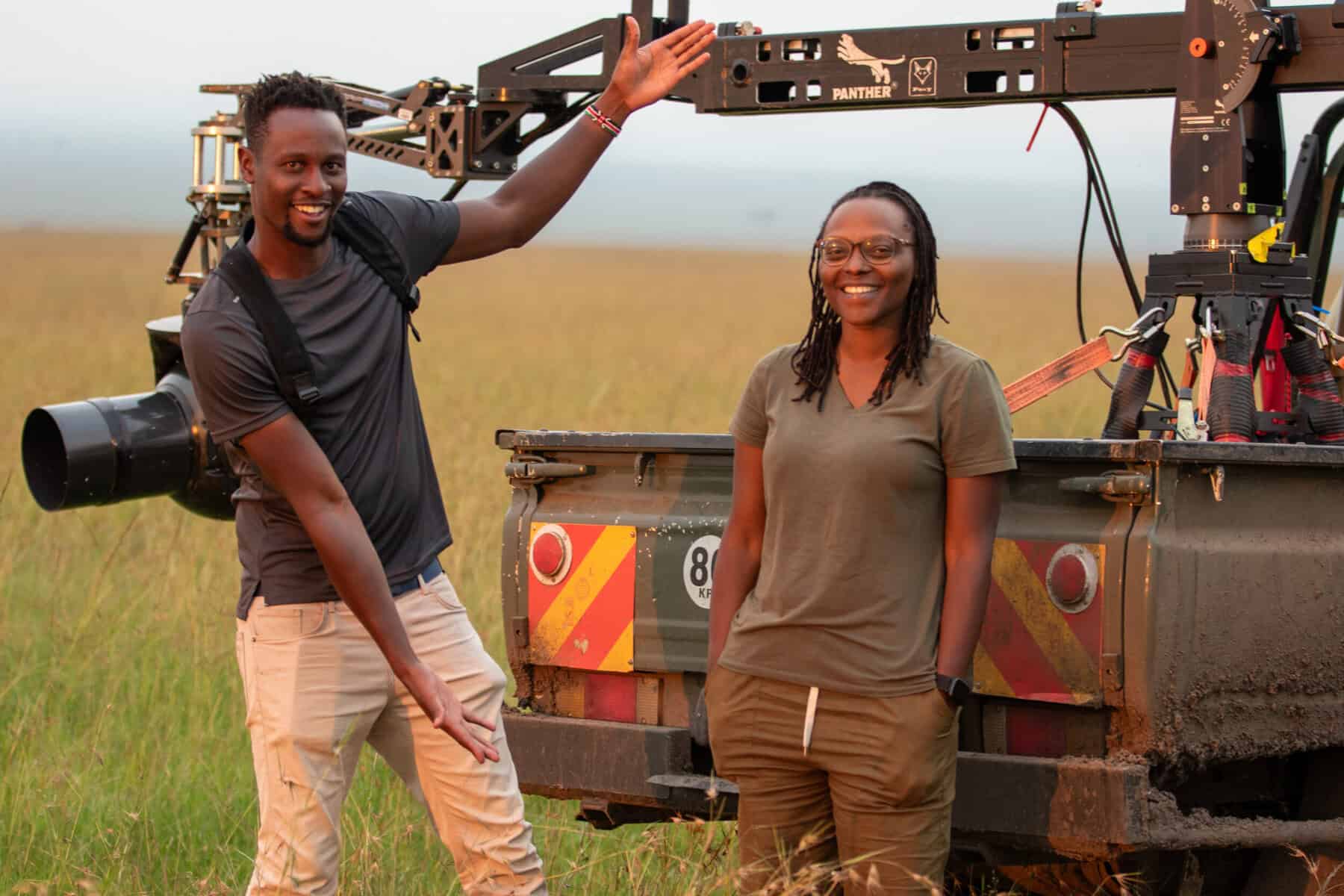
Kenyan producer and director Faith Musembi, Musembi, along with a large crew, spent four years at the mercy of the natural world to create the series. It’s called Lion, and debuts on National Geographic on 23 August.
The Lion King director Jon Favreau is the series creative director and tells the story of Kio, a lion cub whose journey from vulnerable cub to adulthood plays out across the Maasai Mara in Kenya.
Musembi said that Kio didn’t land the leading role from the get-go. The production initially had more than 20 lions in the casting call, so to speak, and the challenge was figuring out which of them would deliver against the story that the filmmakers wanted to tell.
“Before you do any of this, you have to write down what you’re promising to deliver in the show,” Musembi said.
“That’s one thing. And then you have to adapt as time goes by. We were very meticulous with tracking all the characters and what we were filming.”
Slowly, individual stories started unfolding, and the field narrowed until Kio became the star.
The natural world is unpredictable
That was when the real gamble began because there was no guarantee that the lion everyone had invested their time in would deliver the story the filmmakers hoped for. There was not even a guarantee that he would make it to adulthood.
“It would be lovely to feed him a script and tell the animal to go and do all these things,” Musembi said.
“We were focused on him, and we were trusting the fact that his life was going to be prolific.” Survival remained the worry in the back of everyone’s minds. “That was always the big question mark. Is he still there? Is he still there?”
So, once the leading man was established, the team had to get to know each character and ensure that they could tell the lions apart. It was no mean feat in a pride of more than 20.
“We couldn’t just film any random lions and say, ‘Oh, this is Kio.’ Kio had to be Kio. Summer (another character) had to be Summer,” Musembi said, adding that differences between the roarers became clear the longer the team spent with them.
“When you start filming lions, they all look the same. But when you get to know them you realise they’ve got different characteristics, their individual idiosyncrasies become clear.”
Watch the trailer
The cast was one variable, Musembi said, and then there was the weather. It was impossible to bank filming schedules as gospel.
“When it was raining and pouring outside, we must still film,” she said. “You want to film everything to look beautiful, but not everything happens in beautiful weather.”
Perhaps the greatest test, however, was waiting. Lions sleep for much of the day, and once the production had committed to Kio, there was no segueing to find a more obliging feline actor, or another animal entirely.
“You can’t just go, okay, while they’re sleeping today, let’s go film the hippos. You have to sit there, and you have to wait even though you get super antsy.”
Wait for the lions despite getting antsy
And then there were the names. As wildlife documentaries often do, Lion turned its animals into characters, but Musembi said naming them was about more than giving the production team a convenient way to keep track of who was who.
A name gives audiences someone, rather than something, to follow.
“If Kio was male four-five-eight-six, just a number,” Musembi said, “there’s a distance that as humans we put between us and the character immediately.”
Before they were named, even Kio’s brothers were simply M1, M2, M3 and M4. And after four years with the pride, the characters were no longer interchangeable lions to Musembi either.
“When you get to know them, you realise they are all different,” she said. “When you give them names, it just elevates that and pulls into focus the aspects of who they are as individuals.”