
Zinc oxide searches are at an all-time high thanks to TikTok's 'face basting' trend. Dermatologists explain why sunscreen, bum cream and barrier cream can't be swapped.
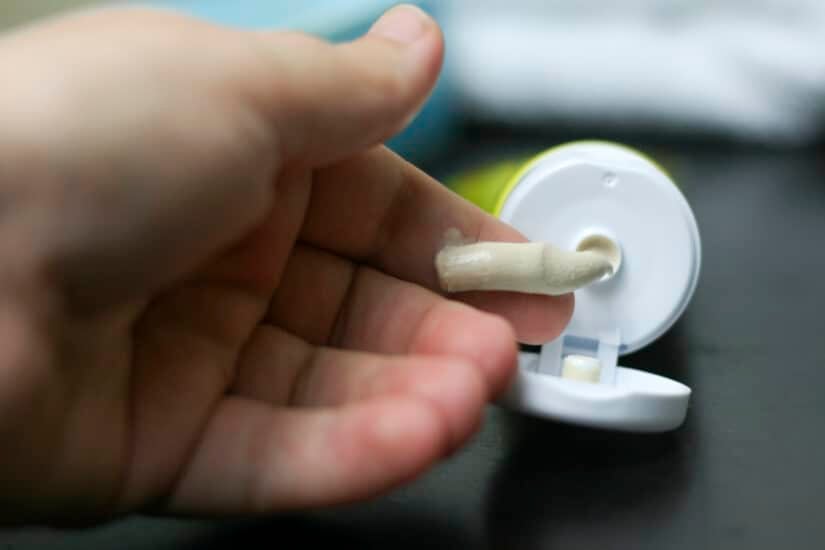
Zinc oxide is trending — but your baby’s bum cream and your SPF are not the same thing. Picture: iStock


If your For You Page has recently served you a video of someone smearing a thick white paste on their face before bed and calling it a “night mask,” you’re not imagining things – and you’re definitely not alone.
Google Trends data from early July confirms it: search interest in “zinc oxide cream” has hit an all-time high, while “zinc oxide overnight” and “zinc oxide cream for acne” are both official Google breakout terms over the past month.
Zinc oxide, the chalky white mineral that’s been sitting in your bathroom cabinet in the form of nappy rash cream, is suddenly one of the most searched skincare ingredients around.
But before you raid your baby’s cupboard (or your own bum cream stash) for a nightly face mask, it’s worth understanding why the humble zinc oxide in a tub of nappy cream is not interchangeable with the zinc oxide in your sunscreen – or a proper barrier cream, for that matter.
How ‘face basting’ became a thing
The trend of lathering on creams containing this ingredient has a name now: “face basting,” popularised on TikTok by dermatologist Dr Shereene Idriss, who has described slathering her face in a zinc-oxide-based nappy cream at night to calm dryness and irritation, joking that she wakes up looking like a “Magnolia buttercream cupcake.”
It’s essentially a variation on “slugging” (the K-beauty-inspired practice of sealing in moisture overnight with a thick, occlusive layer) except instead of plain petroleum jelly, people are reaching for the zinc oxide paste made for babies’ bottoms. On TikTok, creators are applying anywhere from 10% to 40% zinc oxide creams as an overnight mask, claiming it calms redness, supports the skin barrier and leaves skin softer by morning.
There’s real science underpinning some of the appeal. Dermatologists note that zinc oxide can help lock moisture into the skin while offering anti-inflammatory benefits, which can be especially useful for red or irritated skin, in much the same way it helps treat nappy rash. Zinc has documented anti-inflammatory and antibacterial properties, and some research suggests it can support wound healing and collagen production.
Why derms are torn on the trend
Not every skin type is going to love a face full of nappy cream, though. Dermatologists are broadly split between “it can help, cautiously” and “please don’t.”
Some dermatologists point out that while zinc oxide has antibacterial and anti-inflammatory properties, it also reduces oil production and absorbs excess oils – meaning it can leave skin drier, and isn’t well suited to acne-prone, oily or sensitive skin.
There’s also an allergy factor to consider: nappy creams are rarely pure zinc oxide. People allergic to zinc, lanolin, mineral oil, paraffin, wax or petroleum jelly are advised to steer clear, since most diaper creams contain a mix of these ingredients.
“Zinc oxide creams should also not be applied to severe skin conditions unless advised by a healthcare professional. Medical advice should be sought if skin irritation persists, worsens, or if signs of infection, such as swelling, pain, or discharge, develop,” notes Dr Judey Pretorius, Biomedical Scientist and founder of Biomedical Emporium Skincare.
The acne question is a particularly hot one, given “zinc oxide cream for acne” is one of the breakout search terms driving this trend.
Experts caution that zinc oxide itself isn’t the acne fix people are hoping for – because nappy rash creams are often comedogenic and can clog pores, they may actually make breakouts worse rather than better. The anti-inflammatory reputation of zinc is real, but that doesn’t mean the thick, occlusive base it’s suspended in plays nicely with congested or oily skin.
Other formulators note that zinc oxide on its own isn’t necessarily what clogs pores – it’s often the other ingredients it’s blended with in a nappy cream that can trigger breakouts.
There does seem to be some nuance by product, too. Dermatologists have flagged that zinc comes in different chemical forms, and while zinc oxide tends to work best on dry, inflamed or irritated skin, it can be more irritating for acne-prone users, who may do better with a gentler form like zinc gluconate found in dedicated barrier balms.
Why bum cream, sunscreen and barrier cream aren’t the same thing
Here’s where the trend runs into a wall of actual chemistry – and it’s the part that matters most if “zinc oxide overnight” has you eyeing your sunscreen or nappy cream as a two-in-one product.
Dr Pretorius also explained the difference.
“Zinc oxide is a multifunctional ingredient used in skincare and medical creams primarily for its protective skin barrier properties and broad-spectrum ultraviolet (UV) filtering ability. Its function within a specific cream is determined by its concentration and overall formulation. In sunscreen products, zinc oxide is typically present at lower concentrations to provide effective protection against both UVA and UVB radiation.
“In contrast, medical and barrier creams, including nappy (bum) creams, generally contain higher concentrations of zinc oxide to create a thicker, longer-lasting protective barrier that shields the skin from excess moisture, friction, and irritants. This makes these formulations suitable for several conditions such as diaper rash, chafing, and minor skin irritation.”
Additionally, sunscreen needs zinc oxide to do one very specific job: sit in an ultra-thin, evenly dispersed layer across the skin so it can scatter and absorb UV radiation consistently, without gaps. Most importantly, sunscreen’s SPF number isn’t just a factor of how much zinc oxide is in the jar – it’s a lab-tested, regulated outcome that depends on that dispersion being close to perfect.
Pretorius further explains that “the formulation and concentration of zinc oxide are important because they determine the product’s intended function, performance, and effectiveness. Although zinc oxide is the same active ingredient, its concentration, and the other ingredients in the formulation influence how it interacts with and supports the skin.”
So should you try it?
If your skin is dry, cold-weather-chapped or occasionally irritated, an occasional overnight layer of a well-formulated zinc oxide cream isn’t unreasonable – plenty of dermatologists use some version of this themselves. But the internet’s current framing of “zinc oxide cream” as a single interchangeable product is where things go wrong.
“When considering the use of a zinc oxide-containing product, guidance from a healthcare professional or pharmacist can help ensure that the most appropriate formulation is selected for the intended purpose. Healthcare professionals, including dermatologists, general practitioners, paediatricians, and other specialists, can provide valuable advice for different skin concerns, such as eczema, dermatitis, rashes, diaper (nappy) rash, skin irritation, or wound-related conditions.
“Pharmacists also play an important role in recommending suitable over-the-counter zinc oxide products, including sunscreens and barrier creams, and providing guidance on their correct use,” advises Pretorius, noting that consulting the appropriate professional helps ensure that the zinc oxide formulation chosen matches the specific skin need and provides the intended benefit.