If you call it a cookie, you'll be in trouble, Macarons are in a league of their own.
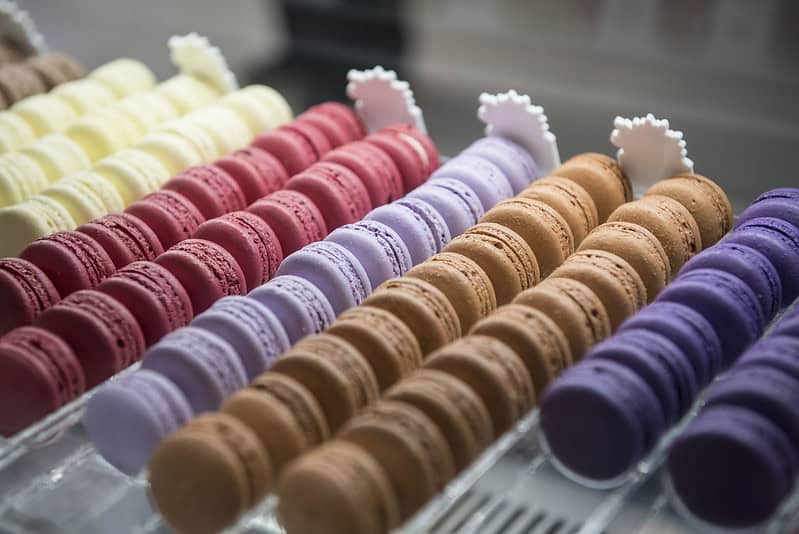
Luxury snacks and trendy yums. Picture Michele Bega / The Citizen


Macaron, macaroon, you can pronounce it any way you want but don’t call it a biscuit or a cookie, because it’s not that, even though it seems like it.
Eating a macaron is a sensual indulgence and probably akin to choosing a Prada wallet over a supermarket purse. When it’s mixed and baked right, you cannot get enough of the yum.
And there is a lot of yum at Nicole’s Macaroons. In Melrose Arch it’s on the piazza and in Pretoria, in Menlyn. The coffee is good, the snacks, to borrow from a hand lotion brand, oh so heavenly.
The little luxury has a pedigree of note. The word comes from the Italian maccherone, meaning fine dough, and its ancestry stretches back to Arab and Persian nut confections that reached Sicily as early as the eighth century. Almond biscuits were baked in European monasteries for centuries before Italian pastry chefs apparently carried the recipe to France in 1533, in the entourage of Catherine de’ Medici when she married the future King Henry II.
During the French Revolution, two Benedictine nuns hiding out in the French town of Nancy baked and sold them to survive, earning the name the Macaron Sisters. The sandwich we know today, two meringue discs hugging a filling, only arrived in the early 20th century, credited to Pierre Desfontaines of the Parisian pâtisserie Ladurée.
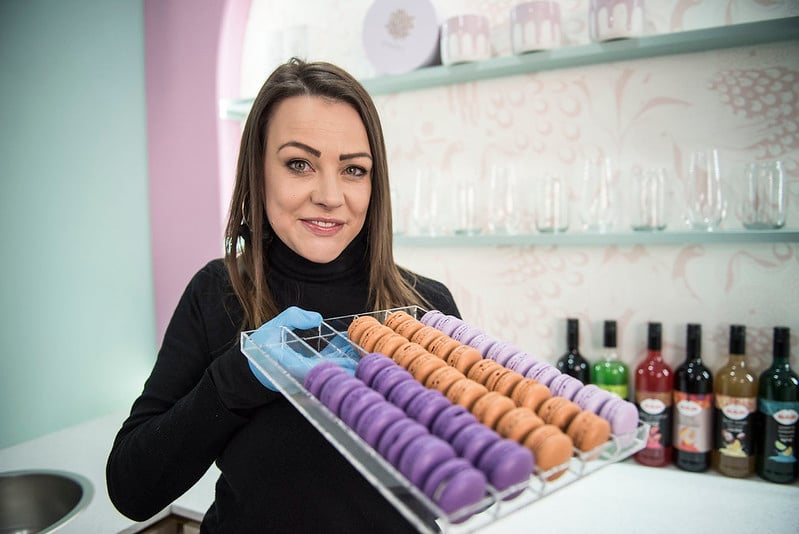
Macarons have a pedigree of note
These cookie-like sandwiches, for lack of a better term right now, are as fickle as a mother-in-law. Just ask Denise to van der Merwe, who owns Nicole’s Macaroons.
“If it’s too hot, they don’t work. If it’s too cold, they don’t work,” she said.
On hot days and rainy ones, her husband sends her off to work with a sincere “good luck”. “They are seriously challenging to get right, but luckily, we do.”
She never trained as a pastry chef but that does not discount her love for the yum. She was a wedding planner, ran a venue, then moved into property management. Her husband, a business broker at the time, found the macaron business on his books.
“He said to me, just look at the business. I looked at him like, thank you, me? A bakery? But I went to have a look, and I saw the potential.”
The business was founded in 2012, and she bought it a decade ago. The potential she spotted was a gap because there was just nowhere to simply walk in and buy a proper macaron. The business comprises a bakery, too, that supplies restaurants and her own shops, turning out up to 2 000 macarons a day. When load shedding threatened production, she moved the bakery to Pretoria’s outskirts, onto the same grid as the Ford factory, where the lights stayed on to keep the car factory revving.
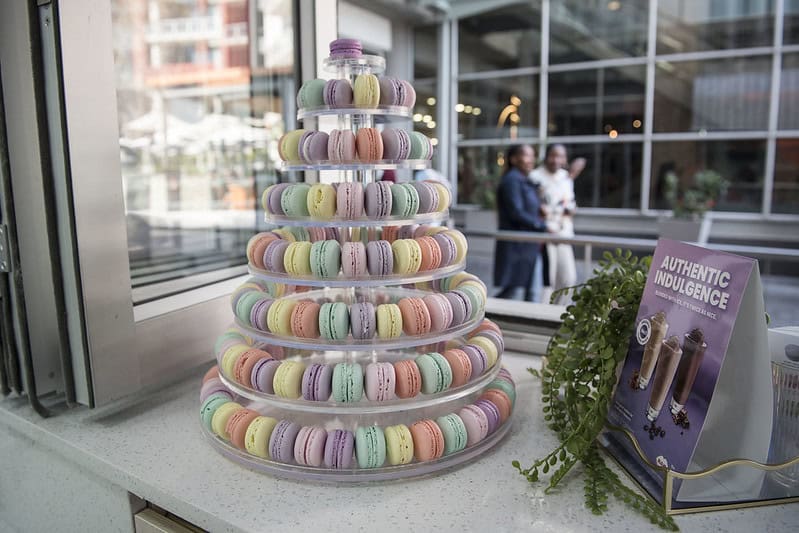
Macaroon or macaron? A cookie by any name
The shells or outer part of the macaron sandwich-cookie is made with Italian meringue, a trickier method that delivers a softer bite. The chocolate is Belgian, the Nutella comes from the actual jar, the Biscoff likewise.
“I don’t compromise on the flavours,” she said.
That is also her answer to anyone balking at R25 for a single snack. “They’re like, oh, R25 for a cookie. I’m like, no, no. It’s not that, it’s a macaron.”
The base is ground almonds, and nuts don’t come cheap either. And once you taste it, you’ll want to empty your wallet for more. They’re that good.
The standard menu runs to 25 flavours, with limited editions alongside. Presently Van der Merwe’s developing an Ouma Rusks macaron, with peppermint crisp to follow. The flops, five or 10 from every batch of 80, are sold in factory boxes or crushed into ice cream.
The world has fallen in love with the macaron and for that Van der Merwe credits Ladurée.
“People queue around the block in Paris,” she said.
The pâtisserie, she reckons, “created this legend of luxury for macarons” and set a benchmark that everyone else now chases, as much through its beautiful packaging as its baking. In the age of social media, it’s become a status symbol.
“A lot of people come in and the first thing they say is, I’ve been to Paris,” she said. “They don’t even ask about the price. They’re just like, oh wow, macarons. It’s not like you’re having a muffin and a coffee. It’s fancy.”