R6.1m debt haunts Dudu Myeni's estate| New refugee centre directive sparks fresh concerns| US ambassador to SA on thin ice as pressure mounts| Nomvula Mokonyane under fire
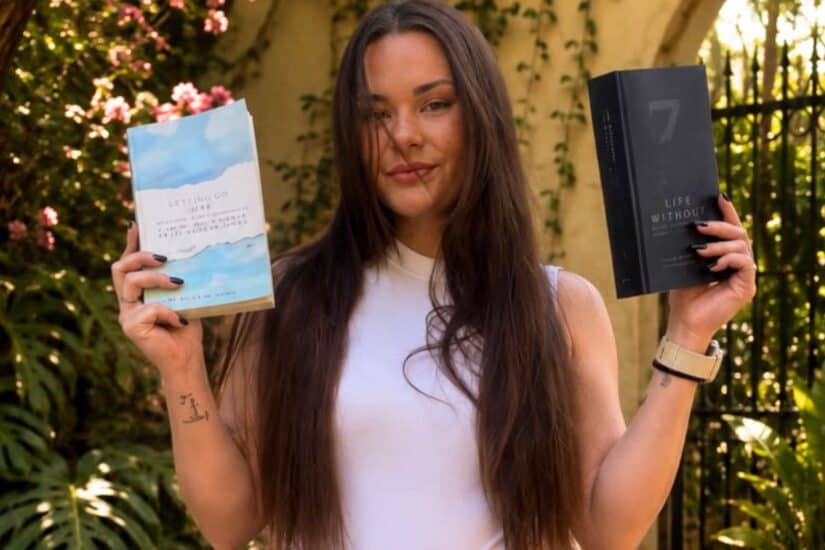
Gen Z author published globally by 26. Picture Supplied


This Gen Z self-published author has already published two books by age 26. Kempton Park’s Jordin Lea Andrews-Jones taught herself the mechanics of the publishing industry and secured international distribution for her work. A third book is due in November.
She writes under the name JL Andrews-Jones, and so far, her non-fiction title Letting Go was followed by the psychological thriller Life Without Fantasies. Her next book is a romantic comedy, she said.
It is a fairly rapid publishing record for somebody whose plans for adulthood changed dramatically at 18. That was when Andrews-Jones was diagnosed with her first autoimmune disease. She had already struggled with health issues for several years, after tearing a ligament in her ankle when she was 12.
“I was in a cast or a moon boot probably every four months until I was about 14,” she said. Surgery followed, but in 2020, she injured the ankle again and underwent a second operation.
Health challenges changed her life
It was after this that she developed complex regional pain syndrome, or CRPS, an invisible disability and chronic pain condition. Andrews-Jones said that in about five years she underwent more than 15 surgeries in attempts to treat the condition.
“There is no cure,” she said. Her life changed along with it. “I had to stop living my life as a 19-year-old. It was a lot. I became very depressed.”
Andrews-Jones cannot work a conventional job either. She requires treatment from a pain specialist every month, takes regular medication and has several needs related to her illnesses and disabilities.
“I have a lot of special needs that nobody was willing to take on,” she said. But she had always written and imagined stories.
Andrews-Jones was homeschooled for most of her school career after struggling in mainstream education. She grew up with a single mother, was close to her grandparents, and spent plenty of time on her own.
“I’m very introverted,” she said. “As a child, I spent a lot of time imagining in my own head, making up stories.”
Wide variety of subject matter interests
Letting Go had been a file on her laptop for a long time before it became a published book. Then Andrews-Jones lost her grandfather in 2023 and her dog Baxter, who she described as her best friend, last year.
“That was the tipping point for me,” she said. “I lost a lot of myself as well.” The book became an account of more than grief over losing people and animals she loved.
“Letting Go came from grieving myself, grieving my grandfather, my dog and the life I should have had,” Andrews-Jones said.
“I felt that it was important to share it because I’m not the only one who feels these things. We’re all human. We all have emotions, and I know how lonely it can be when you feel these things but nobody understands. You can’t explain it.”
Andrews-Jones did not have a publishing house behind her. She taught herself about manuscripts, ISBNs, formatting, publishing and distribution, and then worked through the business of getting her books into the market. Both titles are now available through a global distribution programme.
Her debut book started getting attention, she said.
“When I saw my first book was gaining traction, I suddenly felt like I’m not useless. There is something I can do for myself,” she said. “My disease doesn’t have to stop my life. Is this something I can make a living doing? I’m gonna do it.”
Did it her way
Her third book will take a different direction. A 360 flip from the first two. The romantic comedy follows a dog trainer who suffers a series of disastrous dates and compares the men she meets to dogs and lessons from her profession. It is far removed from both the personal account in Letting Go and the psychological thriller that followed it. Andrews-Jones said this was exactly how she wanted it. “I don’t want to be defined by one genre either. I want to be able to explore everything.”
Human emotion, she said, is what ties her work together. And she has no intention of allowing illness to become the single description of her life either.
“It goes hand in hand with my diseases and my life,” Andrews-Jones said. “I don’t want to be defined by one thing.”