Marloth Park’s vegetation rehabilitation efforts remain strong
Seekoei Road in Marloth Park is the latest portion of parkland to undergo restoration by the honorary rangers.
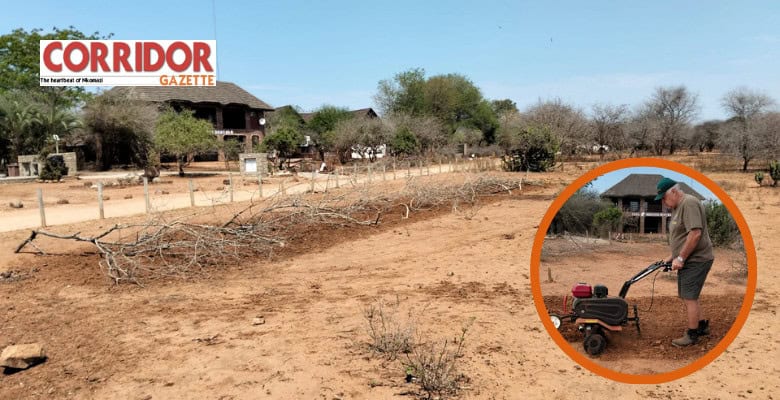
The Marloth Park Honorary Rangers (HRs) have been hard at work rehabilitating parts of the veld in the park this year, and they recently started on a new patch of ground in Seekoei Road.
Members Frikkie Pretorius, Ria Fisher, and Andy Fetz took advantage of the rains that soaked the area in September to begin rehabilitating the area in front of South Post at 3222 Seekoei Road. The HRs decided on this location after much discussion that included evaluation of the parkland following the most recent game count carried out by the organisation.
“After the game count, we all have to be patient. For successful general rehabilitation of parkland we need another big take-off of animals next year, as we are still very overstocked,” the organisation said in a statement on social media.
“It is expensively pointless to sow grass that will be eaten, roots and all, within a few weeks of germination. Plus, the whole of Marloth Park needs rehabilitation.”
According to the statement, for this to happen, the operation will need to be massively scaled up and will require huge amounts of money, or else face years of very slow recovery.
“So, the HRs can only do selected small areas for now, especially because we have to protect them from the hundreds of warthogs and impalas, as well as the bigger grazers,” the statement reads. “We considered working on the inedible flannel weed-infested areas along Seekoei, which cause so much debate and discussion on social media. To reiterate our point of view: the weeds moved in because the grass was eaten out, not the other way round.”
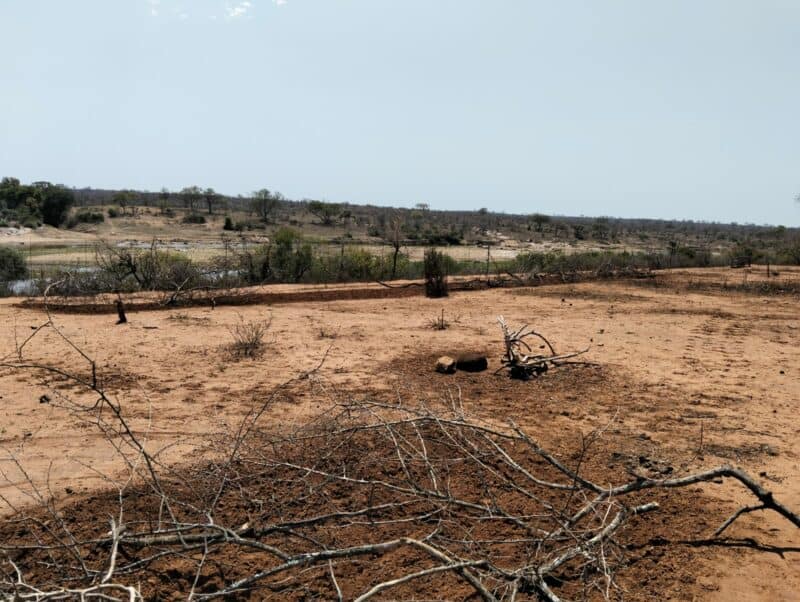
Hence, the HRs chose to tackle the more urgent problem of thoroughly desertified areas along Seekoei Road first. These are areas where riverine trees and a variety of other vegetation thrived decades ago, but were later removed ‘for the view’, leaving the land vulnerable to erosion and desertification as overstocking pressure increased.
“These areas are losing topsoil fast, and when the rains settle in nothing except invasive, poisonous parthenium and other weeds will likely grow there. The flannel weed-infested areas, at least for now, have roots holding the soil together and leaves falling to protect and enrich the soil.”
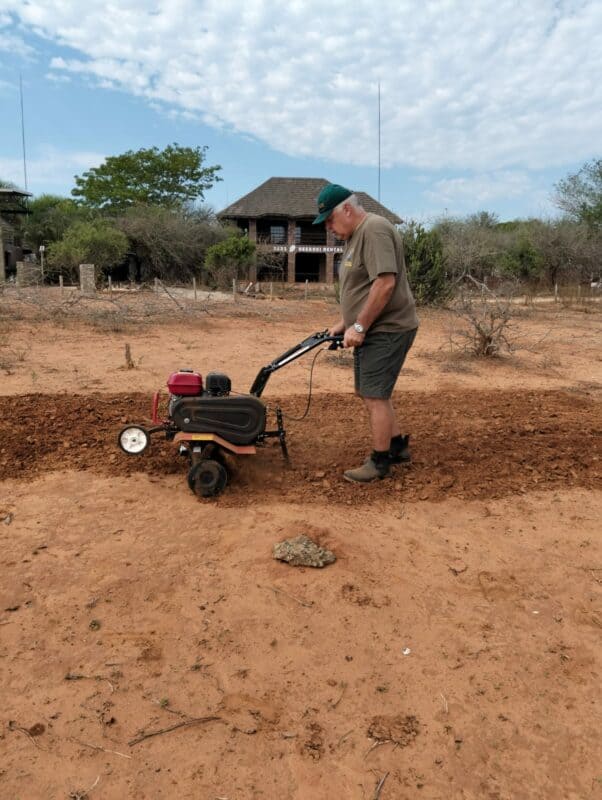
In order to kick-start the rehabilitation, Pretorius and Fisher rotavated the compacted soil, sowed the seeds then rotavated again in the opposite direction. “This ensures the seeds are mixed in, so they won’t be washed away and being covered will give them the best chance of germinating.”
ALSO READ: Marloth Park: Overstocking crisis as animal numbers rise
The seeds were then combined with the Marloth Park HRs’ fine compost and river sand sourced and delivered by Fetz. “This will ensure better, even sowing and a little growing boost.”
Fetz also sourced sekelbos from encroached areas of parkland, and the trio used it to protect the sown area, especially from warthogs.
Meanwhile, people using Crocodile Road will have noticed the area between Porcupine and Henk van Rooyen streets, where HR Jaco van der Merwe and his helpers cut down a number of sizeable encroaching trees. The HRs will be re-seeding the area for summer.