According to Eskom, its energy availability factor for the financial year to date reached 68.2%, the best level in six years.
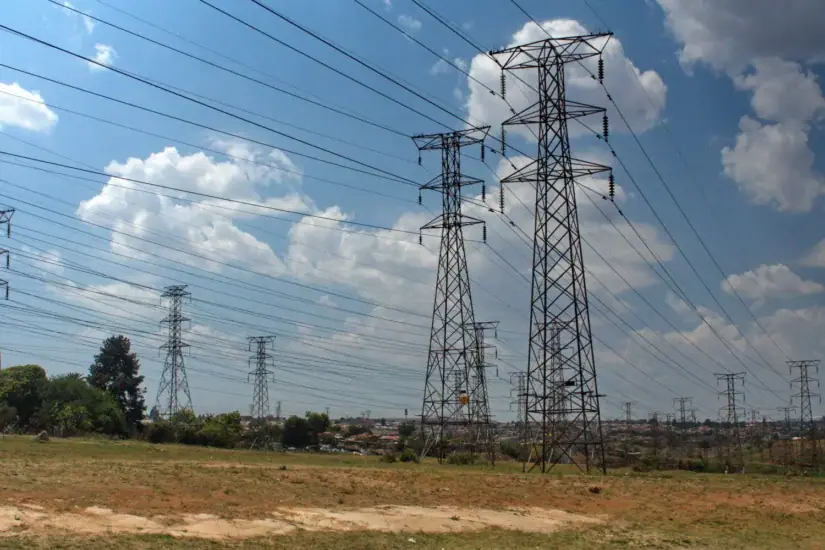
Picture: iStock


Eskom reported its best energy availability in six years on Friday, but load reduction still hits parts of Gauteng and KwaZulu-Natal.
Eskom said on Friday that its power fleet was performing at a six-year high, yet customers in parts of Gauteng and KwaZulu-Natal still faced load reduction.
The update comes less than two weeks before the 4 November Local Government elections. The ANC, DA, EFF and MK party set out their electricity plans in their manifestos.
The ANC and DA focused on improving municipal networks; meanwhile, the EFF wants electricity treated as a public good, and MK Party targets private power producers.
Eskom reports highest energy availability in six years
According to Eskom, its energy availability factor for the financial year to date reached 68.2%, the best level in six years.
That was 12.8% higher than three years ago and returned about 6 536MW of capacity to the grid. Diesel spending also dropped by R4.87 billion compared with the same period last year.
The utility said the gains left room for growth. “Eskom currently has 5 695MW of surplus capacity available as a platform for growth and industrialisation,” Eskom stated.
Eskom credited its Generation Recovery Plan for the turnaround.
“These gains reflect sustained operational improvements under the Generation Recovery Plan and have contributed to South Africa recording 518 consecutive days without loadshedding since 16 May 2025,” the utility noted.
Load reduction still affects Gauteng and KwaZulu-Natal
Eskom said the number of customers hit by load reduction had fallen from about 1.69 million, an 88.6% reduction.
The remaining impact was confined to selected areas in Gauteng and KwaZulu-Natal, where about 80% of previously affected customers had already been returned to normal supply.
“Seven provinces remain free from load reduction, with 89% of targeted customers restored to normal supply and only 193 556 customers, or 2.7% of Eskom’s customer base, still affected,” Eskom said.
The utility aims to end the intervention by March 2027 and appealed to communities for help.
ANC promises stronger municipal networks and Eskom coordination
The ANC pointed to national progress to back its case.
In its manifesto, the party said it had achieved more than 400 consecutive days without load shedding.
“Load shedding that crippled every household and business in the country has been brought to an end,” the ANC stated.
For municipalities, the party pledged to upgrade distribution networks, expand smart metering, cut outages, and speed up fault response.
It also promised to raise monthly Free Basic Electricity for qualifying households.
ANC-run municipalities would consider a feed-in tariff for rooftop solar users and adopt a NERSA-approved wheeling tariff so businesses could buy clean power through municipal networks.
“We will strengthen coordination with Eskom, protect electricity infrastructure from theft, vandalism and illegal connections, expand electrification using appropriate technologies, and reduce technical and non-technical losses,” the party pledged.
DA wants municipalities to buy and sell their own power
DA leader Geordin Hill-Lewis framed electricity as part of the party’s promise to get municipalities working.
“We will keep the lights on by reinvesting electricity revenue into electrical infrastructure, maintaining grids, enabling municipalities to buy and sell their own power, and supporting households and businesses that can feed electricity back into the system,” Hill-Lewis said in the manifesto’s foreword.
The DA promised to let municipalities use private firms to run electricity trading services.
It also planned to pay grid maintenance contractors based on network uptime and to publish map-based reports on blackouts.
According to the manifesto, municipalities would also push Eskom for clear service level agreements.
“Municipalities must be empowered to buy and sell electricity directly from private energy companies without waiting years for national government approval,” the party stated.
EFF pledges free prepaid meters and in-house technicians
The EFF said its municipalities would treat electricity as a developmental public good rather than a profit-making function.
It promised to scrap extra charges on prepaid meters, install them for free, and restore full municipal control of billing.
“EFF municipalities will strengthen revenue collection through improved billing systems, smart metering, and fair enforcement against non-payment by high-consumption users,” the party added.
The party also pledged to employ its own engineers and electricians and to set emergency response times of no more than one hour for faults.
The EFF further planned solar panels, solar geysers and battery storage for households still waiting for electricity.
It said it would also develop community-based renewable projects with Eskom.
“Billions of Rands are lost annually through water and electricity wastage caused by poorly maintained infrastructure,” the party stated.
The EFF described unreliable services as a matter of dignity.
“There can be no dignity where water does not flow, where electricity is unreliable, where roads are unsafe, and where clinics cannot serve the sick,” the party said.
MK party opposes private power producers
The MK party’s manifesto, titled The People’s Mandate, was broader in scope and said little about municipal networks.
It pledged to “Ensure that key state SEO’s provide cheap electricity, water, and transport for citizens and industry”.
Furthermore, the party plans to review and repeal the independent power producer programme and the unbundling of Eskom. It also promised to renew Eskom’s coal fleet and speed up its nuclear new build programme.
“Since 2018, critical infrastructure has deteriorated, with trains inoperative, expensive and intermittent electricity supply, dilapidated roads, and prolonged water shortages,” MK said.
The party added that state-owned companies should supply cheap electricity to citizens and industry.
“Increasingly, we see the commodification of electricity, water, and transport because of those who seek to profit from the provision of basic services,” MK claimed.