Stokvels could help low-income households eat better, but their existing buying systems reinforce diets dominated by sugar, cooking oil and other shelf-stable goods.
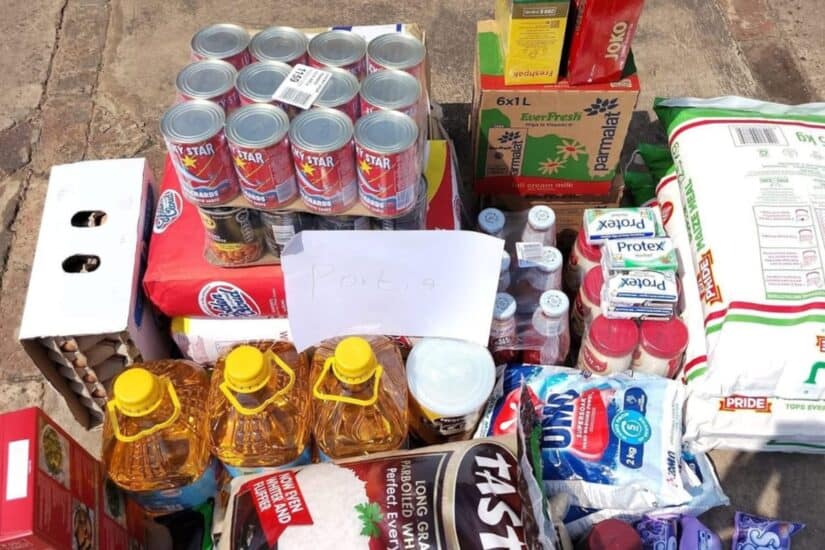
Picture: Screengrab/Facebook


South Africa’s stokvels have the purchasing power to become powerful allies in the fight against poor nutrition. Yet, a University of Cape Town study warns that these community savings groups are currently using that influence mainly to buy food that is cheap, plentiful and easy to store – not necessarily food that is healthy.
The findings say stokvels could help low-income households eat better, but their existing buying systems may also reinforce diets dominated by sugar, cooking oil, processed meat and other shelf-stable goods.
The study, published in the Journal of Nutrition Education and Behavior, examined grocery stokvels in Dunoon and Khayelitsha. Researchers interviewed 20 stokvel leaders and conducted focus-group discussions with 40 members.
A missed nutritional opportunity
Bulk buying was reported in all 20 stokvels. But in 19 of them, 95%, members did not explicitly consider nutrition or healthy eating when deciding what to purchase. Only one group said nutritional value formed part of its buying decisions.
The purchasing priorities were practical: affordability, quantity and durability. Staple foods, sugar, cooking oil and processed meats were among the products most commonly bought.
UCT health economist Dr Akim Tafadzwa Lukwa, the study’s lead author, said stokvels already possess the foundations required for a nutrition programme.
“They have trust, accountability, regular meetings, collective decision-making and, importantly, substantial purchasing power. The challenge is to find ways of using these existing structures to increase preference for healthier food while making them affordable and practical.”
Collective cash, collective constraints
Stokvels typically had between 10 and 30 members, with each person contributing R200 to R1 500 a month. All the groups studied operated according to formal rules, while 85% imposed penalties for breaking them.
That discipline gives stokvels considerable leverage when negotiating with retailers.
Members pooled their money, compared prices, sought discounts and sometimes dealt directly with supermarkets or wholesalers.
The arrangement allowed households to buy more food at prices they might not secure on their own, particularly during periods of financial strain.
But the same model that makes bulk purchasing affordable can work against fresh-food consumption.
Limited refrigeration, transport expenses and long distances to wholesalers make perishable products harder to include. Standardised grocery hampers also favour food that can survive transport and remain usable for long periods.
In effect, the logistics of survival are shaping the contents of the shopping basket.
Healthier buying without breaking the model
The researchers argue that stokvels should not be remade from the outside. Instead, interventions should be fitted into the routines that already make the groups work.
Potential measures include:
- Retailer-negotiated food bundles containing more nutritious products.
- Subsidies or vouchers to reduce the cost of healthier items.
- Short nutrition discussions during ordinary stokvel meetings.
- WhatsApp messaging with recipes, meal-planning guidance and information on affordable healthy food.
Lukwa said the purpose would not be to impose a new agenda on stokvel members, but to make healthier choices realistic within existing budgets and purchasing arrangements.
“The idea is not to change what stokvels are or to impose an external agenda on them. Nutrition-sensitive interventions would need to fit into existing practices and priorities, while giving members practical options that make healthier purchasing possible within their budgets.”
Women-led networks, uneven reach
The study also found that stokvels were overwhelmingly led by women: 95% of the groups surveyed were women-led. Many placed a high value on household responsibility, dependability and mutual support.
That social cohesion could make stokvel meetings useful spaces for conversations about dietary diversity, food literacy and meal planning.
However, the researchers cautioned against treating stokvels as a universal answer to food insecurity.
Some groups exclude younger people or those with irregular incomes because their survival depends on members who can contribute reliably. The people most exposed to food insecurity may therefore be the least likely to belong to a stokvel.
“Stokvels should be seen as a complementary platform rather than a replacement for broader food security and public health programmes,” Lukwa said.
“Any intervention needs to consider who is reached through these groups and who may be left out.”
The central question is no longer whether stokvels have influence over food purchasing. The study makes clear that they do. The question is whether that influence can be redirected so that collective buying power delivers not only more food, but better food.