


Witness G's lawyer told the commission this week that his client is involved in high-risk, covert operations in Gauteng.
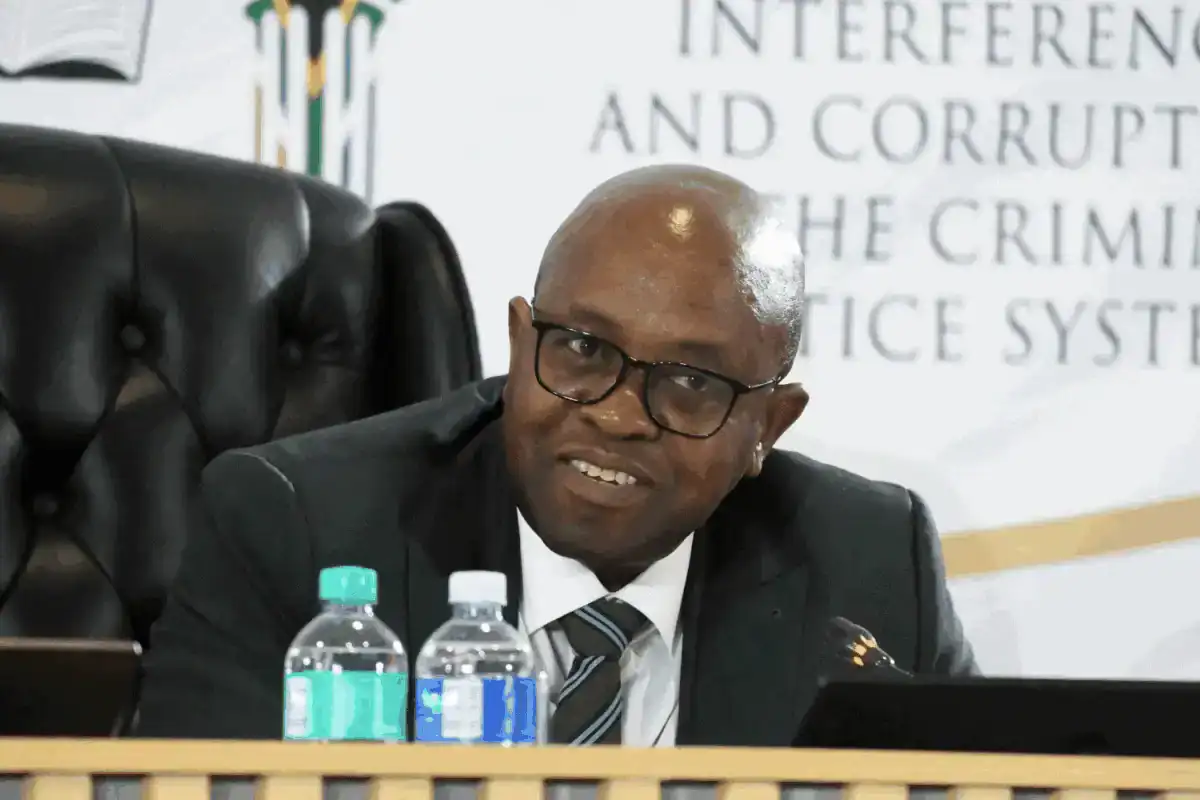
Retired judge Mbuyiseni Madlanga at the Brigitte Mabandla Justice College in Pretoria on 27 Octobear 2025. Picture: Gallo Images


The Madlanga commission has ruled that Witness G will testify off-screen and virtually.
Witness G’s lawyer, Tshepo Matlala, told the commission this week that his client is involved in high-risk, covert operations in Gauteng and works closely with informants.
Life risk
Matlala expressed concern that being publicly seen with informants could put their lives at risk and requested protective measures for Witness G, including testifying off-camera remotely with voice alteration, while still allowing the proceedings to be broadcast.
“Our client is willing to assist the commission, but there are some sensitivities, as the commission may well know he runs some covert operations and there is a very high-risk unit that he’s running in Gauteng.
“What makes this particular application pertaining to our client unique is that because the witness deals with informers and the likes and operational contacts, their safety may be at risk as well,” said Matlala.
Evidence leader Matthew Chaskalson agreed that Witness G should not be visually identified. However, Chaskalson said the commission does not possess voice-altering software.
“It’s not clear to me that he would be identifiable by voice, and so it seems to me that the request for off-screen testimony, which will be recorded but without visuals, is one which we would support and not go beyond that.”
The commission made the ruling on the application on Wednesday.
“The appearance of the applicant before this commission shall be conducted virtually and off-screen, but with an audio broadcast,” the commission’s secretary, Dr Nolitha Vukuza, said.
Proceedings
Vukuza said only the following persons shall be permitted to remain present during the hearing of the applicant’s evidence: the commissioners, evidence leaders and staff of the commission; and the parties and their legal representatives.
“No persons may disclose the identity of the applicant or any information that is likely to lead to the disclosure of the identity of the applicant.”
The commission invited media outlets to justify why this ruling should not stand will have to “give notice of their intention to do so on or before 23 March 2026 and file any affidavits in support of their opposition on or before 26 March 2026”.
Chaired by former Constitutional Court (ConCourt) judge Mbuyiseli Madlanga, the inquiry has been tasked to investigate allegations of criminality, corruption, and political interference within South Africa’s criminal justice system.
READ NEXT: Ramaphosa extends Madlanga commission deadline by five months
Support Local Journalism
Add The Citizen as a Preferred Source on Google and follow us on Google News to see more of our trusted reporting in Google News and Top Stories.

