We need the courage to ask what kind of men we are raising and what kind of relationships we are modelling.
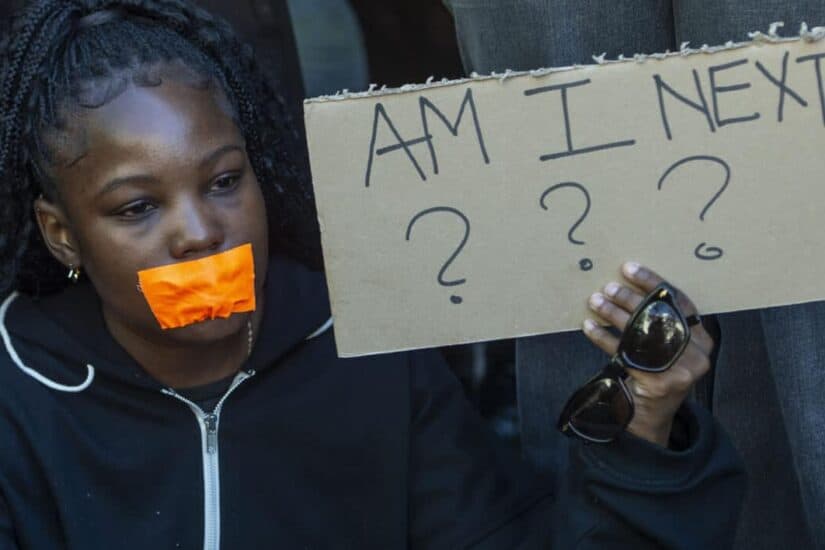
Over 100 women and a handful of men marched to City Hall and the police station to protest against Gender-Based Violence and Femicide (GBVF) on September 16, 2026, in Cape Town, South Africa. (Photo by Gallo Images/Brenton Geach)


President Cyril Ramaphosa announced another set of interventions to stop the killing of women last week. More task teams, more registers, more specialised courts, more police units.
It will not work. Not because government is not trying, but because it is treating the symptoms of a disease it refuses to diagnose. We are policing the result of a broken system – murder – without even having an honest national conversation about how we produce the murderer.
If we are serious about stopping femicide, we need a different conversation. A national psychosocial indaba. And we need to bring everyone in – psychologists, psychiatrists, social workers, criminologists, detectives, prosecutors, correctional officers, priests, traditional leaders and, crucially, men and women who have lived in toxic relationships.
We need to ask the uncomfortable questions. What kind of man kills a woman? It sounds like a simple question. It is not. Is he a psychopath? In some cases, yes. Clinical antisocial personality disorder.
But most men who kill their partners are not psychopaths. They are ordinary men.
So what happens? Psychologists will tell you about three converging factors. First, fragile masculine identity built on control, not character. Second, inability to regulate emotions – jealousy, humiliation, shame and anger experienced as unbearable pain. Third, entitlement – the belief that a woman’s body, time and loyalty are possessions that can be enforced.
What is in the mind of a woman killer when he decides to kill? Detectives who have interviewed them will tell you it is seldom a sudden snap. It is rumination. He wakes up and replays a perceived disrespect over and over.
By midday, violence feels to him like justice, not crime. He feels justified. And this is where we must have an honest conversation.
South Africa has built a highly transactional culture around intimate relationships and we pretend it does not affect violence.
We must interrogate the “girlfriend allowance” economy. We must interrogate the “a man must…” narrative. A man must pay. A man must provide. A man must not cry.
In Soweto, Ekurhuleni, Tshwane, Gugulethu, Mlazi, a 24-year-old man is told his worth is his wallet. He borrows money to buy hair, nails, data, rent – to keep a relationship. Then, betrayal happens. She cheats. Or she leaves for a man who can provide more. What is he expected to do? The law, morality and humanity say: walk away, heal, seek help.
But if we do not answer why walking away feels impossible for him, we will keep burying women.
When a man has been socialised to believe this relationship was his only proof that he is a man, the pain of infidelity, or abandonment, becomes existential, not just emotional.
That does not excuse murder. It explains the pressure cooker we have built. If we want prevention, we must be allowed to study relationship dynamics honestly without being accused of victim-blaming.
If a woman cheats, does that justify killing? Never. But does cheating cause pain that, in a man who lacks tools, can turn deadly? Yes.
We need the courage to ask what kind of men we are raising, what kind of relationships we are modelling and what happens inside a man in the 12 hours between humiliation and homicide.
If we avoid those questions because they are uncomfortable, we will be back next month listening to another presidential address after another woman’s body is found in the veld.
The killers must face the law. But society must face itself.