Population grew from 40 million to 63 million since 1994, yet only 3% of children aged seven to 18 are not attending school today.
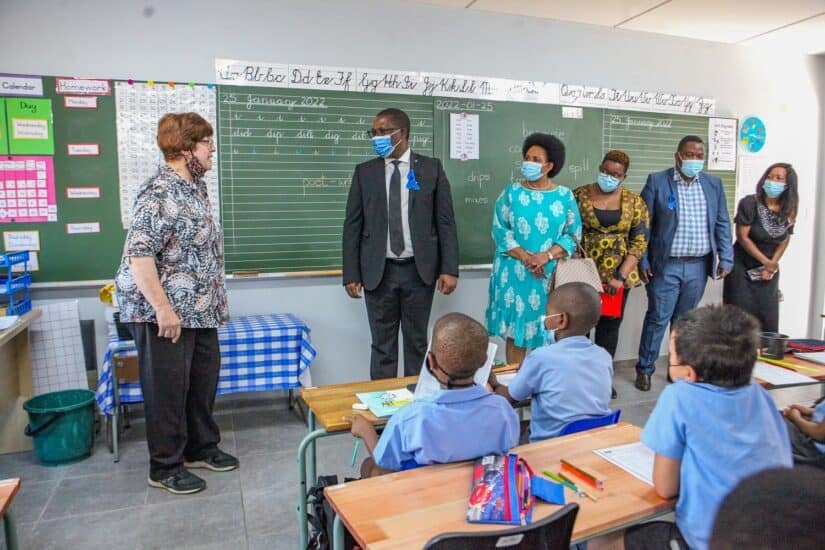
Then-MEC for education Panyaza Lesufi at the opening in January 2022 of new classrooms at Bordeaux Primary School in Randburg – part of efforts of the Gauteng department of education to assist in alleviating pressure in identified areas. Pictures: Gallo Images


South Africans often judge the education system by what they see immediately around them: an overcrowded classroom; a teacher responsible for too many pupils; a school struggling to cope with growing enrolment.
These experiences are real. They deserve neither dismissal, nor excuse. But they also raise a question that is seldom asked. Compared with what?
Since 1994, SA’s population has grown from about 40 million people to more than 63 million, an increase of over 50%. Every one of those additional millions has required schools, classrooms, teachers, textbooks and, ultimately, places at universities and colleges.
Any serious assessment of education must therefore ask not simply whether the system is under pressure, but whether it has managed to keep pace with one of the fastest expansions in demand in SA’s history.
The evidence suggests that, while the system is unquestionably under strain, it has done considerably better than public perception often allows.
Take access to schooling.
The first challenge facing democratic South Africa was getting children into school. That challenge has largely been overcome.
Today, only around 3% of children between the ages of seven and 18 are not attending school. The overwhelming majority complete the compulsory years of education. The national challenge is therefore no longer one of access, but of quality.
A nuanced story
The same pattern emerges when one examines classroom capacity. Critics often point to overcrowded classrooms as evidence that the system is collapsing. But the national pupil-teacher ratio tells a more nuanced story.
Over the democratic period it has fluctuated within a relatively narrow range of between 29 and 33 pupils per teacher. These figures reflect sustained pressure, but not uncontrolled deterioration. Had teacher recruitment failed to keep pace with enrolment growth, those ratios would have risen dramatically. They did not.
This is an important point.
Maintaining broadly stable pupil-teacher ratios while educating millions more children is itself evidence of institutional capacity. It means that government has continued appointing teachers, expanding schools and increasing operational capacity simply to prevent conditions from deteriorating further.
That does not mean every classroom is adequately staffed. Far from it. National averages conceal profound provincial differences.
Current pupil-teacher ratios range from about 28 pupils per teacher in the Western Cape, to around 33 in Limpopo, with several provinces clustered around 30 or 31.
Those differences matter, because they translate directly into different educational experiences for pupils. A child in one province may receive significantly more individual attention than a child in another.
This is precisely why averages should be interpreted carefully. They should not be used to deny inequality. They should be used to understand the scale of the national task.
The same principle applies to public spending.
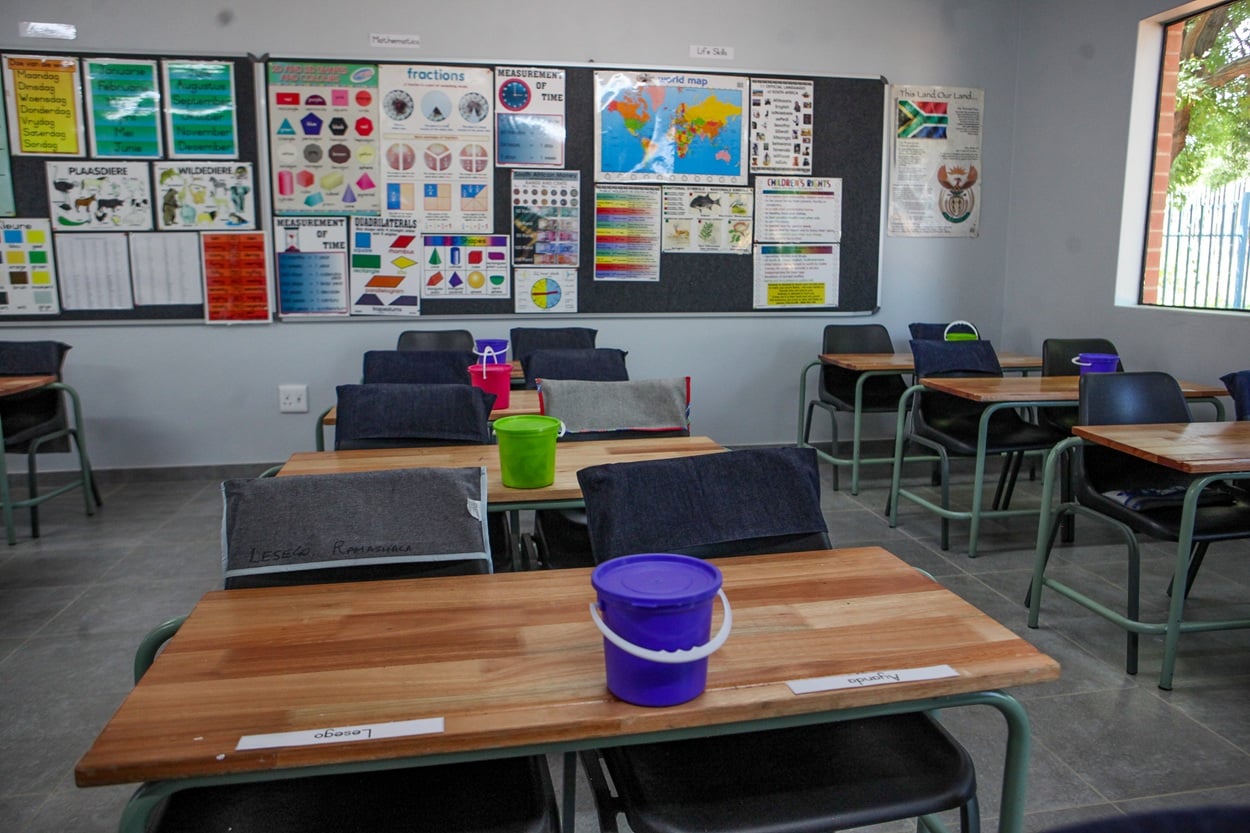
Contrary to the popular narrative that government has abandoned education, the evidence points in a different direction.
Education continues to account for around one-fifth of total government expenditure, while basic education alone absorbs about 14% of all public spending. That doesn’t guarantee quality.
Money never does. But it does demonstrate that education has remained one of government’s highest fiscal priorities throughout the democratic period. Higher education tells a similar story.
More young South Africans now qualify for university admission than ever before. This has inevitably intensified competition for places. Many applicants experience rejection, not because universities have become less accessible, but because demand has expanded faster than capacity.
Competition can feel like exclusion. The two are not the same.
The real lesson from the evidence is that South Africa’s education challenge has fundamentally changed.
Thirty years ago, the priority was expanding access. Today, the priority is improving quality within a system that already reaches almost every child.
The report argues that reform must therefore become more precise: strengthening teaching quality, addressing provincial disparities, supporting weaker schools, reducing pupil-teacher pressure where it is greatest and improving progression through the schooling system long before learners write matric.
This is not an argument for complacency.
Too many pupils still leave school without adequate literacy and numeracy.
Too many schools continue to struggle with infrastructure, management and teacher shortages. Educational opportunity remains profoundly unequal. These shortcomings demand urgent reform. But reform begins with an accurate diagnosis.
The good news
Countries whose education systems have genuinely collapsed do not maintain near-universal school participation while educating a population more than half as large again.
They do not keep pupil-teacher ratios broadly stable over three decades of rapid demographic growth. They do not continue devoting one-fifth of public expenditure to education.
South Africa’s education system is not where it should be. But neither is it where many South Africans imagine it to be.
It is a system under sustained pressure. But a system that continues to function and a system that still possesses the institutional capacity to improve.
That is why the choice before us is not between complacency and despair.
It is between allowing perception to dictate policy or allowing evidence to do so.
The evidence suggests that South Africa has not exhausted its educational potential. The challenge now is to realise it.