



When Mlambo-Ngcuka became SA's first female deputy president in 2005, it was more than a symbolic milestone.
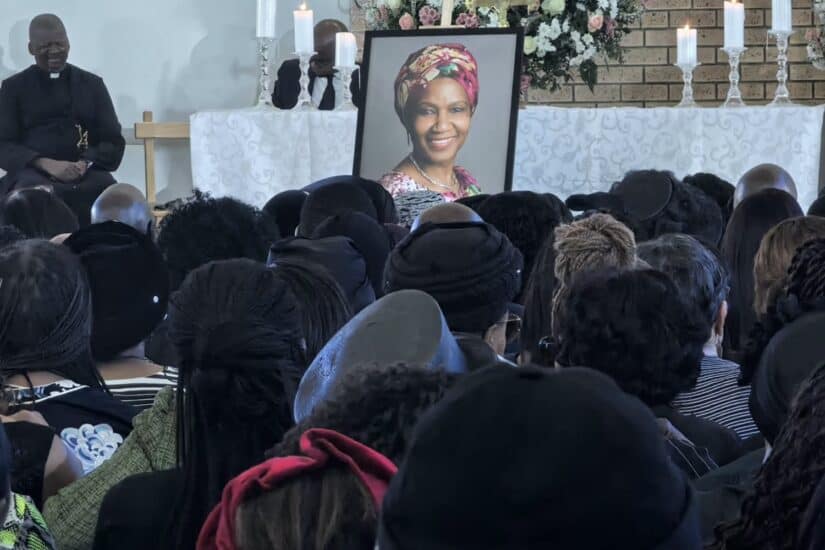
The state memorial service for former deputy president Phumzile Mlambo-Ngcuka at Our Lady of Lourdes Catholic Church in Rivonia, Johannesburg, 24 November 2026. Picture: Nigel Sibanda /The Citizen


South Africa has not simply lost a former deputy president. It has lost a trailblazer, a stateswoman and a woman whose life helped expand the possibilities of leadership for generations of South Africans.
When Phumzile Mlambo-Ngcuka became SA’s first female deputy president in 2005, it was more than a symbolic milestone. It was a direct challenge to a culture that had long treated the highest offices of state as male territory. Yet, history handed her no gentle arrival.
She entered the deputy presidency during one of the most difficult and divisive periods in the ANC’s democratic history, following the dismissal of Jacob Zuma by then-president Thabo Mbeki.
From the moment she entered the Union Buildings, she was viewed by many not simply as a deputy president, but as a political actor in a much larger struggle for the soul of the ANC.
Fairly or unfairly, she became entangled in the era’s tensions. Her husband, former national director of public prosecutions Bulelani Ngcuka, was a central figure in the legal and political controversies surrounding Zuma.
Ngcuka was also accused in 2003 by some ANC figures of having been an apartheid spy, allegations later rejected by the Hefer commission. Mlambo-Ngcuka entered office carrying political baggage she had not created herself.
Many would have buckled under that pressure. She did not. Instead, she remained one of the few women in politics willing to occupy powerful spaces without apology or self-pity.
That doesn’t mean her record was flawless. Her time as minister of minerals and energy attracted criticism. Her remarks on Zimbabwe’s land reform programme led to fierce debate.
Her brief departure from the ANC to join the Congress of the People following the Polokwane conference in 2007 raised questions about political loyalty, only for her to later return to the party she seemingly could never fully leave.
Some will view that chapter as inconsistency, others as a reflection of the political complexities that defined a generation of ANC leaders.
Either way, it revealed a politician wrestling with the same questions confronting many South Africans: where do you go when the movement no longer resembles the one you joined?
Yet, reducing Mlambo-Ngcuka’s life to ANC factional politics would miss the bigger story. Her most enduring contribution may have come after she left domestic politics.
As executive director of UN Women, she was influential on the global stage. She championed gender equality, fought for women’s economic empowerment and pushed governments around the world to confront gender-based violence.
While many politicians spend their careers talking about empowerment, she dedicated much of hers to building it. She understood that real empowerment requires access, opportunity, education and resources.
She also changed perceptions. For a generation of young women, she showed that high office was not something to admire from a distance, but something they could occupy themselves.
She was not perfect. History will judge Mlambo-Ngcuka with all her contradictions intact. But while others were fighting to control the ANC, she changed what leadership looked like.
The real question is not whether she left a legacy. It is why, more than 20 years after becoming the country’s first female deputy president, South Africa is still waiting for a woman to occupy the highest office in the land.
That absence says as much about the country as her achievements ever did.


