



According to Maluleke, municipalities are increasingly utilising consultants to prepare financial statements for audits.
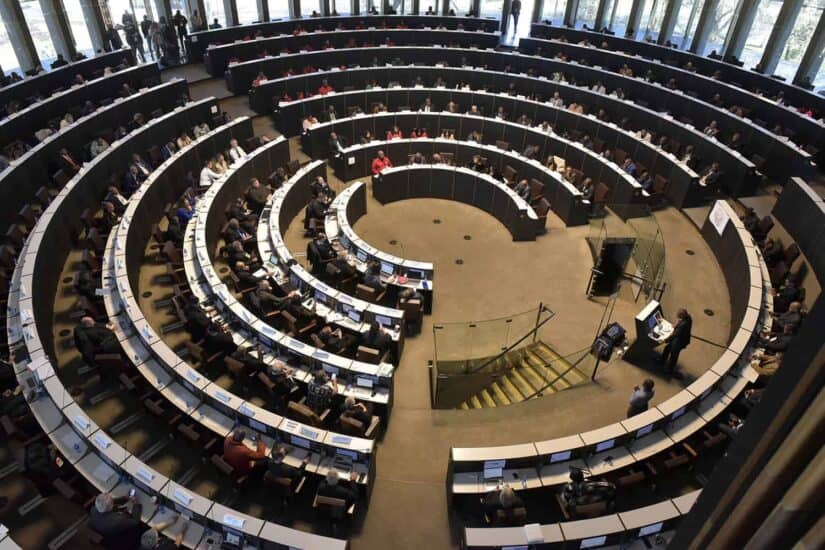
Johannesburg City Council meeting at the Connie Bapela House. Picture: Supplied


Auditor-General Tsakani Maluleke has painted a grim picture of the country’s municipalities, which are increasingly depending on consultants for basic tasks yet still deliver poor-quality work.
On Wednesday, Maluleke presented the 2024-25 local government audit outcomes to Parliament.
Although there have been improvements in some municipalities, the overall picture suggests no end to governance failures, which result in irregular expenditure and poor service delivery.
According to Maluleke, four years ago, 29 municipalities were issued a disclaimer audit opinion, meaning the Auditor General of South Africa (AGSA) could not obtain sufficient and appropriate financial statements to form an audit opinion. They are now eight, signalling an improvement.
However, of the eight municipalities, seven are repeat disclaimers, with the Kamiesberg Local Municipality in the Northern Cape regressing to a disclaimer in this round of the audit. According to Maluleke, the seven must be given attention as they have demonstrated “an inability to move out of this governance failure”.
The seven include Masilonyana in the Free State, which has been in disclaimer territory for 10 years, and Nketoana municipality, also in the Free State, and is a seven-year repeat disclaimer. Mohokare municipality, also in the Free State, is a three-year repeat disclaimer.
The Eastern Cape has the Makana and Sundays River Valley municipalities, which have been disclaimed for seven years. Ditsobotla in the North West is a nine-year repeat disclaimer, while Kannaland is a four-year repeat disclaimer. These municipalities serve about 173 000.
Metros ‘going backwards’
According to the Auditor-General, South Africa’s eight metros need “particular attention” as they handle 54% of the local government’s expenditure budget. They look after almost 40% of South Africa’s population and households.
“Unfortunately, what we’re seeing is that of all the categories of municipalities, metros are going backwards. Local municipalities have improved on a net basis. Intermediate cities have improved. District municipalities have improved on a net basis. Metros are going backwards,” said Maluleke.
“The City of Cape Town regressed on supply chain management issues, procurement issues that led to non-compliance, which then landed them in the unqualified space with findings. They did submit quality financial statements, so no problem there. They did submit a quality performance report; no problem there. What they need to do now is sort out the control matters that let them down on procurement.”
The eThekwini Metro has received an unqualified opinion with findings for over a decade.
“They don’t struggle to compile financial statements and haven’t struggled for a very long time. The CFO and the finance team get that job done. However, what we’re seeing in eThekwini is that the basic functions across different sections within the metro, and how they collaborate, are still a problem.
“There’s ongoing noncompliance with the law around procurement in particular, leading to significant leakages. There’s little attention to ensuring that when funds are available to drive infrastructure projects, they’re spent properly. Unfortunately, they’re often not spent properly, leading to delays in infrastructure and poor-quality work delivered by the chosen contractors.”
City of Joburg ‘needs attention’
The City of Joburg operates through entities including City Power, Pikitup and Johannesburg Water, and, according to the AG, most of these entities have received unqualified audit opinions with findings for years.
“They can put the financial statements together for the audit process, but their financial governance is weak. Their procurement issues continue to be plagued by noncompliance and leakage. Their performance management remains quite weak.
“The city itself, outside of the entities, has a qualified audit opinion this year. It had been unqualified for many years, and this time around, they were unable to correct the errors we identified through the audit and jump to an unqualified. They’ve been relying on the audit process for many years, and this time they couldn’t do it. So, at its core, you have a city that is unable to present credible financial statements.
“We do want to highlight that the city of Joburg needs ongoing attention from oversight as well as from the executive. It’s crucial that the institutional arrangements in Joburg be addressed. If we don’t do that, we’re going to continue on this slide where financial health deteriorates, which is what we’re seeing, where service delivery continues to be compromised. We’re going to continue on the path where investors that look at the city of Joburg don’t look at it in the way that they might have years ago.”
Skills shortage in municipalities
According to Maluleke, municipalities are increasingly utilising consultants to prepare financial statements for audits. She said 10 years ago, 179 municipalities used consultants, collectively spending R586 million. The number increased for the 2024-25 audit, with 225 municipalities using consultants for the same purpose, collectively spending R1.6 billion.
“It’s telling us that the situation is not getting better, it’s getting worse. We looked carefully to see why municipalities were using consultants every single year, and we found that, yes, there are some vacancies, but the real issue is a lack of skills. Meaning that there are people employed in the municipality to do this work, and they’re unable to do it, so consultants are hired year after year.
“There is no plan to reduce spending on these consultants, no plan to drive skills transfer, and no plan to build institutional capability to run financial management within the municipality.
“The things that the consultants are doing in this environment, spending this R1.6 billion, are basic functions that the municipality should be able to build capability for. We’re also seeing that there’s still inappropriate spending in this regard, where municipalities will hire a consultant to submit VAT returns and then pay them a percentage of the input VAT that comes back to the municipality.
“We also kept asking our auditors to get us data on why it is that, despite the spend on consultants, we still get poor quality financial statements, even in the areas where consultants did the work. In most instances, the consultant’s work is not reviewed by the people employed by the municipality.”
Irregular expenditure in municipalities
Governance failures and a lack of discipline in SA’s municipalities have resulted in R145.21 billion in expenditure over four years. The 2024-25 audit cycle recorded a R40 billion consolidated irregular expenditure, with R23 billion of it in the metros.
“We are often very cautious to quote the number of R40 billion irregular expenditure, because at least 40% of municipalities did not disclose the full extent of their irregular expenditure. So we know that the number is underreported. What it tells us is that the trend is still upwards.”
The AG said the upward trend in irregular expenditure suggests a tendency not to address it.
“That means consequence management is not happening as it should. Resource recovery is not happening. And, of course, discipline continues to deteriorate within municipalities.”



