
Storytelling carried a responsibility to encourage audiences to reflect on their own behaviour, says Buys, who plays Samke in Soul City: Let's Rise.
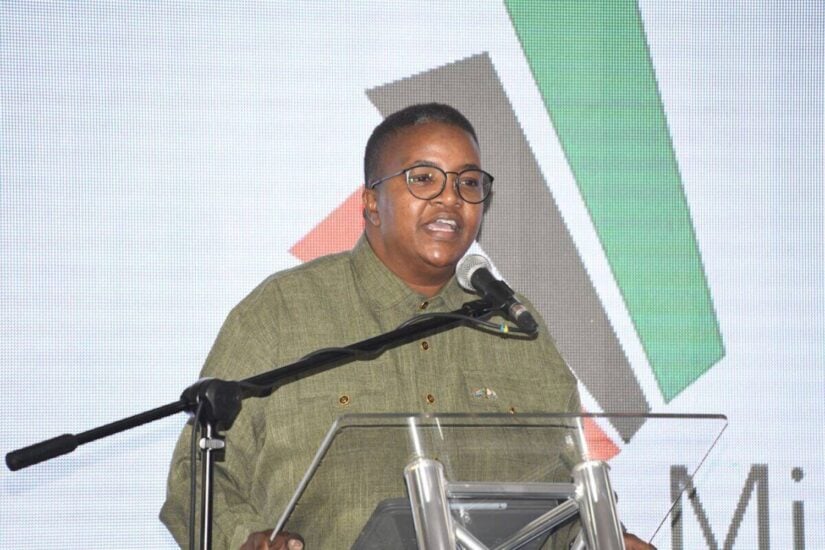
Deputy Minister Mmapaseka Steve Letsike. Picture: Gallo Images/Frennie


Deputy Minister for Women, Youth and Persons with Disabilities Mmapaseka Steve Letsike has called on South Africa’s creative sector to use storytelling to challenge attitudes and behaviours that contribute to gender-based violence and femicide (GBVF).
Letsike made the call in a keynote address at the inaugural Within Collective: Beyond the Screen – A Catalyst for Change gathering, which explored storytelling’s role in confronting social issues.
She said South Africa was facing a sustained national crisis of GBVF, adding that government, communities and the creative sector all had a role to play in addressing it.
“We must move beyond awareness towards transformation,” Letsike said.
She said while the police, justice system and government had responsibilities in responding to GBVF, society could not rely solely on law enforcement to address the problem.
“We will never police our way out of gender-based violence,” she said.
According to Letsike, violence often starts with attitudes and behaviours that become normalised before it becomes a police case.
She said control was sometimes mistaken for love, jealousy was romanticised, boys were taught that masculinity meant dominance, while girls were encouraged to tolerate behaviour that diminished them.
Stories can challenge harmful norms
Letsike said storytelling could become an intervention by helping audiences understand gender, relationships and power.
“A storyline can give someone a language to name what they are experiencing while forcing another person to recognise harmful behaviour in themselves,” she said.
She challenged creatives to tell stories that affirm women’s agency and dignity, while portraying young men with forms of masculinity rooted in care and equality.
She also called for greater visibility of persons with disabilities, LGBTI communities, rural women and other groups often pushed to the margins.
“Our constitution gives us a vision of South Africa founded on dignity, equality, freedom and non-sexism,” Letsike said.
“Those values cannot live only in the legislation or documents. They must become a part of our culture, part of our homes, part of our relationships and stories, for that matter.”
Letsike urged audiences not to allow discussions about GBVF to end when the credits roll.
“If you are creative, use your craft deliberately to challenge what society has normalised,” she said.
Panel calls for prevention
The panel discussion, featuring filmmaker Adze Ugah, actress and Within Collective founder Pule Buys, Soul City Institute for Social Justice CEO Phinah Kodisang and GBVF activist Keitumetse Moutloatse, also focused on the role of storytelling in prevention.
Ugah said the story had to resonate with those telling it to ensure it was portrayed authentically.
He said violence could take different forms and was not limited to physical harm.
“For me, when somebody denies you the right to choose what you want for yourself and for your own best interest, for me, that is violence,” Ugah said.
Kodisang said storytelling could help audiences confront GBV without sensationalising violence.
She said stories could help people recognise harmful behaviour before violence occurred and could encourage audiences to move from awareness to action.
“Storytelling helps you get to the core of the issue without exactly hitting a violent picture, because sometimes we sensationalise violence,” Kodisang said.
Moutloatse said meaningful prevention required society to examine the social, economic and political factors that contributed to violence.
She said social behaviour change needed to begin with conversations about harmful expressions of masculinity and patriarchal values.
“Prevention is not about women. It’s not about a young woman. It’s about men, it’s about boys, it’s about the alcohol, the ones on the margin,” Moutloatse said.
Moving beyond the screen
Buys, who plays Samke in Soul City: Let’s Rise, said the story had stayed with her beyond her work as an actress and motivated her to establish Within Collective.
She said storytelling carried a responsibility to encourage audiences to reflect on their own behaviour and the environments around them.
Letsike said government could not address GBVF alone and called for collaboration with the creative sector and wider society.
“Let this screening be a beginning, not a conclusion,” she said.
“Let us build healthier relationships and together create a South Africa in which women and girls do not need extraordinary courage simply to live ordinary lives in freedom and in safety.”