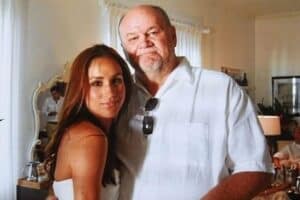
Ndilinasho David Joseph was acquitted of all charges.
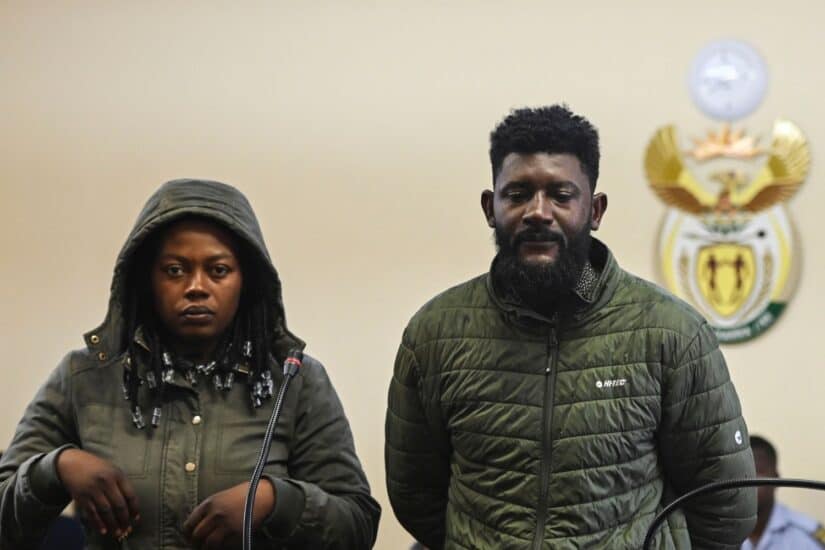
Froliana Joseph (L) and Imanuwela David (R) appear at Bela-Bela Magistrate’s Court on 7 November 2023. Picture: Gallo Images/Deaan Vivier


Imanuwela David, accused of orchastrating the theft of cash from President Cyril Ramaphosa’s Phala Phala farm, has been convicted alongside his co-accused, Froliana Joseph, while her brother, Ndilinasho David Joseph, has been cleared of all charges.
The verdict was handed down by Magistrate Peter Manthata at the Modimolle Regional Court in Limpopo on Monday, 2 November 2026, bringing the trial to a close after a lengthy examination of the evidence and arguments presented by both the state and the defence.
The alleged mastermind and the Joseph siblings faced charges of housebreaking, conspiracy to commit housebreaking with intent to steal and theft.
David also stood accused of money laundering.
The case centred on the disappearance of US $580 000, worth approximately R9.2 million at the time, which was stolen from a couch at Ramaphosa’s game farm in Bela-Bela, Limpopo, on 9 February 2020.
It was alleged that David went on a spending spree after the incident, acquiring expensive vehicles, properties and other luxury items.
Froliana, who had worked as a temporary cleaner at the farm, was suspected of providing information about the cash hidden inside the couch.
All three accused, who originate from Namibia, are South African citizens.
Judgment in Phala Phala farm burglary trial
In delivering his judgment, Manthata revisited the evidence presented by several witnesses, including the investigating officer, Lieutenant-Colonel Ludi Rolf Schnelle.
Schnelle had told the court that David had purchased several vehicles using US dollars.
Among the vehicles was a Porsche, with the sellers allegedly receiving payment in foreign currency.
David’s defence disputed the state’s version, arguing that he had acquired the vehicles on behalf of a motor dealer who intended to export them to Namibia for resale.
However, Schnelle rejected this explanation, pointing out that the vehicles had not been taken out of South Africa.
The investigating officer also questioned David’s explanation regarding the money laundering allegations, pointing to the manner in which he acquired and handled the vehicles.
“He said the accused purchased the cars without receiving invoices. He was hiding and even one of the vehicles was stolen and he did not report it,” Manthata remarked on Monday.
Magistrate raises concerns over police investigation
Although a significant portion of the judgment dealt with evidence surrounding David’s sudden wealth and his subsequent purchases, Manthata was critical of the investigation into the actual burglary.
The magistrate noted the state had established that a break-in occurred at Phala Phala, but had failed to produce direct evidence proving that the three accused had carried out the theft.
He also highlighted the absence of fingerprints and CCTV footage linking the accused to the crime.
“This is a clear indication that the investigations of this case were poorly done.
“It is, in my view, not understandable as we are not talking about an ordinary house, but the house of the country’s first citizen, the president.
“It is not surprising that this case was opened two years after the incident,” Manthata said.
Court examines circumstantial evidence
According to the magistrate, the prosecution had relied largely on “circumstantial evidence”, asking the court to infer that the three accused were responsible for the theft.
However, he stressed the evidence had to be considered in its entirety rather than in “piece-meal” fashion before the court could reach such a conclusion.
“It is common cause that there were millions of rands that were deposited into the accused’s bank account.
“He was confronted about the period he acquired the money, which was during the Covid-19 pandemic, when economic activities were affected.
“He conceded that the money was indeed acquired during this period, but said importing and exporting of goods were not affected. I disagree with him on this issue.”
Manthata further focused on the dramatic change in David’s financial circumstances, saying the Namibian national had previously relied on public transport when he travelled from Cape Town to Bela-Bela prior to the burglary.
“After this incident, he had accumulated more money. He had money to buy cars and even bought his girlfriend a Mercedes-Benz worth R500 000.”
Two accused found guilty
Despite examining communication between David and Ndilinasho, the magistrate concluded the state had failed to establish that the latter was involved in the alleged conspiracy.
Manthata emphasised Ndilinasho had never worked at Phala Phala and that no evidence had been presented to show that he knew what was happening at the farm.
“Again, there is no evidence adduced for the court to draw an inference against him that he conspired with accused two, his sister, about committing the said crime.
“The same applies to the communication that he had with accused one.”
He added that bank records showed that neither Froliana nor Ndilinasho had received any money from the alleged proceeds of the burglary.
Ultimately, the court found David and Froliana guilty of conspiracy to commit housebreaking with intent to steal and theft.
David was also convicted of the additional money laundering charge.
Ndilinasho, meanwhile, was acquitted of all charges.
The matter has been postponed to 13 November for sentencing proceedings.
David will remain in custody pending sentencing, while Froliana’s bail has been extended.
She has been ordered to return to court on the next hearing date.
Phala Phala ‘cover-up’
The Phala Phala scandal only became public in June 2022, when former State Security Agency boss Arthur Fraser laid criminal charges against Ramaphosa and the head of the Presidential Protection Service, Wally Rhoode, with the South African Police Service, alleging that the pair had concealed the theft of $4 million (around R65.5 million).
Ramaphosa later confirmed that a burglary took place, but maintained that the $580 000 cash was payment for the sale of Ankole cattle to Sudanese businessperson Hazim Mustafa, who had not yet collected the livestock.
Further allegations by Fraser suggested that Rhoode improperly used state resources to investigate the theft and manage its fallout.
Subsequent investigations by the Public Protector, the South African Reserve Bank, and the South African Revenue Service cleared the president of wrongdoing.
However, the Independent Police Investigative Directorate concluded in its report that Rhoode deliberately covered up the break-in at Phala Phala farm, in addition to kidnapping the suspects and interrogating them.