March and March has set a hard deadline of 30 June for undocumented foreign nationals to leave South Africa.
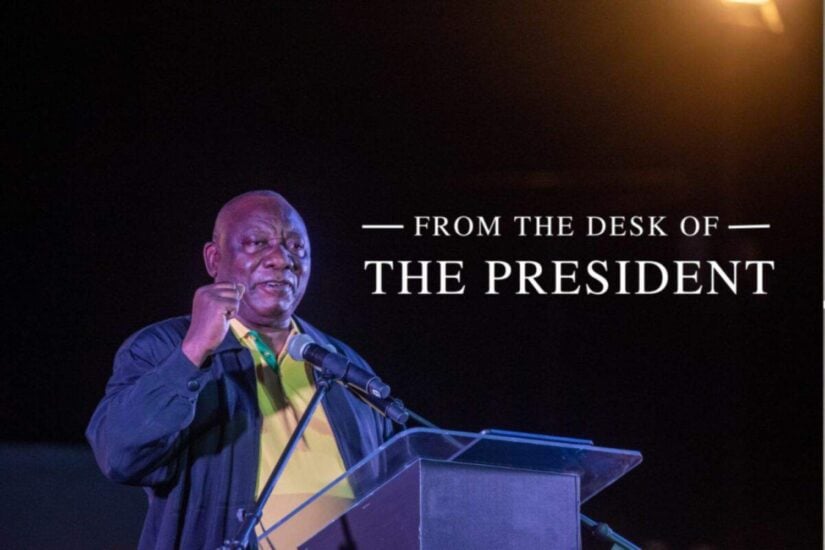
President Cyril Ramaphosa. Picture: The Presidency.


President Cyril Ramaphosa has issued a firm warning ahead of Tuesday’s planned protests against undocumented immigration, stressing that while grievances are legitimate, they must be pursued peacefully and within the bounds of the constitution.
Ramaphosa said “there is no place for violence in the country”, cautioning that intimidation and vandalism will not be tolerated.
Anti-immigration protests
In recent weeks, anti‑immigrant demonstrations across several provinces have escalated to the point of requiring police intervention, with protesters openly threatening the safety of foreign nationals and their property. One of the organisations at the forefront,
March and March have set a hard deadline of 30 June for undocumented foreign nationals to leave South Africa – a move Ramaphosa condemned as unconstitutional.
“Whatever the motivation, taking the law into one’s own hands is vigilantism and has no place in our constitutional democracy. It is vigilantism thinly disguised in the language of patriotism,” he said in his weekly newsletter on Monday.
Concerns
Ramaphosa acknowledged widespread concerns about illegal immigration, border management, pressure on public services and criminal syndicates exploiting the system.
He emphasised that the government is already strengthening border controls, tightening enforcement against undocumented immigration, improving asylum and visa systems, and tackling corruption that has weakened oversight.
“We remain committed to correcting failures and holding accountable those responsible for enabling illegal immigration,” he added.
SA history
The president drew a sharp line against intimidation, invoking South Africa’s painful history of pass laws.
“We must never allow ourselves to return to that chapter of our history where people were stopped on the street, scrutinised and humiliated,” he said, insisting that only law enforcement officers have the authority to demand identification.
Assurances
Ramaphosa welcomed assurances from some protest organisers that they oppose violence, but warned they will be held to that undertaking.
He also highlighted support from traditional leaders, unions, religious and business communities and civil society for the government’s stance on reform and tolerance.
Peace
Ramaphosa reminded South Africans that many foreign nationals live in the country lawfully, contribute positively to society and are entitled to constitutional protection.
“Freedom comes with responsibility. The right to protest is one of the defining freedoms of our democracy, but every right carries corresponding responsibilities,” Ramaphosa said.
Framing the moment as a test of South Africa’s democratic resilience, he urged citizens to choose dialogue over confrontation and law over lawlessness.
“Let us protect both our borders and our constitution, both our security and our humanity. We are capable of doing both, and we must,” he concluded.