


DA councillor Retief Odendaal will take up the mayoral position in Nelson Mandela Bay.
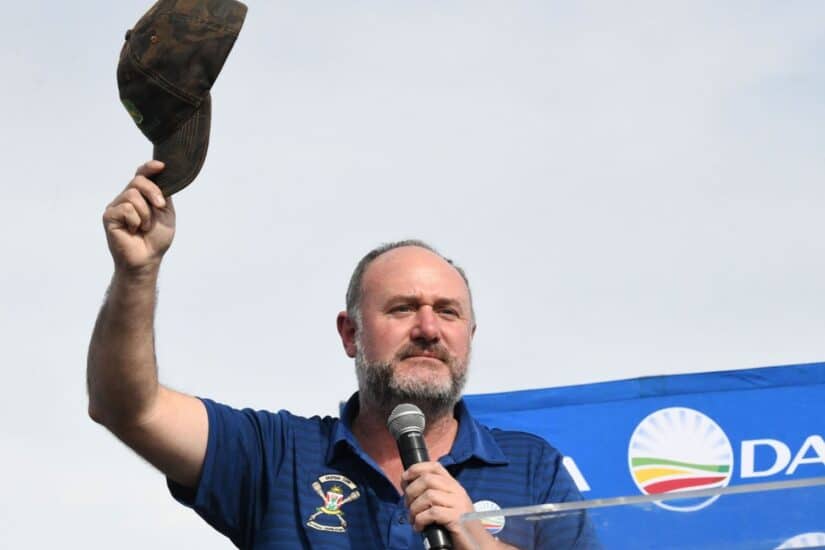
DA mayoral elect for Nelson Mandela Bay, Retief Odendaal. Picture: Gallo Images


The political landscape in the Eastern Cape’s two metropolitan municipalities has taken shape following the 2026 local government elections, with the DA securing a coalition deal in Nelson Mandela Bay while the ANC has held on to the mayoral seat in the Buffalo City metro.
The outcomes were confirmed on Tuesday, 24 November 2026, as political parties moved to establish new municipal leadership structures.
Coalition agreement gives DA control of Nelson Mandela Bay
The DA is set to lead Nelson Mandela Bay after reaching an coalition agreement with five other political parties, securing the numbers needed to govern the metro.
DA Eastern Cape leader Andrew Whitfield announced that the deal had been concluded with the Freedom Front Plus (FF Plus), United Democratic Movement (UDM), ActionSA, African Christian Democratic Party (ACDP) and the Pan Africanist Congress of Azania (PAC).
The agreement will see DA councillor Retief Odendaal take up the mayoral position, with fellow party member Marshall von Buchenroder nominated as council speaker.
The ACDP’s Lance Grootboom has been allocated the deputy mayor position, while Rano Kayser, a DA councillor, will serve as the council’s chief whip.
The coalition has also agreed on the leadership of two Section 79 oversight committees.
FF Plus councillor Bertus Griebenow will chair the municipal public accounts committee, while Democratic Movement councillor Bevan Brown will head the rules and ethics committee.
‘We have learnt from past coalitions’
In outlining the reasons behind their agreement, the coalition partners pointed to the challenges facing residents and businesses as a result of political instability and poor municipal service delivery.
“When water and electricity supplies fail, sewage runs through streets, and basic repairs go undone, families and businesses pay the prices,” the parties said in a joint statement on Tuesday.
“This multi-party coalition agreement gives Nelson Mandela Bay a change of government and a chance to fix those failures.
“We have learnt from past coalitions that stability depends on how we work together when difficult decisions have to be made.
“We believe it is in the best interests of Nelson Mandela Bay and its people for us to govern together for the next five years,” the statement reads.
The parties identified improved service delivery and municipal stability as key areas requiring urgent attention.
They have also pledged to strengthen financial management, combat corruption and improve transparency around municipal expenditure and procurement.
Although the DA secured the largest share of the vote in the 2026 municipal elections, its 53 seats in the 120 member council were insufficient to govern without support from other parties.
With 61 seats required for an outright majority, the coalition’s combined 64 seats place it in a position to take control of the municipality.
The DA’s coalition partners contribute three seats each from the FF Plus and UDM, two from ActionSA and one each from the ACDP, PAC and Democratic Movement.
ANC’s Princess Faku re-elected Buffalo City mayor
In Buffalo City, the ANC has successfully defended its mayoral position, with Princess Faku securing another term after defeating the UDM’s Nqabayomzi Kwankwa.
The mayoral election took place during the metro’s first council sitting on Tuesday, where Faku obtained 52 votes compared to Kwankwa’s 47.
The ANC also secured the council speaker position, with Bongiwe Sauli defeating Xolani Malamlela of the South African Communist Party (SACP) in the contest.
Reports indicate that the ANC candidates received backing from councillors belonging to other political parties.
The ANC does not have an outright majority despite emerging as the largest political party in Buffalo City.
It holds 42 of the council’s 100 seats, leaving it nine short of the 51 needed to govern independently.


