


Fifteen new tankers mark a shift to municipal control, aiming to improve response times, cut costs and stabilise water supply.
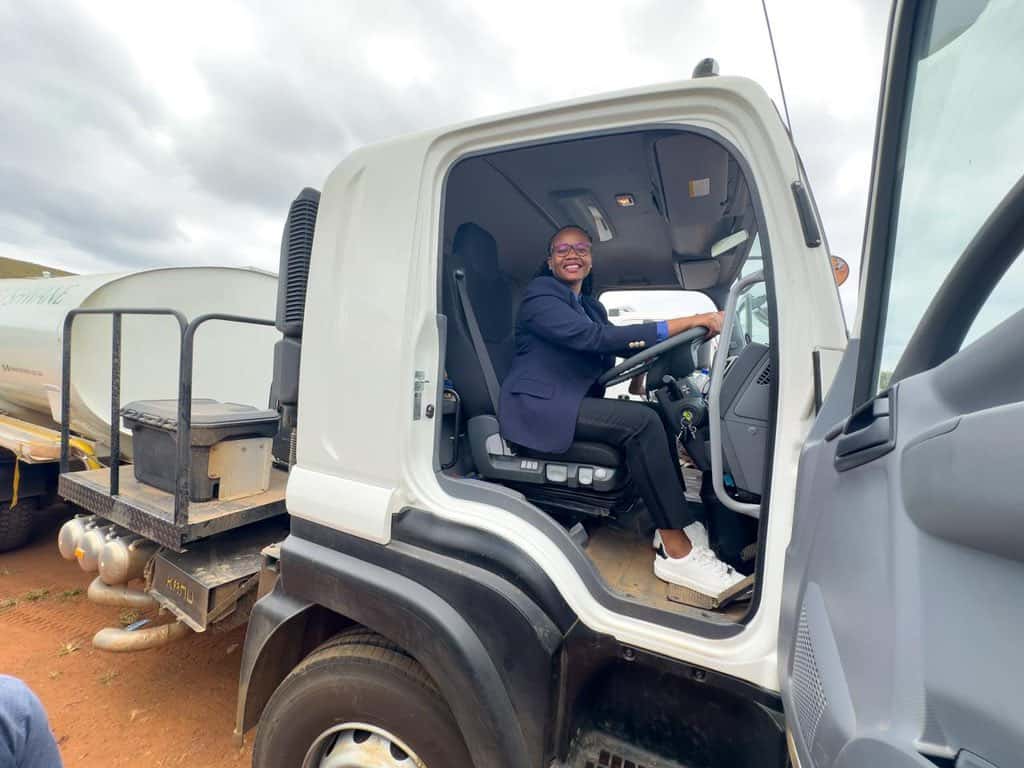
Tshwane mayor Nasiphi Moya announces the city’s new water tanker fleet this week. Picture: Dr NasiphiMoya/X


The City of Tshwane added 15 new municipal water tankers to its fleet this month in an attempt to address the water supply and tanker issues in the capital.
Tshwane mayor Nasiphi Moya and members of the mayoral committee launched what she described as a radical plan to stabilise the water supply in the city.
Tshwane adds 15 water tankers
Moya commissioned 15 new municipal tankers at the Ikageng informal settlement, where some residents have had intermittent water supply for six years.
“This brings the city’s fleet to 41 municipal tankers.
“On the safety, we are doing something that has never been done before. We can’t say we are not concerned. We will be proactive because there may be a risk of retaliation in some parts, and it may be taken out on our officials manning this function,” she said.
Safety measures to protect the tankers include the Tshwane Metro Police Department (TMPD) escorting tankers in certain areas and tracking units fitted in the vehicles.
“From 1 April, tanker services will be fully municipal-led with 26 tankers in daily operation, of which 13 are newly commissioned and two additional units are arriving next month with 23 trained drivers,” she added.
Improving supply, cut costs and reduce reliance on contractors
Moya said the city had one of the largest and most complex municipal water systems in the country, which includes over 660km of bulk pipelines, more than 10 000km of reticulation network, over 80 pump stations and more than 150 reservoirs and towers.
Moya added that the city is currently using 32% more than its licensed allocation.
“This is not sustainable. It places the entire system at risk and limits our ability to stabilise supply across all regions.”
She said the city has to reduce consumption across the system by 100 megalitres in Rietvlei and Roodeplaat, reduce physical losses through leak repairs and pipe replacement and enforce level 1 restrictions.
ALSO READ: Diesel shortage brings Tshwane buses to a standstill
The city will also be metering its hydrants.
‘War on leaks’
Moya said the city was also intensifying the war on leaks, adding that over 150 priority leaks had been repaired so far.
MMC for utility services Frans Boshielo said the new municipal water tankers shift the city’s approach away from an outsourced model.
“By insourcing, we will be improving response time and expanding coverage.
“At the peak of operations earlier this year, 175 trucks were deployed at a monthly cost of R20.56 million.
“This has been reduced to 141 trucks at R8.34 million per month or over R100 million annually. The savings exceed R12 million per month and over R144 million a year,” he added.
R110m redirected to infrastructure and municipal capacity
Boshielo said the tanker budget has been reduced to R126.7 million, which was a 79% decrease, while 110 million was redirected to infrastructure and municipal capacity.
MMC of health Tshegofatso Mashabela highlighted the importance of the quality of water that was being distributed through tankers.
“Contaminated water can easily lead to outbreaks of waterborne diseases such as diarrhoeal problems and cholera.
“Typhoid was found in water trucks that were contaminated. We will not let water tankers become a business that enriches a few,” she said.
Mashabela said water tankers should not be a business worth millions, but rather a source of water that is safe for human consumption.
NOW READ: Tshwane Bus Service faces disruptions amid fuel shortage
Support Local Journalism
Add The Citizen as a Preferred Source on Google and follow us on Google News to see more of our trusted reporting in Google News and Top Stories.

