
'No dispute over commercial interests could justify bloodshed, intimidation or the disruption of essential public transport services,' Sileku stressed.
Picture: iStock


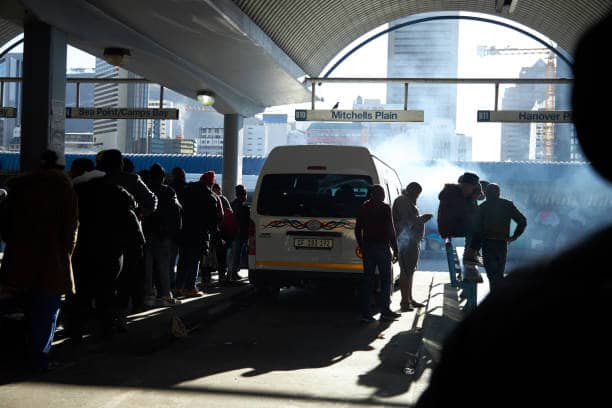
The Western Cape government and the City of Cape Town (CoCT) said they would intensify their coordinated response to ongoing taxi-related violence that has claimed lives, terrorised communities and disrupted public transport services.
Western Cape Minister of Mobility Isaac Sileku and CoCT MMC for Urban Mobility Councillor Rob Quintas met with the Western Cape South African National Taxi Council (Santaco) and the Cape Organisation for the Democratic Taxi Association (Codeta) on Thursday to discuss urgent measures to end the violence.
‘Innocent lives at risk’
According to reports from Arrive Alive, the Cape Amalgamated Taxi Association (Cata) could not attend the meeting because of prior commitments outside the province.
While the government acknowledged the apology, Sileku said its absence from such an urgent engagement was deeply disappointing, particularly given the loss of life.
‘No justification for bloodshed’
Sileku said government would not stand by while disputes over routes and operating rights continued to place innocent lives at risk.
“No dispute over commercial interests could justify bloodshed, intimidation or the disruption of essential public transport services,” Sileku stressed.
He said the provincial government and city are strengthening their collective response through legal intervention, regulatory action, and increased law enforcement, with the office of the premier forming part of the coordinated government effort.
Santaco Western Cape and Codeta acknowledged the gravity of the situation and the urgent need to restore stability in the taxi industry. The following interventions were agreed upon:
Interventions
To urgently engage in discussions, a meeting has been arranged involving Cata and Codeta leadership for Monday, 2 November, to address outstanding disputes and work towards a lasting resolution.
Through legal action, the department says that it will continue its regulatory processes, including an inquiry into alleged violations by identified taxi associations and an urgent court application to clarify operating rights.
To strengthen enforcement, the city said it is committed to maintaining a strong law enforcement presence in affected areas and supporting the province’s legal action.
‘We are appalled’
The department is exploring additional transport services to protect commuters if taxi operations are disrupted.
Western Cape Premier Alan Winde said that they are appalled at this latest outbreak of violence in the taxi industry.
“We are appalled at this latest outbreak of violence in the taxi industry.”
“I urge all law enforcement agencies to keep working together to bring the situation under control and to track down and arrest those responsible for this senseless bloodshed,” Winde said.
Issues in Taxi Industry
Winde said that where issues arise among taxi groupings, they must be dealt with within the confines of the law.
He said if taxi leaders are not prepared to negotiate peacefully, they must expect authorities to take the requisite steps to bring order and the rule of law to the taxi sector.
“We recognise the importance of the taxi industry in the broader public transport environment.”
“But we will never condone violence that puts commuters and other members of the public in danger.”
“Our priority remains protecting lives and shielding the economy from disruptions; this must be followed by decisive action from the relevant authorities, including the Western Cape Mobility Department,” Winde emphasised.
Protecting commuters
Sileku warned that residents could not continue living in fear or be stranded because of taxi disputes.
“We need an end to the violence, and we expect all taxi leaders to take responsibility for restoring peace and stability,” he said.
Ongoing violence amid exams
Western Cape Education Minister Jaco Londt expressed deep concern about the impact of the ongoing violence on schools and the safety of teachers and pupils.
“We are especially worried about the impact on the National Senior Certificate exams,” Londt said.
“The Western Cape Education Department’s (WCED’s) exams teams have well-established contingency plans for any potential disruptions – from weather and power outages to gang activity and protests,” Londt explained.
“We work closely with Saps [South African Police Service] and safety structures to ensure safe passage for learners, with police visibility where needed,” he added, noting that their priority is always the safety of candidates and staff while protecting the integrity of the NSC exams.
“Psycho-social support measures are available to schools on request,” Londt said.
‘Violence must end’
The Provincial Minister of Police Oversight and Community Safety, Anroux Marais, said that it is unacceptable that their already stretched policing resources must repeatedly be diverted from communities plagued by gang violence and killings to respond to disputes within the taxi industry.
“The message is unequivocal: the violence must end, those responsible for unlawful conduct must face consequences, and the safety of commuters will not be compromised,” Marais concluded.