
Race Coast has clinched a deal with international firm Total Performance Data (TPD) to provide real-time GPS tracking of galloping horses.
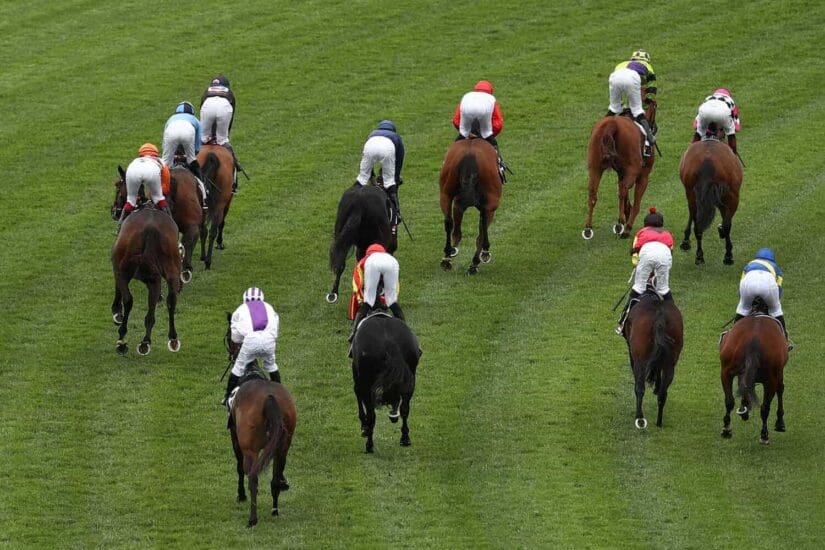
Picture: iStock


Sectional timing analysis is a neglected art in horse race punting.
Most modern-day punters must already wade through a torrent of information when they sit down to study a racecard. There are comparative form, class indexes, weights and merit-rating fluctuations, stable and jockey form, distance variations, last night’s dreams and other things to factor into calculations.
Adding more arcane numbers to the mix can seem like adding fog to further cloud a murky path.
Plus, us Average Joes often don’t have the time to spend on the arithmetic needed to interpret sectional times. Or are we just being lazy?
The small band of professional bettors who can invest time in the process do reckon that race-time data gives them a vital edge in the market.
The role of timing in racing is nothing new, of course. Aficionados have been peering at hand-held stopwatches at early-morning training gallops for centuries. And official race times have been printed in form guides for years – in tiny point-size, buried amid a galaxy of other stats and, frankly, not the most scrutinised data on the page.
Some authoritative players, such as the folk at Sporting Post, have long emphasised timing, though.
In the UK, punter Phil Bull made a fortune after introducing his Timeform system in 1948, when codified timing rankings weren’t any sort of a thing in the game.
South African racing’s attitude to this issue is likely to get a shake-up with news that operator Race Coast has clinched a deal with international firm Total Performance Data (TPD) to provide real-time GPS tracking of galloping horses, delivering highly accurate sectional (or fractional) timing and performance data (like stride metrics) at its four racecourses, Hollywoodbets Kenilworth, Durbanville, Greyville and Scottsville.
Electronic info and attendant TV graphics will also enable more efficient in-running betting platforms – with blindingly fast odds updates and the like.
This is all likely to be live and operational later this year.
The GMax System used by TPD at 160 venues around the world involves a GPS tracker chip in each horse’s saddlecloth relaying info to trackside receivers around the course.
The key elements of the system are 200m fractional times leading up to the winning post – 800m, 600m, 400m, 200m – in terms of the field as a whole and of individual runners.
A punter can identify horses who’ve done better than their finishing positions might suggest, so they might be underestimated in the betting next time out. For example, a horse that’s done well in coming from the back in a slowly run race could show improvement in a subsequent race that is run to suit him or her.
Conversely, after a fast early pace, a horse that wins with an apparent sharp “turn of foot” from off the pace as the front runners implode, may well be flattered by the result.
The new tech clearly won’t be instantly game-changing from a form study point of view, but it will provide quicker, more comprehensive and more accurate data delivery. Punters will still have to know how to read a race to make full use of the info.
However, it does add something to the toolbox of dedicated bettors.
In an online discussion on the subject in the UK’s Racing Forum, one professional punter stated: “I hope sectionals don’t become so well-known because the fewer punters taking advantage of sectionals, the bigger the edge.”