Workers are demanding a salary increase of 74%.
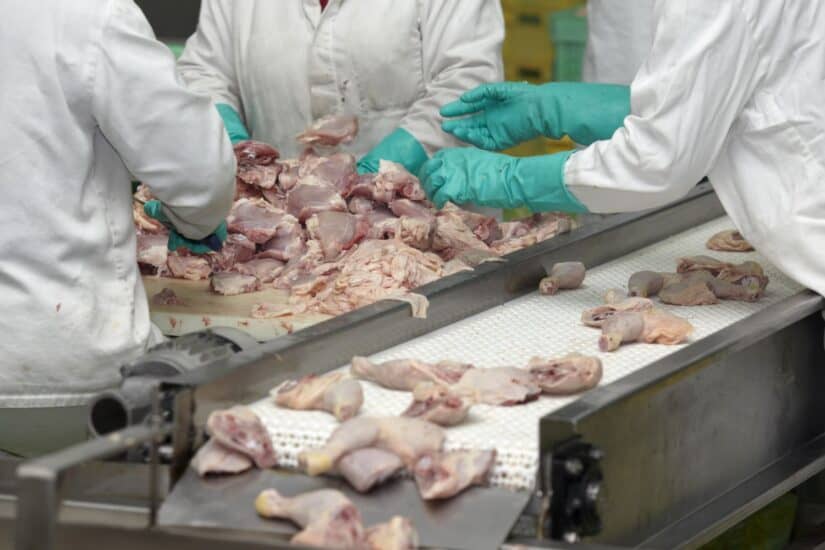
For illustrative purposes. Picture: iStock


Astral Foods, the largest integrated poultry producer in South Africa, is standing firm on implementing the ‘no work, no pay’ principle as some employees at its Festive Chicken factory in Olifantsfontein, Gauteng, continue to strike, with employees from some farms under the group joining in.
In an interview with The Citizen, Astral Foods CEO Gary Arnold said the group is still recovering from the severe losses it suffered due to load shedding, adding that it could not provide employees with the demanded increase of more than 74%, while some employees are demanding more than a 100% increase. Load shedding pushed the group into its first-ever annual financial loss in 2023.
Festive is a chicken brand under Astral Foods. Workers from the brand, represented by the Simunye Workers’ Forum (SWF), are demanding a salary increase to R13 500 from R6 500 (the lowest earned).
Unregistered labour union fight for Festive workers
Arnold said some employees at the Olifantsfontein factory have returned to work, while some continue to protest. The strike has been going on for over two weeks now, led by SWF.
He highlighted that while the two labour unions representing most workers remain satisfied with employment conditions, SWF, an unregistered labour organisation and movement, is the only one dissatisfied.
Under South Africa’s Labour Relations Act (LRA) No. 66 of 1995, workers do not need to be a registered trade union to participate in or launch a strike, provided they meet the core legal requirements for a protected strike.
Arnold said the workers aligned with SWF approached the CCMA for a salary dispute and were issued a certificate of non-resolution for a strike dispute.
Could the Festive strike be unlawful?
Arnold added that the workers on strike were not issued with a picketing certificate. “They were issued a strike certificate by the CCMA; however, they were not issued with a picketing rules because they are not a registered trade union. So the employees participating in the strike have been doing so under the Public Gatherings Act.”
A section of the Labour Relations Act states that the commissioner conciliating a dispute under section 64 must attempt to secure an agreement between the parties on picketing rules. If there is no agreement, the commissioner must determine picketing rules. Section 65 of the LRA does not limit the right to strike when no picketing rules exist.
However, according to law firm Cliffe Dekker Hofmeyr (CDH), the CCMA amended the Rules for the Conduct of Proceedings Before the CCMA in 2023. The rules are structured across several core parts that govern how labour disputes are referred, processed and resolved under the LRA.
“The new CCMA rule, Rule 13(1A), now clarifies this connection between a commissioner’s responsibilities in conciliating relevant disputes that could result in strike action if a certificate is issued,” said CDH. The law firm was not commenting on the Festive Chicken strike, but on the amendments to the rules.
“If a dispute relates to section 64 of the Act [LRA], picketing rules must be established before a certificate of non-resolution is issued, unless a party provides a signed picketing rules agreement, as required by section 69(6A) of the Act.
“The CCMA rule indicates that in terms of striking and lock-out disputes under section 64 of the LRA, a certificate can only be issued once picketing rules are established. However, does this mean that if there are no picketing rules established before the issuing of a certificate, the strike is unlawful?”
Engaging with unhappy employees
Arnold said Astral Foods was informed that several employees from farms have joined the strike, aligned with the same demands being made by the SWF.
“There are one or two farms associated with Festive that some employees have decided to join in sympathy with the group that is striking. We have engaged with the employees, we respect the right that employees have to go on strike, and we will always engage with them through appropriate channels.”
He, however, raised concern that some employees not participating in the strike have been intimidated by those on strike. Criminal cases have been opened against members who displayed misconduct during the strike. These charges relate to assault, arson, breaking of private property and public violence.
Operations continue at the Festive Chicken factory in Olifantsfontein without the employees on strike. Arnold said production was down at the start of the strike; however, it is starting to pick up as some workers return to work.
Demands are unaffordable
He said the minimum salary increase being demanded is over 74%, which the group cannot afford.
“While we understand the increase in the cost of living in the country, the burden of high fuel prices, and rising unemployment, one single company unfortunately cannot fight all these challenges on its own.
“And I do not think there is any company in South Africa that can afford, when it does comply with market-related remuneration, a 74% increase.”
Arnold noted that Festive implements annual salary increases in March and September; recently, the company has settled for above-inflation increases.
“The trade unions recognised by the company do not support the industrial action taking place currently. They are not involved in this dispute in any way. They have been helping get some of their workers back to work, as some stopped coming in because they were being intimidated.”
Dangers of a prolonged strike
Arnold added that even though a small number of employees are on strike, the implications can be severe.
“We are a business engaged in poultry production, so we work with livestock and live pit mills. Now if those chickens that are on the farm don’t go to the processing plant at the right weight and age, it’s very dangerous.”
This is similar to what happened when load shedding hit the country. The chickens stayed on the farms longer, and they got bigger, costing Astral Foods a lot of money.
He said the company’s focus right now is getting chicken out to suppliers. However, during days like these, the biggest challenge is processing. The company has added additional resources, such as overtime shifts, to help meet demand.
The Olifantsfontein plant experienced an ammonia leak on Thursday, 12 November 2026, which led to several employees being hospitalised. Arnold said the leak happened during maintenance and that most employees have been discharged from the hospital.
“The striking employees saw this, and to some degree have now been used as a bit of a scapegoat to drive an agenda.” Arnold also denied claims of unhygienic conditions or safety concerns at the plant, adding that these issues had not formed part of the disputes tabled at the CCMA.
Responsibility to shareholders
Arnold said he has noted some remarks that the company makes enough profit to give employees increases.
“It has been three years since load shedding, and we are currently in the recovery stage.” He added that profits must be reinvested in the company and shared among shareholders, as the company has a responsibility to issue dividends.
Astral Foods will release its 2026 financial results on Monday, 23 November.
The Citizen reached out to SWF for a comment on Monday morning. It will be added once received.