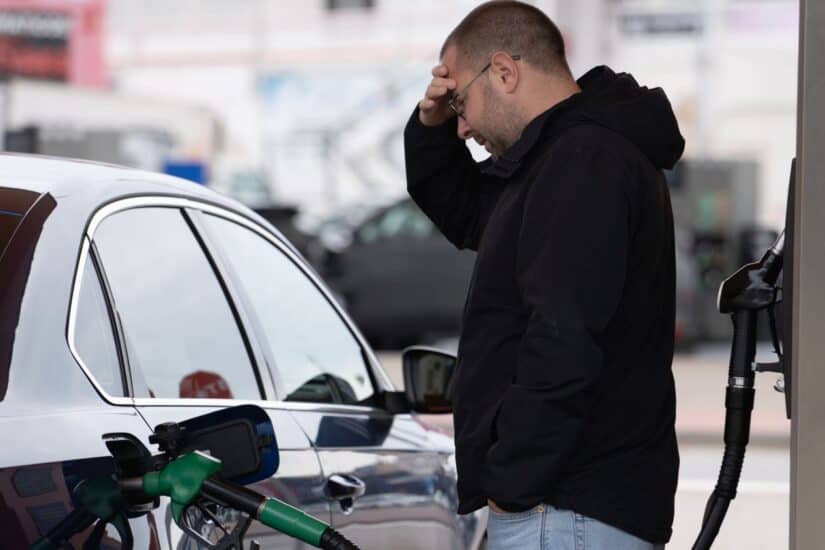
High fuel prices are forcing South Africans to cut discretionary travel.
Picture: iStock


South African motorists have been biting the bullet for more than eight months, since petrol prices surged in March 2026, with a series of steep increases, despite some temporary month-to-month relief, culminating in the October increase that pushed petrol and diesel prices well over the R30 mark per litre.
While motorists will technically pay one cent less per litre of petrol in November, the figure masks the extent of the underlying fuel-price pressure. Without the government’s temporary R1.50 per litre reduction in the general fuel levy, motorists would have faced another substantial petrol increase this month.
The November petrol price cut is largely due to the reduction of the fuel levy by R1.50 per litre for petrol and R3 per litre for diesel from 4 November until 1 December 2026.
The intervention has provided meaningful protection against what could otherwise have been another steep increase, but it remains temporary and does not resolve the underlying international price pressures facing South Africa.
South Africans to still feel petrol price pain
CEO of Debt Rescue, Neil Roets, noted that international oil prices are still around US$110 per barrel, and the rand, global supply disruptions and geopolitical uncertainty continue to expose South Africa to further increases.
Therefore, people remain exposed to renewed upward pressure when the levy relief is reduced in December, particularly if international oil and refined-product prices remain elevated.
“The apparent relief at the pumps does not mean the underlying cost pressures have disappeared,” he said.
“The underlying affordability problem remains. Households have absorbed months of higher transport, food, electricity and financing costs, which means even where a particular expense temporarily stabilises, the cumulative pressure on disposable income does not disappear.
“The reality is that, at the end of what has been one of the most difficult years yet for South Africans, many households are likely to find discretionary festive-season travel increasingly difficult to justify or afford over the festive season holiday break. In fact, this, along with ever-increasing debt pressure, leaves little room for discretionary travel anymore.”
South Africans to cut travelling
Roets said high fuel prices are forcing South Africans to cut discretionary travel.
Referencing data from Discovery Insure, he said motorists have already cut back on discretionary travel, and this has resulted in a 30% decline in long-distance trips, showing that motorists are buying smaller amounts of fuel and cutting longer discretionary journeys, while essential everyday driving has remained comparatively resilient.
“Discovery findings demonstrate the limit of household fuel-saving strategies: discretionary trips can be reduced, but commuting to work, school runs, and essential errands cannot simply be eliminated.
“These findings align with those from SpendTrend26, which identified fuel as an essential expense linked to daily routines, such as commuting to work, school runs, and errands.”
November petrol decrease will not do anything
Roets said South Africans have absorbed substantial cumulative fuel-price increases since March, despite temporary reductions in some months, and that this damage to their budgets, along with relentless cost-of-living increases such as electricity and water tariffs and consistently high interest rates, means the harm has already been done.
“For financially stretched households, the cumulative response can include drawing down savings, increasing reliance on credit and taking on additional short-term debt simply to meet monthly expenses,” he added.
“A marginal reduction at the pumps does not put money back into household savings or reverse the debt accumulated to keep up with everyday expenses. Increasingly, consumers are using different forms of credit to bridge the gap between income and essential monthly expenses.
“As more income is diverted towards transport and fuel, households will be forced to cut back elsewhere, and this will likely place further pressure on budgets set aside for groceries and food as well as electricity, savings, insurance and debt repayments. That is how a temporary affordability shortfall can develop into sustained financial distress.”
How sustained cost increases erode household financial resilience
Roets highlighted that the bigger risk is the cumulative deterioration in household financial resilience, meaning more and more people are entering sustained financial distress and falling further into debt.
“From a household debt perspective, what concerns me most is that this increasingly looks less like a temporary cost-of-living shock and more like an entrenched affordability problem.
“If you are consistently unable to meet your financial obligations, it is likely you have reached this stage, and my advice to you is to seek professional assistance from a registered debt counsellor before your debt becomes unmanageable.”