
Due to a packaging mix-up, some Yaz Plus packs left women unprotected and caused unplanned pregnancies.
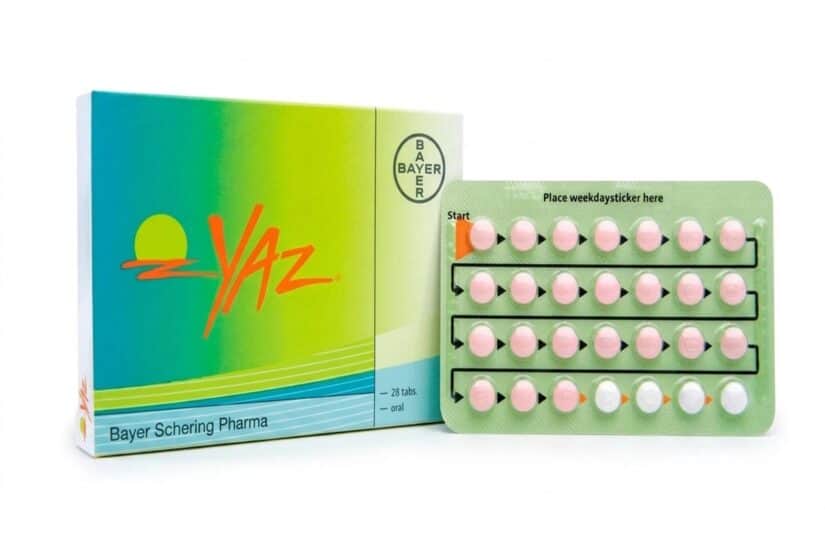
Women who used the affected batch may have received less contraceptive protection than expected. Picture: Bayer and iStock


A potential class action is being investigated after a packaging error allegedly resulted in unintended pregnancies among women who used the faulty contraceptive pills between 2023 and 2025.
Instead of containing 24 active hormone tablets followed by four placebo tablets, the affected packs contained 24 placebo tablets and only four active tablets.
Almost 500 women contacted the law firm about potential legal action after they were made aware of the faulty pills, according to LHL Attorneys senior associate Demi Buckley.
She said that the firm was aware of the recall in 2024 but only decided to escalate it to legal action once a couple of calls started trickling in to their office. The amounts began to increase after the potential lawsuit gained media attention.
Buckley stressed that the figure refers to enquiries, not confirmed claimants or women who have formally joined court proceedings.
Speaking to The Citizen, she stressed that the case is still under investigation and the court hasn’t yet given the green light for it to proceed as an official class action.
Recall exposed packaging error
The issue came to light on 18 November 2024, when Bayer South Africa, in consultation with the South African Health Products Regulatory Authority (Sahpra), recalled batch WEW96J of Yaz Plus oral contraceptives.
Saphra said it distributed the batch on 9 and 24 November 2023, and it remained in circulation for about a year before the recall.
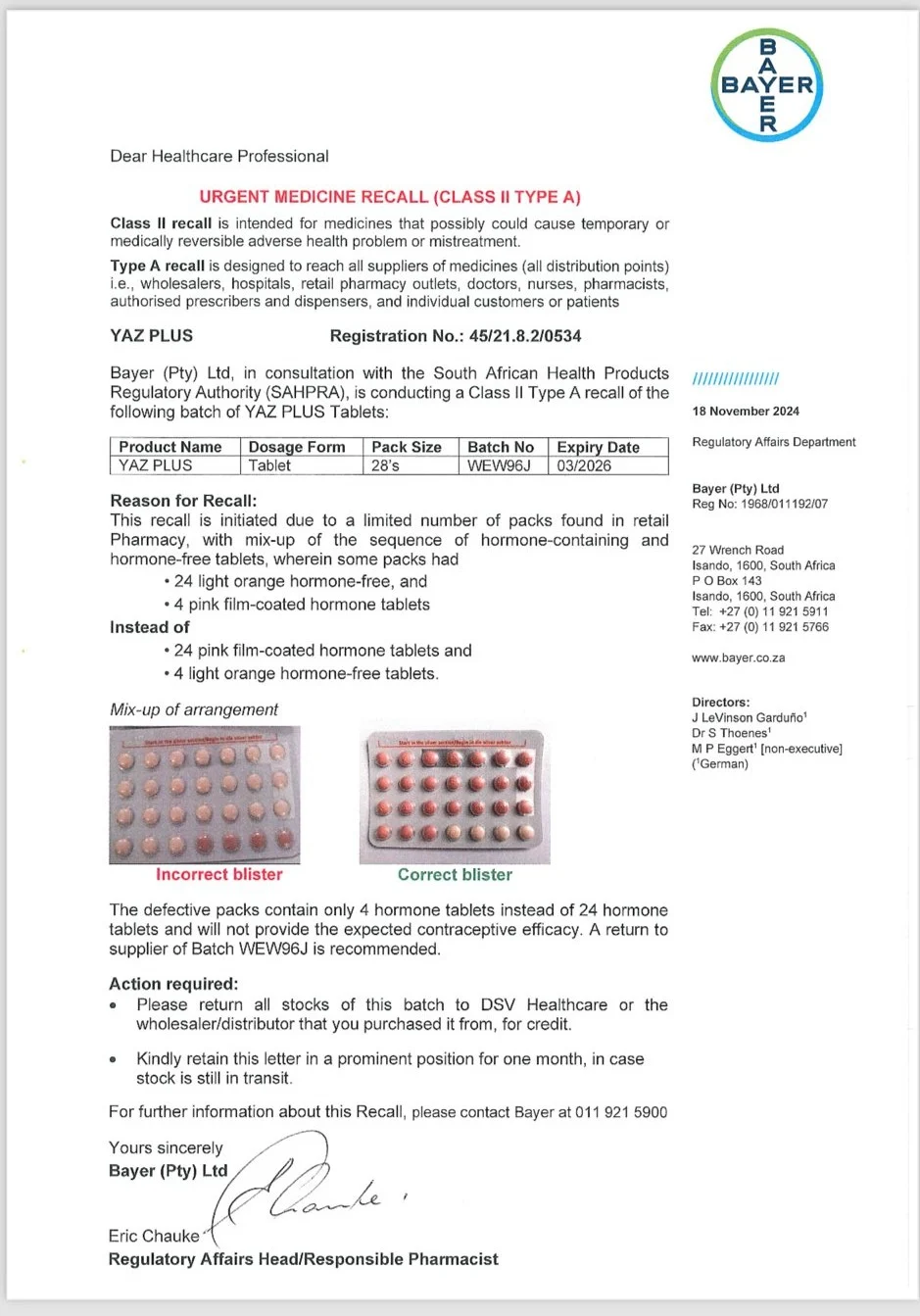
“The official recall strengthens our case as there is no dispute that certain blister packs had a reversed pill sequence due to a mispackaging error,” Buckley said.
She added that the error “would have affected ‘the efficacy of the affected batch'” and that there was concrete information about the period during which the batch remained in circulation.
The recall does not, however, automatically establish liability in every individual case.
Buckley said that claimants would still have to prove their cases on a balance of probabilities and provide the evidence needed to establish that Bayer (Pty) Ltd was legally responsible for the harm suffered.
However, Buckley said the packaging error was materially different from ordinary missed-pill use because the affected packs contained only four active hormone tablets. She described the product as “effectively rendering the product almost useless, from a contraceptive perspective”.
Lawyers still gathering evidence
The enquiries received so far have come from several provinces. Buckley said there were no clear patterns by province, age group, or pregnancy timing at this stage.
“For women that enquire, we assist them with gathering the relevant medical and pharmacy records to determine whether they may have a potential claim,” Buckley said.
The law firm added that it has tracked concrete timeline data on how long the affected batch was circulating in pharmacies.
Green light from the court
The next major step will be a certification application. In South Africa, a court must first authorise litigation to proceed as a class action before the case can continue on that basis.
The firm said it would file the application after completing its investigation and gathering supporting evidence.
It aims to file the application during 2027.
“At this stage we are investigating the matter as a potential class action, as it is the appropriate mechanism for the present circumstances where multiple women have been similarly affected by the same cause,” Buckley said.
She said that class actions let affected women pool their resources and pursue their claims together, potentially saving time and money compared with taking individual cases to court.
But if the court decides a class action isn’t the right path, Buckley said the firm could still help women pursue separate claims.
Records to build the case
LHL Attorneys is collecting prescription records, pharmacy dispensing records, medical records, and personal documents.
These may include the birth certificate of a child born after an unintended pregnancy, as well as medical records where the pregnancy ended in a miscarriage, stillbirth, or termination.
“There are several factors and individual circumstances that need to be taken into consideration,” Buckley said.
“The specific circumstances surrounding an individual’s claim will determine whether their claim can be linked to the defective batch on a balance of probabilities.”
The law firm said it was not ready to share its exact legal strategy, but consumer protection laws will play a central role.
Potential damages vary
According to the firm, compensation will depend on the real-world impact of each affected pregnancy.
The lawsuit could cover medical bills for pregnancy and delivery, lost income from unpaid maternity leave, and compensation for the emotional trauma of miscarriages or terminations.
If a woman gave birth, the claim could even cover child-rearing expenses such as nappies, food, and schooling until the child turns 18 or becomes financially independent.
However, the firm hasn’t set an exact payout amount, if any, yet.