Ria Ledwaba says fewer people are visiting museums, including the Ditsong Museums and Freedom Park.
Picture: iStock


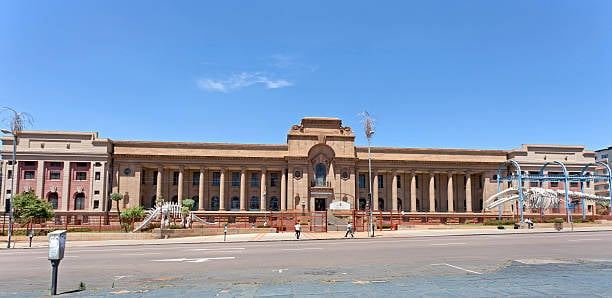
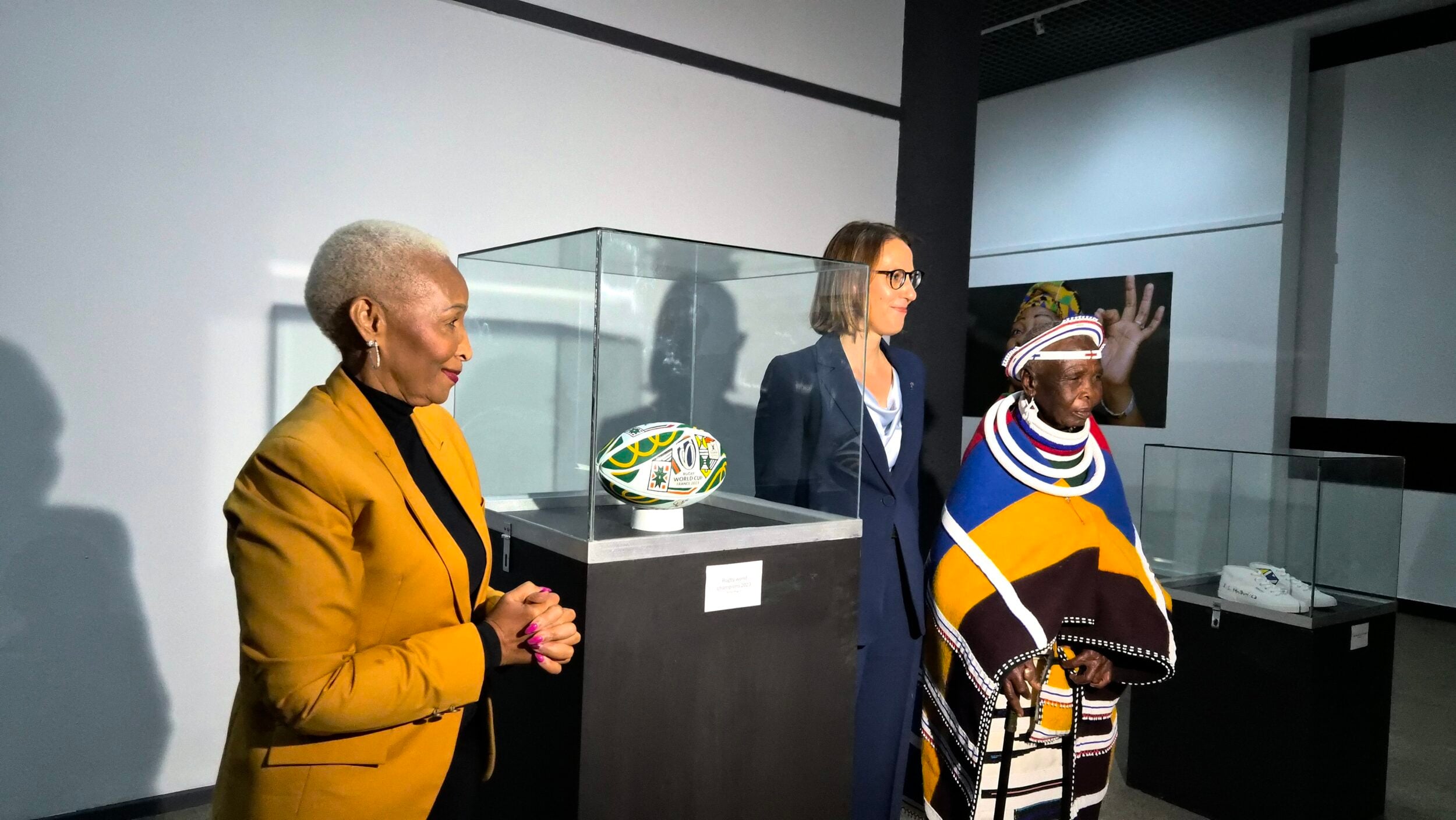
The National Arts Council (NAC) partnered with the South African Gallery of Legends (Sagol) to host its very first Legendary Women in the Arts exhibition at the Ditsong Museums of South Africa, where Esther Mnguni’s brightly coloured netball was officially unveiled in honour of the Springboks’ 2023 victory in France.
During the speeches, speakers emphasised that the event should have received more attention and that people should take time to see the work exhibited in museums to become more connected to their roots and South African artistic expression.
The Heritage of South Africa
Ria Ledwaba, the chairperson of the Sagol, said fewer people are visiting museums.
“There are less people visiting this museum; I don’t know whether it is about the marketing,” she said.
Ledwaba explained that these exhibitions would typically be hosted at Freedom Park in Pretoria.
“I know a lot of people have never been to Freedom Park, which is the heritage of South Africa,” Ledwaba said, suggesting that many other local museums are not getting the recognition they deserve.
Celebrating artistically excellent local female artists
Despite this, an exclusive audience ranging from students to artists of all ages gathered on 27 August 2026, the night before the exhibition opened to the public, to celebrate the launch as a commemoration of the 70th anniversary of the 1956 Women’s March to the Union Buildings.
During her speech, Ledwaba said artists should not have to die before the world appreciates and sees their work.
“They should be given their flowers while they are still alive,” she emphasised.
The event paid tribute to women whose artistic excellence, cultural leadership and activism have made an enduring contribution to South Africa’s democracy, cultural heritage and creative landscape.
The ball unveiling
The exhibit acknowledged some of South Africa’s most celebrated women, visual artists, sculptors and storytellers, including Dr Esther Mahlangu, Dr Noria Mabasa, Helen Sebedi, Gogo Esther Mnguni, Rebecca Matibe and Dr Gcina Mhlope, who were all present and beautifully dressed in their traditional attire.
Ria Ledwaba and Australia’s Ambassador Tegan Brink unveiled Gogo Esther Mnguni’s (90) colourful ‘The Netball Art Ball’, designed with unique patterns and bright colours that catch the eye, as she stood beside them.
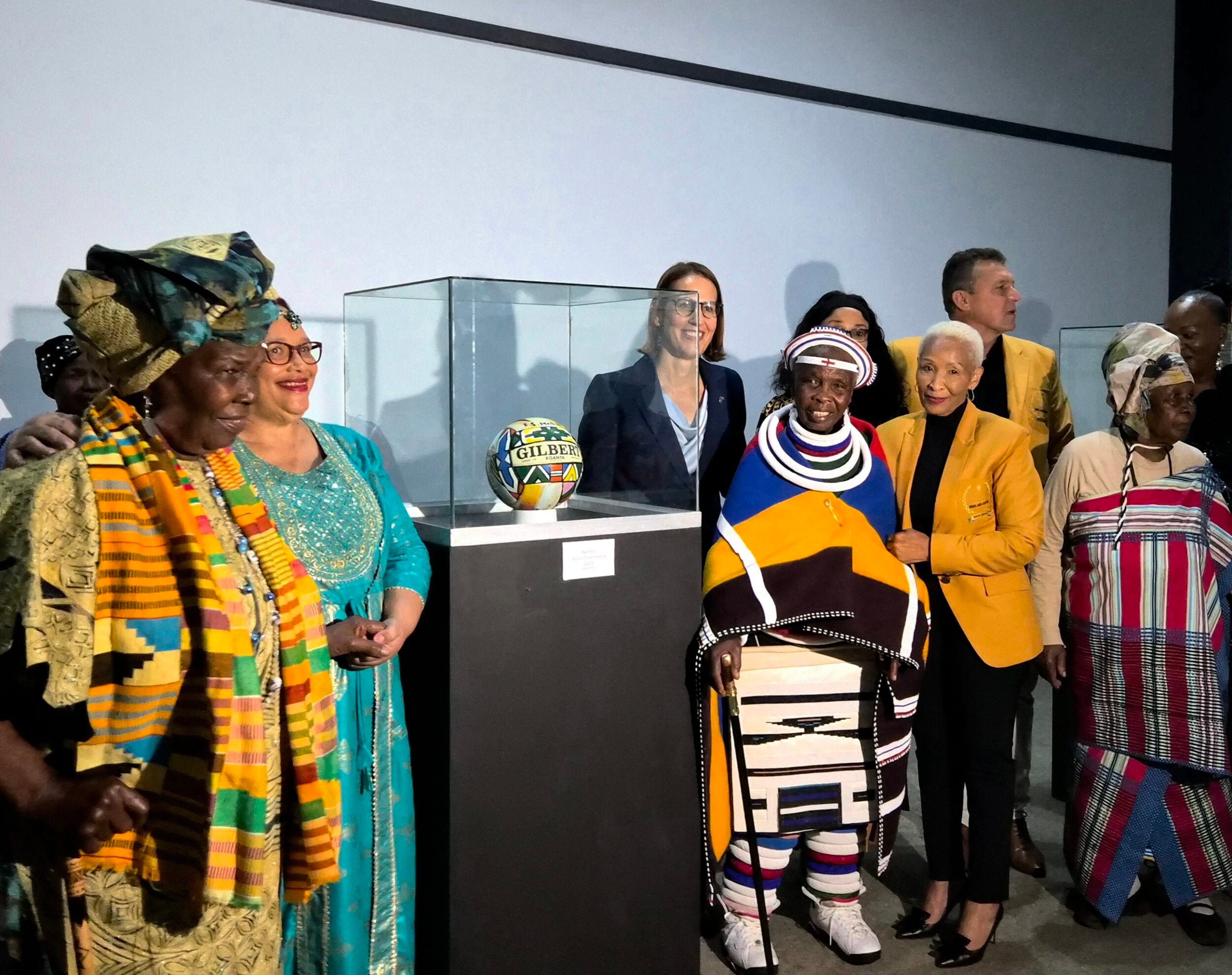
The programme director described it as “game-used”, an art ball after Gogo has “given it her touch.”
He emphasised that all the players have also touched the ball during the 2023 Netball World Cup final hosted in Cape Town.
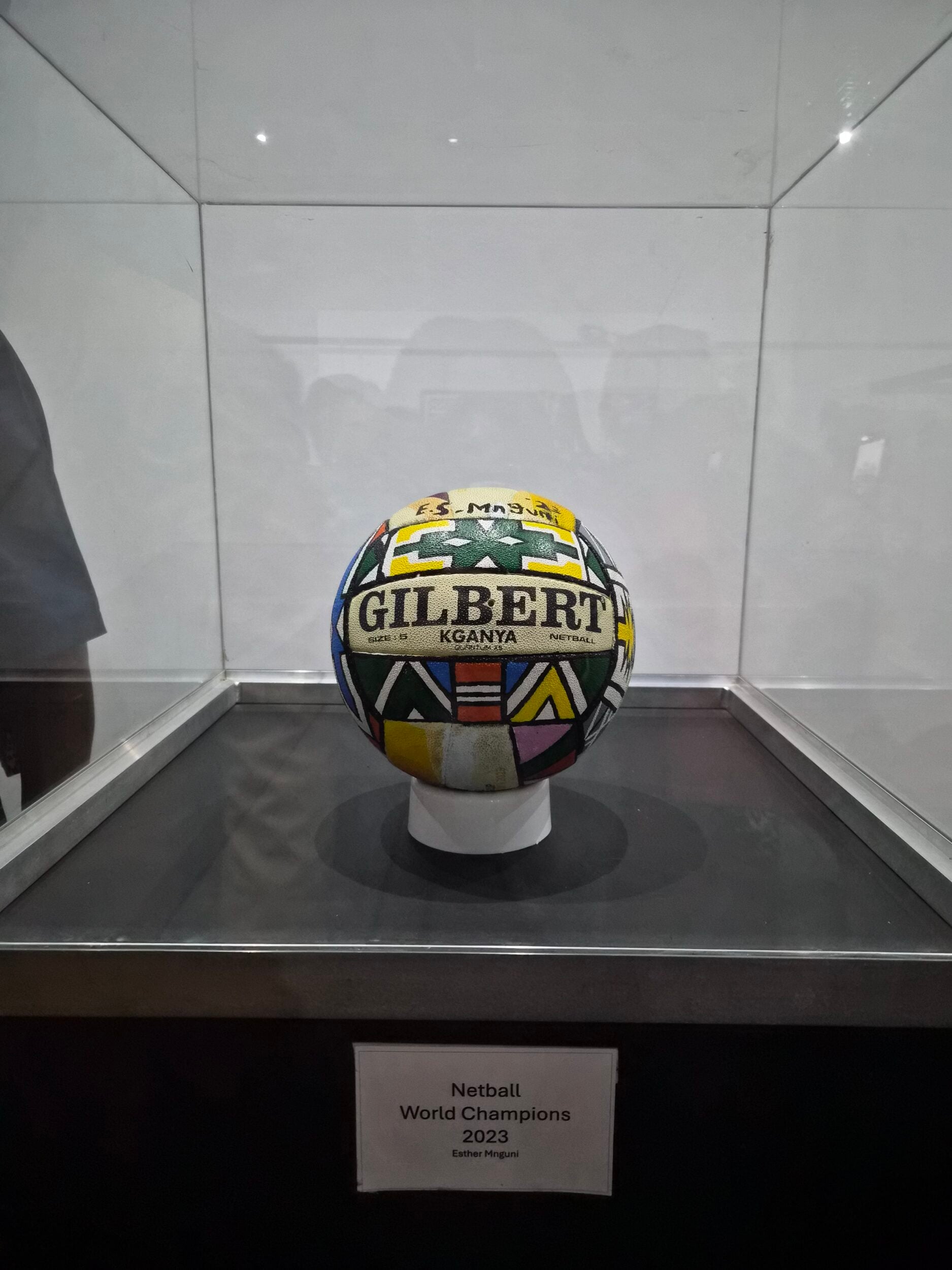
Esther Mnguni also designed the rugby ball in Paris during the 2023 Rugby World Cup final, using the same isiNdebele culturally inspired pattern seen in most of her artwork.
Unique Chicken-feather painting technique
Mnguni is one of the few remaining artists who use chicken feathers as a painting technique.
Her work, along with other artists, will be on display at Ditsong Museums for the next six months.
Ledwaba said that the event marked a special occasion, celebrating and acknowledging the six legendary women who created their work in rural areas, often in workshops without electricity, resources or support.
Support often comes too late
“And then later on, we see the support coming, we see government coming on board, sports and culture, national arts and heritage councils also coming on board and giving them a space to showcase their work” she remarked.
Ledwaba reiterated that support often comes too late and emphasised the importance of culturally engaging with local artists and residents in communities to stay informed about their roots and continue artistic expression.
Ledwaba explained that if Sagol did not have a memorandum of understanding with Ditsong Museum, this would have never happened.
“We came here, we have seen what they have been doing as beautiful creations by South Africans for the public to come see and visit,”
‘Ditsong’ means culture
She described the exhibition as a place for young artists and creatives to connect with female artists and engage with techniques and wisdom that can be passed down for generations to come.
“I mean the sculpture that is done by Helen Sebedi, it’s amazing; that is why I am saying it is not just for them, but for future generations too,” she said.
“We really appreciate that we see this in Ditsong; maybe you are the first person to see these two balls,” she suggested.
She reiterated that it is a privilege for everyone to see these balls.
“I am sure it will be displayed in Australia next year, but you will be saying, we saw those balls there at Ditsong before everyone else,” she expressed.
Paving the way for future artists
To support young artists, Ria Ledwaba said her foundation wants to leave a legacy across all ages.
She has already launched a programme in which nine young boys and girls, considered academic champions in their province, will be selected to represent the country on the world stage at the Olympics.
“Then we will be taking young people from grade 7, this year, and give them a 100% scholarship so that they are able to get into the best performing schools in the country,” she passionately announced.
“We already have an agreement with those schools that they will take them in 2027,” Ledwaba added.
She explained that she intends to grow her initiatives and allow these celebrated women to give back to their communities through art programmes where young artists can learn from the legendary South African artists themselves.
“That is why I want the legends to identify those young people in their community, those that are interested, and then set aside funding to be able to support them,” she concluded.