Demand after their rollout in 2027 will determine whether these models will be considered for local production.
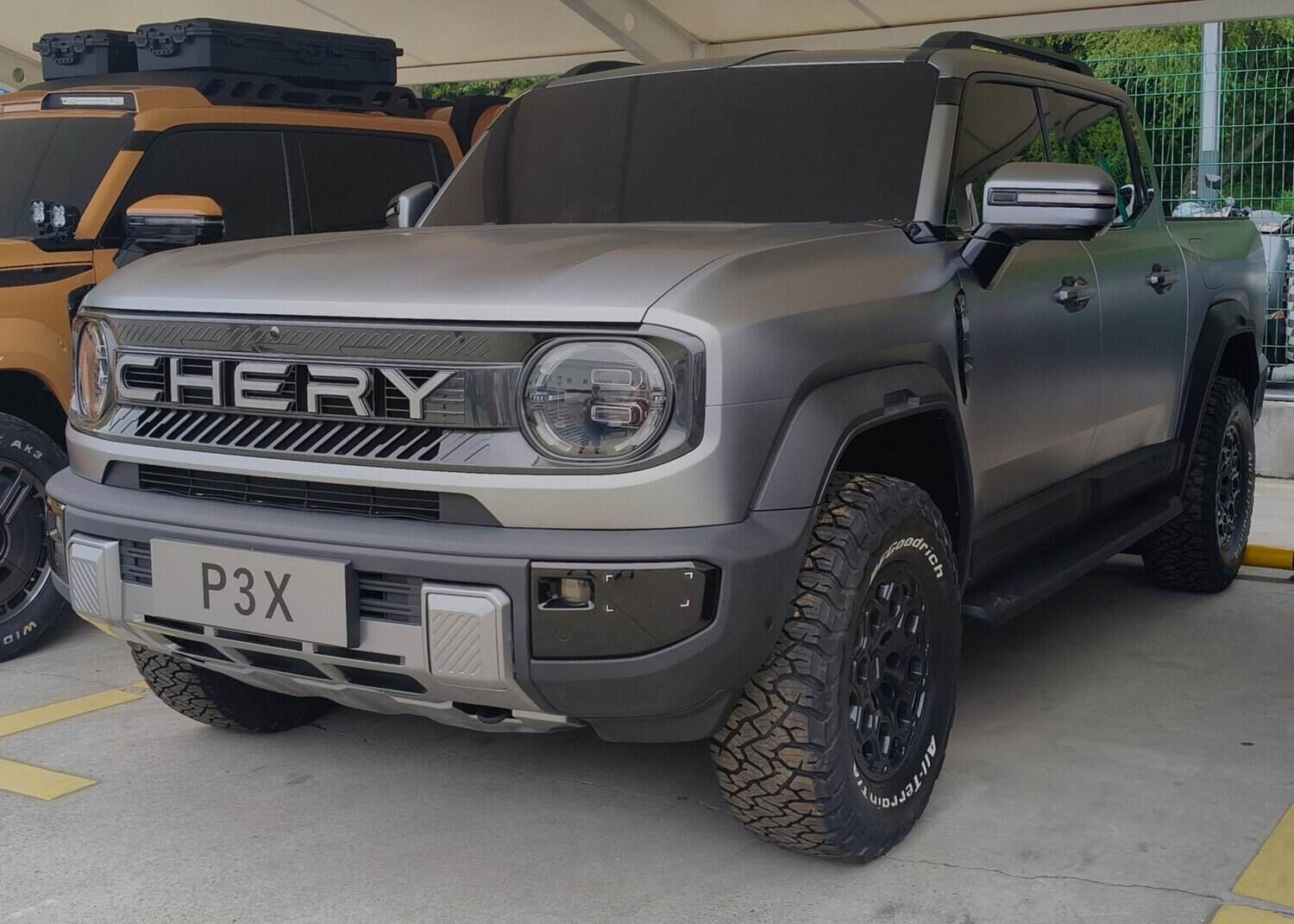
The almost production-ready KP31 earlier this year at Chery’s test track outside its factory in Wuhu. Picture: Charl Bosch


Chery confirmed that their first South Africa-bound bakkie, as well as sub brand Jetour’s F700 bakkie, won’t be produced at its newly-acquired Rosslyn assembly plant just yet.
Chery last week officially opening the Rosslyn factory outside Pretoria after buying it from Nissan, who manufactured vehicles there for over six decades.
It has been widely expected that Chery will produce a bakkie at the facility. Nissan had a long history of building bakkies of the factory, with the Navara being the last model to roll off the assembly line before the takeover.
Chery bakkie arrives in 2027
Chery’s KP31 bakkie is set to be introduced locally in the first quarter of 2027, with the Jetour bakkie expected to follow. The KP31 is called the Himla in China and has recently adopted the Stockman moniker in Australia. It will have yet another name in South Africa.
“We will start to introduce different pick-ups in South Africa from next year and definitely consider producing the most popular model here,” said Zhang Guibing, executive vice-president of Chery Automobile.
“We can’t build all of them here. But when one model is big enough in terms of numbers, it will make local manufacturing more economical.”
Chery has confirmed that the Tiggo Cross, Jaecoo J5 and Jetour T1 and T2 will be built in Rosslyn. While the Chery and Jetour are options, it will all depend on how well they sell once introduced locally.
Flexible assembly lines
Once approved, setting up shop for bakkie production should be straight forward according to Peter Matkin, Chery’s executive director: programme management, vehicle concepts.
“We have fully automated plants in China. They have mixed assembly lines which produces a certain mix of sedans and SUVs. A logistics centre receives all the parts, where they are kitted to follow the vehicle. This means the operated does not have to go looking for parts and parts don’t get mixed up,” says Matkin.
“Getting to the right volume with a single model is not so easy. That is why you need to more flexible.
“When the volume starts to ramp up you can mix and match. This is the whole logic about the mixed assembly line. Then you adjust the mix and build whatever the customer demand.”
The first locally produced models from Chery and its sub brands are expected in the second half of next year. 2028 is set to be the first full year of production in Rosslyn.