With the end of the much loved 4.5 D-4D V8 engine, the Land Cruiser 79 now pairs the torquier 2.8 GD-6 with a manual transmission on its stalwart workhorse.
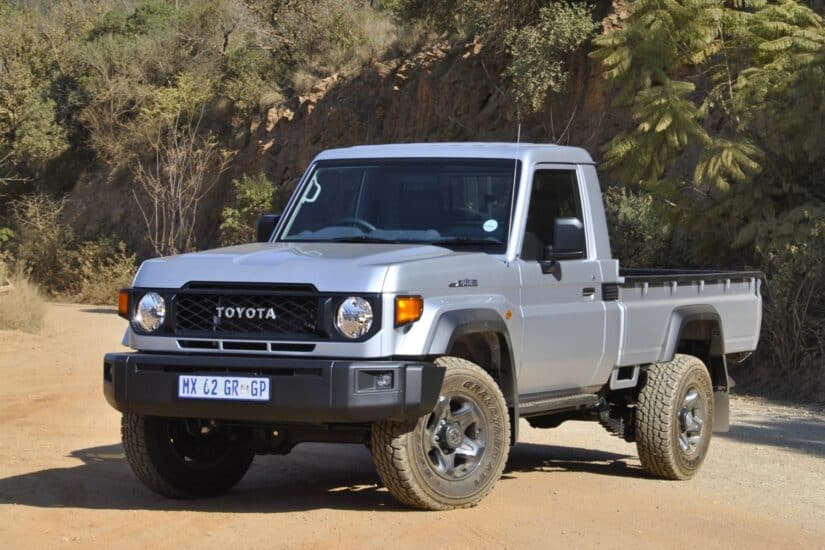
Driving a single cab Land Cruiser 70-series rates as an experience rarer than most supercars. Picture: Charl Bosch


Unveiled in January 1951, this year marks the Toyota Land Cruiser’s 75th anniversary as one of the longest lasting nameplates in the brand’s history.
Still a sales hit
In addition, this year also sees the 70-series add another year to its now 42-year lifespan as the longest produced generation of any Land Cruiser.
Updated aesthetically, inside and underneath its bonnet since its debut, the workhorse of the Land Cruiser family has remained fundamentally unchanged since 1984, bar the inclusion of the factory produced double cab in 2012 following the popularity of aftermarket builds in both South Africa and Australia.
While order books Down Under re-opened earlier this year after being closed for over 12 months due to demand outstripping supply, South Africa has been unaffected as the first half of the year netted sales of 2 796 units.
What’s more, combined 70-series figures, which include the 76 station wagon, the order-only 78 Troop Carrier or Troopy and 79 single and double cab, haven’t dipped below 400 units – the lowest being 406 in March and the highest, 541 in January.
Automatic….
Making this even more remarkable was the belief that the removal of the single-turbo 4.5 D-4D V8 turbodiesel engine would result in sales taking a dive.
Its end announced two years ago, its replacement, the 2.8 GD-6, has proved the naysayers wrong as, apart from being the first four-cylinder engine ever offered in a South African-spec Land Cruiser, it also came with a market-first automatic gearbox.
… and now manual GD-6
Not stopping there, though, the end of said year heralded the availability of the manual gearbox on the GD-6, but only on select versions of the 76 and 79.
With the V8 officially no more, a further range update in March this year finally brought the manual as an option below the automatic on the double cab.
Rarer than most supercars
It, therefore, opened the door to sample what is likely to become a vehicle rarer to drive than most supercars, a manual single-cab Land Cruiser 79.
While the double cab automatic showed its prowess at Gerotek two years ago with Road Test Editor Mark Jones clocking it faster from 0-100km/h, 60-100km/h and from 80-120km/h that the manual V8 tested the year before, there was to be no against-the-clock testing for the manual single cab.
Resplendent in the same Satin Silver Metallic paint as the double cab automatic, the single cab represents what can be seen as the Land Cruiser 79 in its purest form.
Don’t need these…
As such, some of the most basic modern-day furnishings are left out, namely electric mirrors, a trip computer, fuel consumption readout, LED headlights or keyless entry.
At the same time, the single cab is devoid of any connectively functions as it gets a conventional LCD audio system with two-speakers, Bluetooth, USB, no Apple CarPlay and Android Auto.
Its seats trimmed in fabric and the slider controls for the effective and powerful ventilation system still prevalent, the single cab is something different not only from the double cab, but from any other two-door bakkie on-sale today.
Priced at an eye-opening R984 000, the test unit arrived not long after its Nampo showing, with a mere 115km on its odometer.
Better looking
Last updated in 2023, the changes to the 79’s front facia make for a considerably more rugged appearance than the previous “smiley face” look.
Borrowing styling elements from the 40 and 50-series models, the single cab 79 somehow appears more purposeful and aggressive than the double cab.
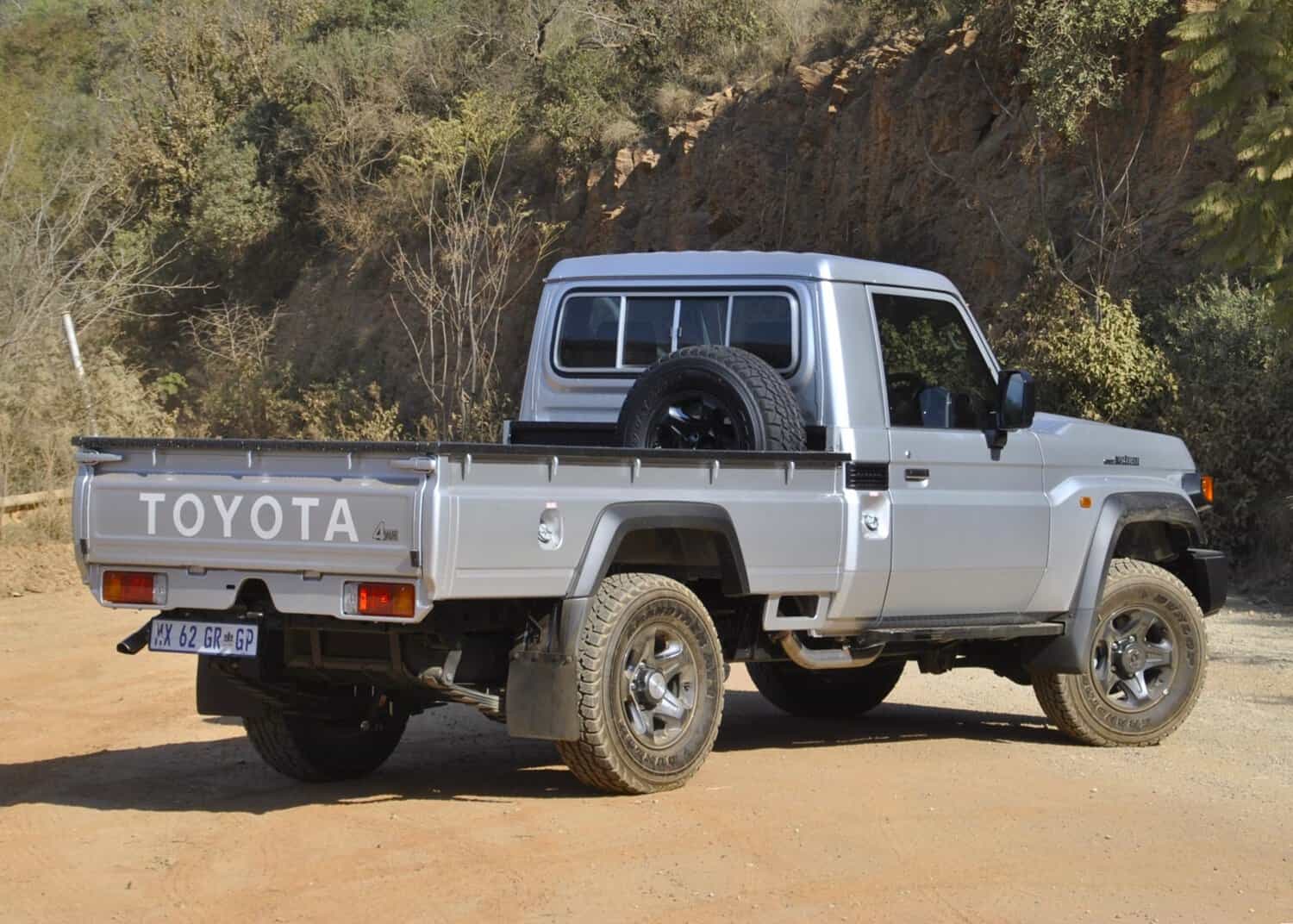
In addition to its striking paint option, the single cab comes standard with LED fog lamps, 16-inch alloy wheels wrapped in all-terrain tyres, chrome door handles, chrome block letter TOYOTA badge on its mesh pattern grille, black mirror caps and side-steps.
Although missing the steel partition behind the sliding rear window, there is little to distract from the single cab being a better visual presentation of what a Land Cruiser 70-series should be.
Back to the past inside
As before, opening the 70-series’ door is akin to stepping back in time as no massive fundamental changes have taken place since 1984.
Aside from the removal of the Cressida-era ashtrays from the door cards, the various switchgear has remained the same, as has the starting method of inserting a simple metal key into an ignition barrel.
Conversely, it also retains the same wood effect trim on the steering wheel as the double cab, but nothing else in the way of feeling plush for its near R1 million price tag.
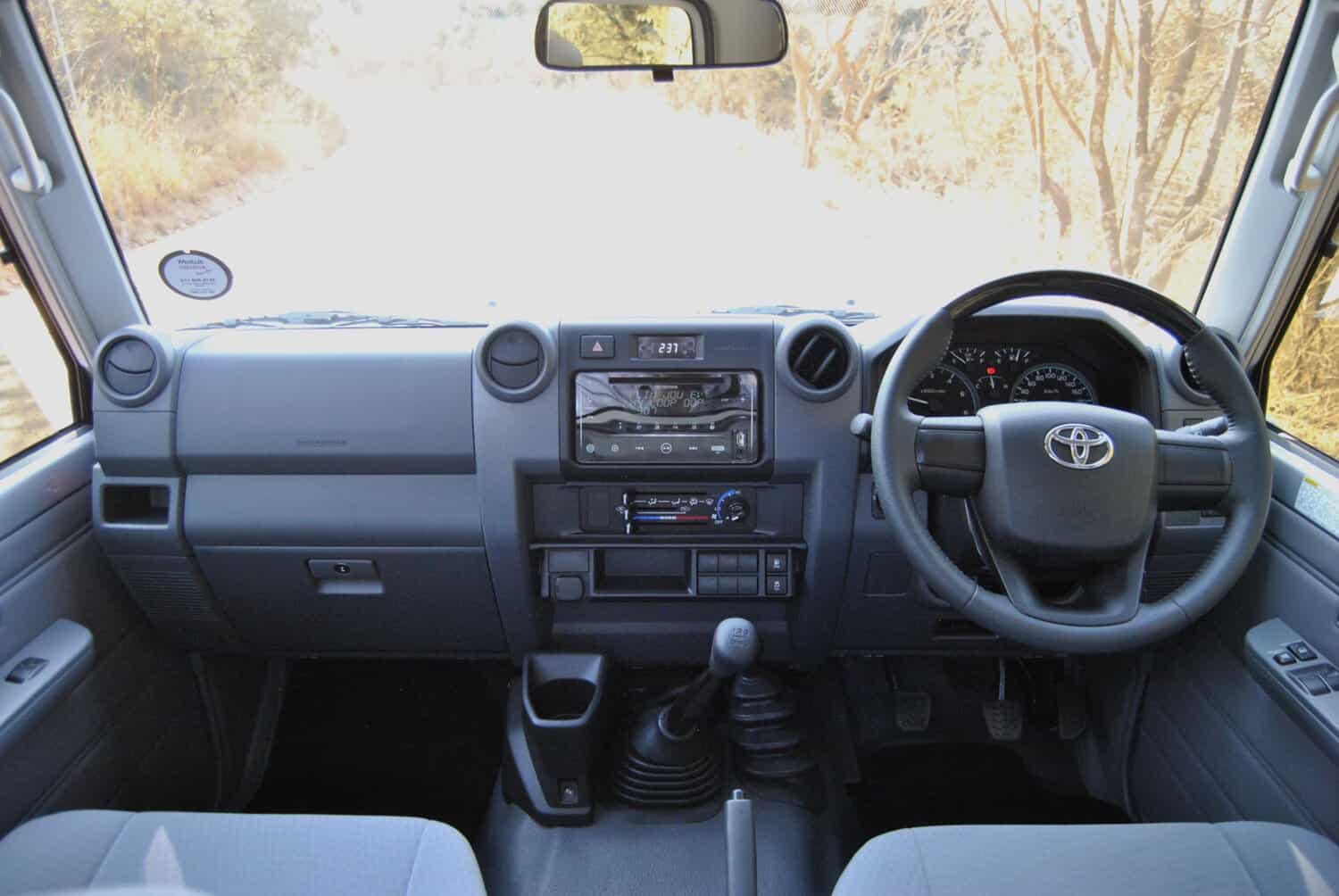
Unsurprisingly, interior trim is made up of hard and shiny plastics that feel durable and rugged, but flimsy in the case of the lidded storage area on the centre console.
Ergonomics present little in the way of troubles. However, while the sparseness of the interior can be expected, the seats are still mounted too high and cannot be dropped all the way to the floor for taller occupants.
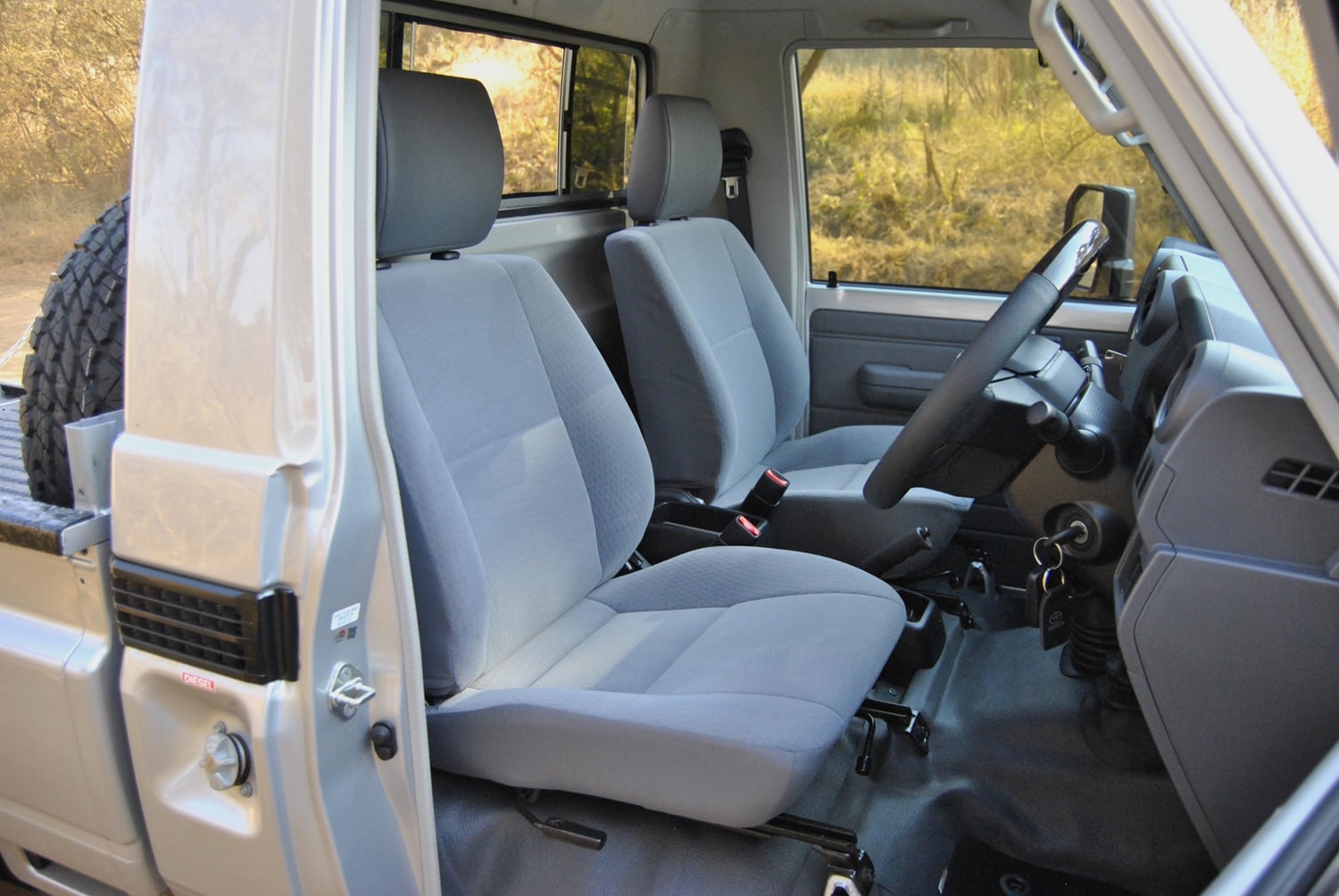
What’s more, the cabin still feels cramped and, while the lack of an infotainment display wasn’t missed, the absence of a traditional volume initially proved irksome.
However, since the radio ultimately only emitted static, with very short periods of reception, regardless of the position of the aerial, opting for the USB provided entertainment throughout the weeklong stay.
As with the double cab, the single cab 79 gets dual front airbags, traction and stability control, electric windows and central locking, but not the PWR function supposedly designed for towing.
Made to work
The forte of any single cab is its loading ability, and while the addition of a rear bumper would have been handy to remove larger items from the loadbin without needing to open the tailgate, the Land Cruiser still has a handy payload of 1 180kg.
While no details surrounding its loadbox dimensions are known, towing capacity for a braked trailer is rated at 3 500kg, with the claimed ground clearance being 235mm.
On the move
Tipping the scales at 2 120kg, 175kg less than the double cab auto, the single cab Land Cruiser 79’s main drawing card, its powertrain, provided the biggest surprise compared not only the double cab, but also the conservatively tuned V8.
While the decision to opt for a five-speed rather than a six-speed manual means shorter ratios, the setup works significantly better than in the V8.
As with the automatic, the GD-6 develops 150kW, but with torque reduced from 500Nm to 450Nm, possibly as a result of limitations related to the transmission.
Combined with its weight loss, the single cab feels significantly livelier and more much responsive, even with more than usual engine and road noise intrusion.
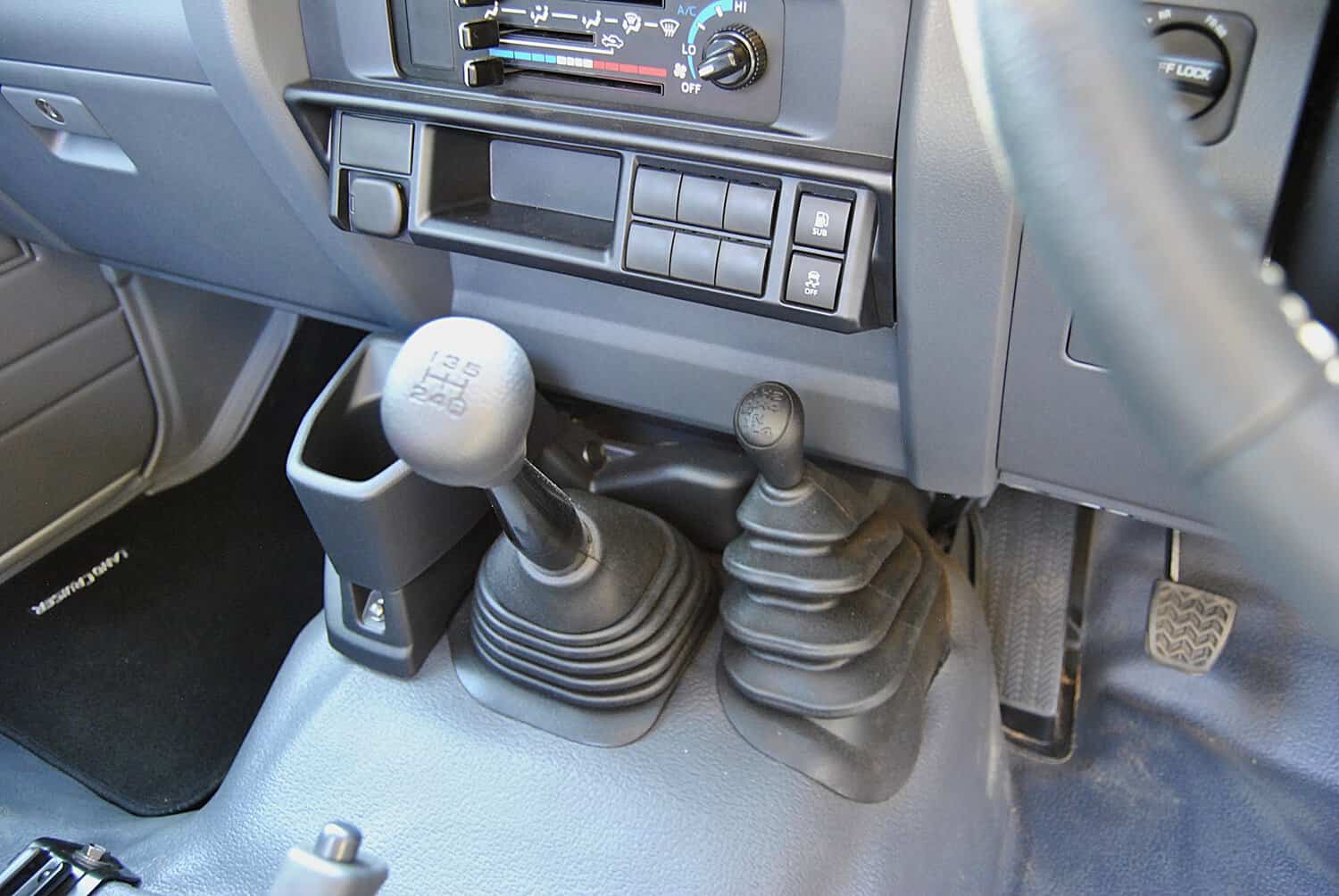
As noted with the V8, the long-through five-speed manual is not the slickest, but comes with a very light and easy to modulate clutch that makes the Hill Start Assist system almost questionable.
Unsurprisingly more engaging to drive than the automatic, even with its torque deficit, the single cab isn’t perfect on the move, as the ride is similarly firm and the steering heavy.
What’s more, the suspension makes for a bouncy ride with no load in the back, which made traversing an admittedly anything but challenging gravel route somewhat of a handful.
That being said, tyre pressure could have played a role as test vehicles are more often than not set up for tar instead of gravel.
Yet, imperfections and surface changes were dealt with in the easiest possible way without being noticeable.
The biggest need
More of handicap is the lack of not only the aforementioned fuel consumption gauge, but also a distance-to-empty reading the Australian model now has standard.
Compared to the double cab’s single 130-litre tank, the single cab 79’s dual range tanks accommodate 90 litres each – the second or reserve being activated by a button above the gear lever on the lower section of the dashboard.
While Toyota’s claim of 7.6L/100km can be seen as optimistic at best, a more reasonable estimation would be around the 9.5L/100km mark.
In addition to the low range transfer case still being selected by the “second gear lever”, which itself requires a bit of muscle, the single cab 79 still has front and rear locking differentials.
Conclusion
At its price tag, the almost flagship single cab Toyota Land Cruiser 79 is thoroughly expensive and well out of date considering what can be bought for the same price.
Undeniably capable and with a reputation that needs little proving, the single cab is a similar “want because I can” buy to the double cab no matter what.
Combined with an analogue feel as a result of the manual gearbox and lack of most modern features, the single cab 70-series is a proper throwback and, as mentioned, the most representative of what a Land Cruiser should be.