The initial range will comprise a single model offering a range of 302 km.
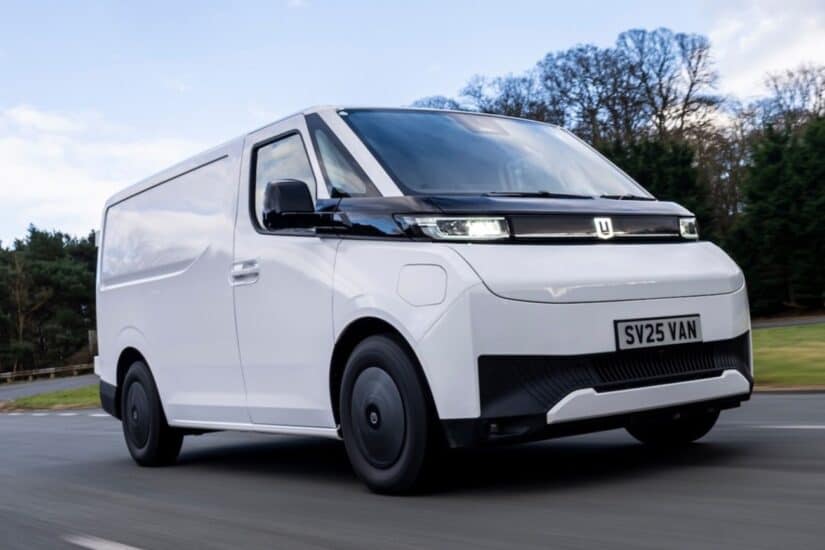
Initially, Farizon will only offer the entry point L1H1 variant in South Africa. Picture: Farizon UK


Having quietly detailed specification last month, Geely-owned electric commercial vehicle brand, Farizon, has revealed pricing of the SV van on its website.
Known in its home market as the Xingfuhao, the SV, which debuted two years ago, will initially only have a single derivative L1H1, with more set to follow.
Dimensions
Making use of a platform called GXA-M, the SV has the following dimensions:
- Length: 4 990 mm;
- Wheelbase: 3 100 mm;
- Height: 1 980 mm;
- Width: 1 980 mm
Farizon’s website claims a payload of 1 350 kg, a cargo volume of 6.95 m³ and tow rating of 2 000 kg.
Rest of the range
Arriving later, the L1H2 has an overall height of 2 180 mm, but a reduced payload of 1 230 kg. Its cargo capacity is, however, greater at 7.92 m³.
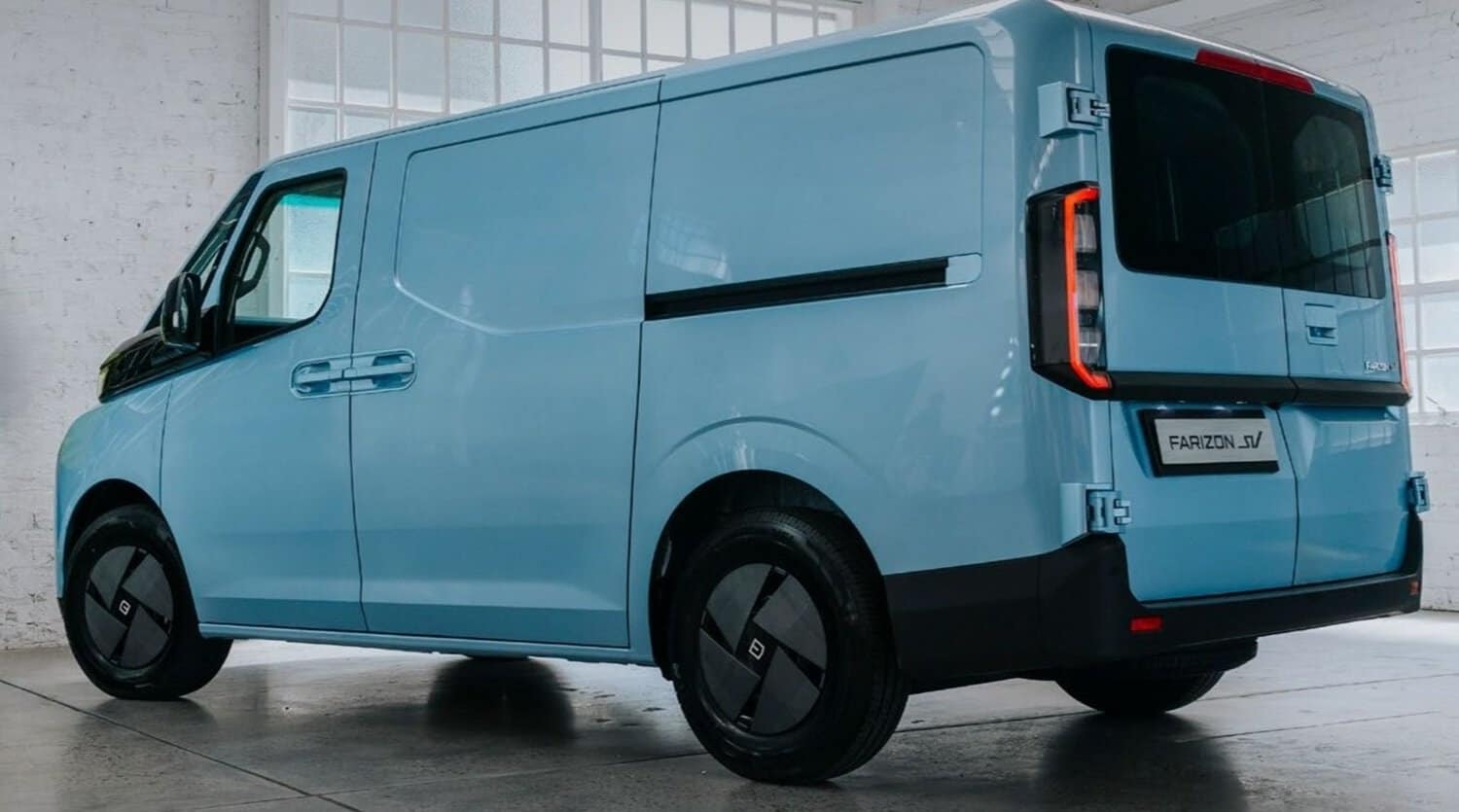
Next up, the long wheelbase or L2 variants come in L2H2 and L2H3 forms, with an overall length of 5 490 mm, wheelbase of 3 600 mm and respective heights of 2 180 mm and 2 500 mm.
For the L2H2, Farizon claims a payload of between 1 160 kg and 1 245 kg depending on the battery, and a cargo capacity of 9.39 m³.
The final variant in the range, the L3H3, has an overall length of 5 995 mm, a wheelbase of 3 850 mm and a payload rating between 1 035 kg and 1 045 kg depending on the battery. Its cargo capacity is 13.0 m³.
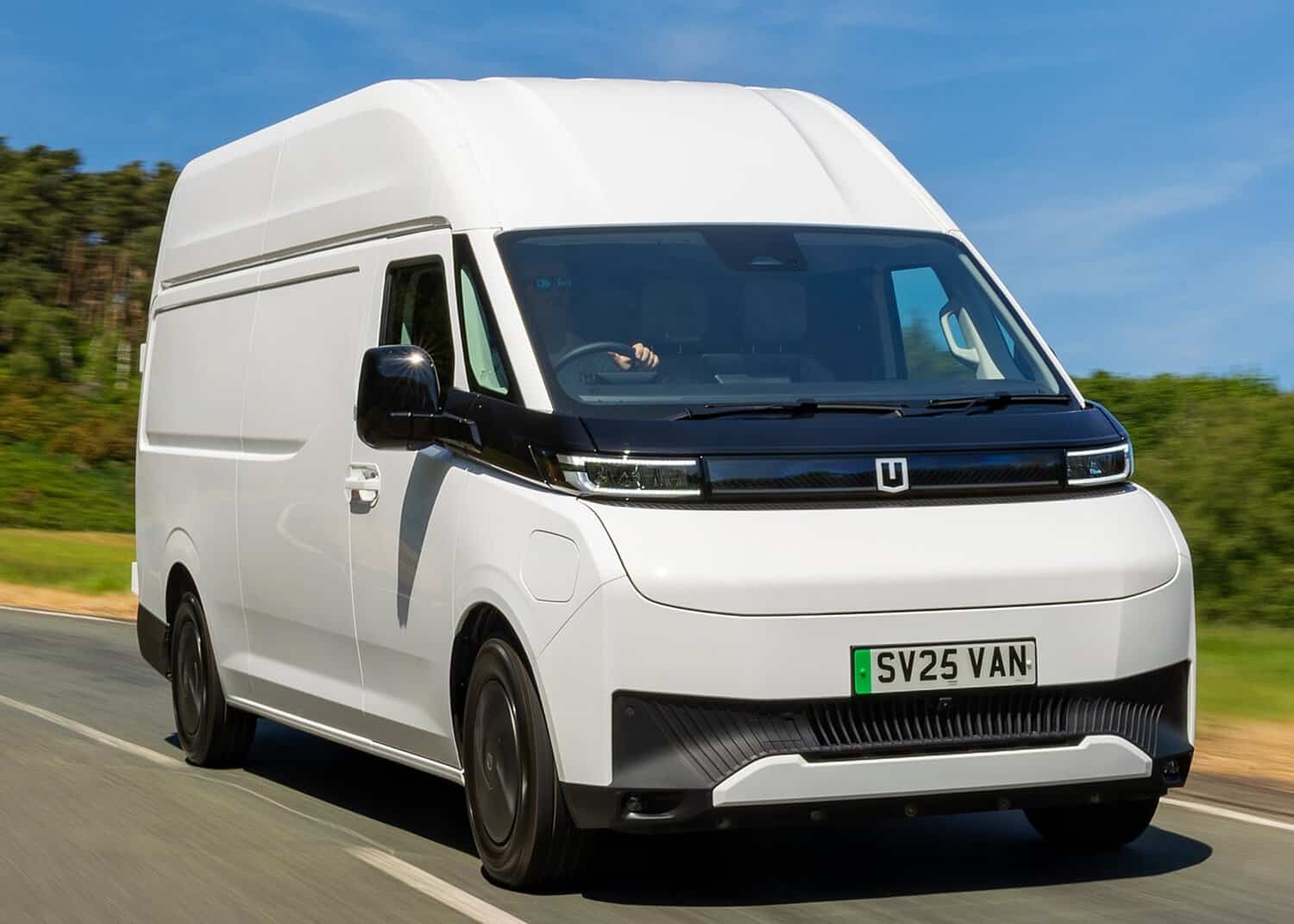
As standard, all variants have 180-degree opening dual barn-style rear doors, which can be adjusted to 270-degrees as an option.
Choice of power
Initially, the SV’s single variant will derive motivation from the smallest battery pack, a 67-kWh cell that develops 170kW//336Nm. A larger 83-kWh unit is expected later.
For the L1H2 and L2H3, the latter battery pack is the sole option, while L2H2 can be specified with either.
The L3H3, though, has the 83-kWh as standard, but has a 106-kWh as an option.
Unlike the 67-kWh battery, no power outputs of the latter pair are known. However, Farizon claims respective ranges of 377 km and 398 km.
For the its smallest option, the SV has a claimed range of 302 km and will do 135 km/h. Its DC charging support up to 120 kW will require a waiting time of 36 minutes.
By comparison, the 83-kWh supports fast charging up to 140 kW – needing the same 36 minute wait – while the 106-kWh can be charged up to 120 kW, which will necessitate a interval of 40 minutes.
Spec
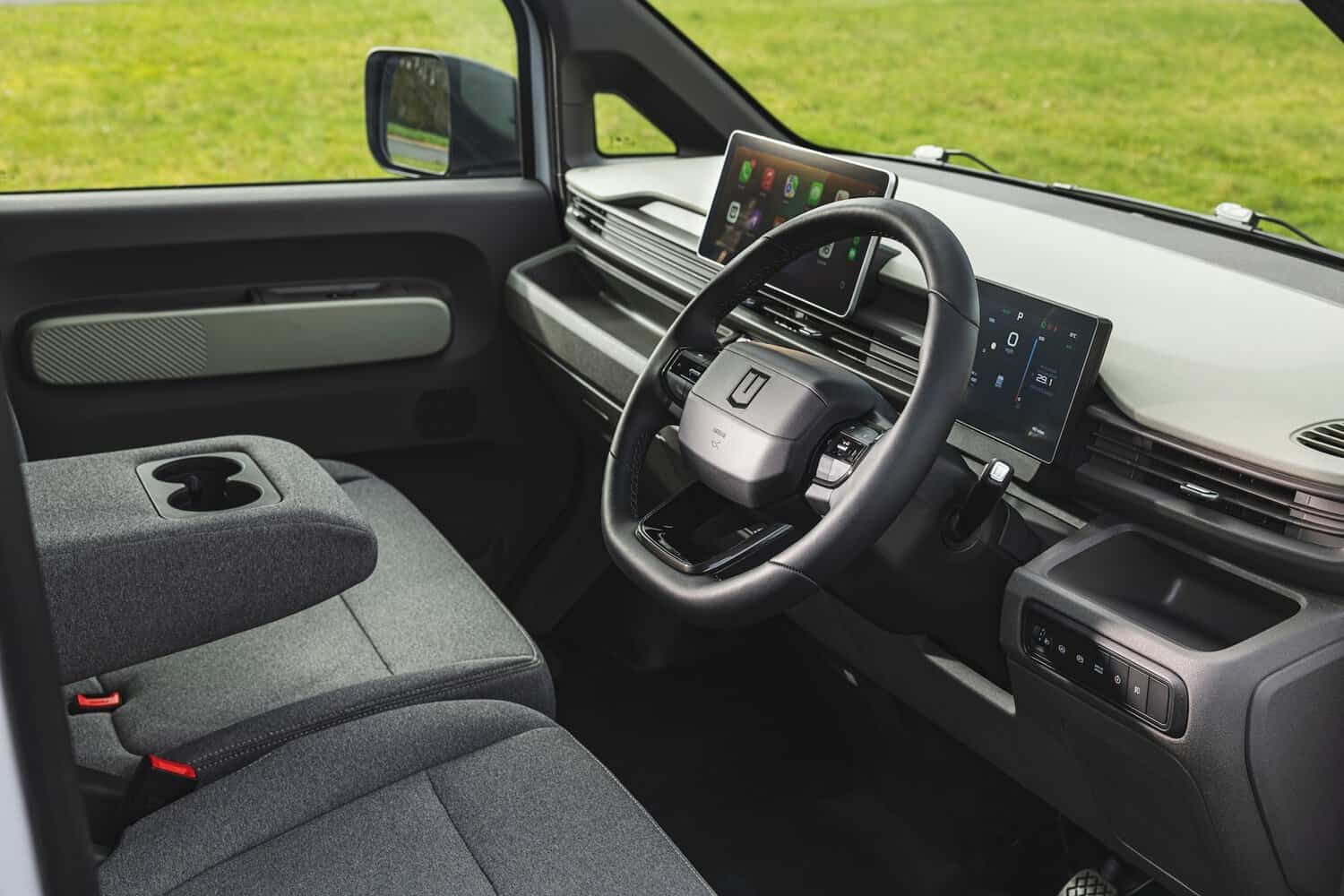
In terms of specification, the SV L1H1 has the following as standard:
- 16-inch steel wheels;
- LED daytime running lights;
- auto on/off LED headlights;
- rain sense wipers;
- electric and heated mirrors;
- imitation leather upholstery;
- electric windows;
- keyless entry;
- seven-inch digital instrument cluster;
- heated multi-function steering wheel;
- two-speaker sound system;
- heated and ventilated seats;
- 12.3-inch infotainment system;
- Apple CarPlay;
- dual USB ports
Taking care of safety and driver assistance is the following:
- front and rear parking sensors;
- surround-view camera system;
- tyre pressure monitor;
- traction control;
- Electronic Stability Program;
- Hill Hold Assist;
- Auto High Beam Assist
- Adaptive Cruise Control;
- Forward Collison Waring;
- Automatic Emergency Braking;
- Blind Spot Detection;
- Lane Keeping Assist;
- Traffic Sign Recognition;
- Driver Attention Alert;
- Door Opening Alert;
- Lane Change Assist;
- Rear Cross Traffic Alert;
- Payload Monitoring System
Colours
In total, the SV can be specified in one of six colours;
- Jade White;
- Ink Black;
- Porcelain Grey;
- Brocade Gold;
- Pale Blue;
- Bamboo Green
Price
Priced at R849 000, the Farizon SV L1H1’s price tag includes a four-year/200 000 km warranty and an eight-year/200 000 km battery warranty.