


Test unit's various accessories and apparent tyre pressures, didn't do it much favours throughout the seven-day testing period.
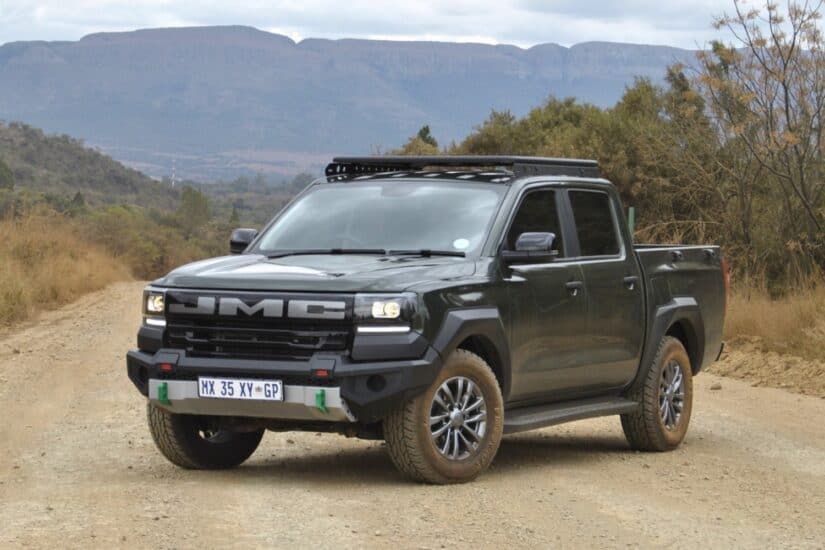
Until the arrival of the Grand Avenue, the Vigus is JMC’s flagship bakkie, and 4×4. Picture: Charl Bosch


JMC or Jiangling Motors Corporation’s return to South Africa at the beginning of this year currently comprises two models, the Vigus Pro and “normal” Vigus.
Arriving later this year, the Grand Avenue will become its flagship, while an off-road specific version, the Dadao, is projected for an “end-of-year” arrival as the brand’s version of the Ford Ranger Raptor.
From 4×2 to 4×4
Until then, the Vigus takes prominence with a line-up of three derivatives, of which the pair of two-wheel drive models arrived directly after each other for the weeklong test.
As if on queue, this quickly became a three-way affair as the manual 4×2, which was replaced by the rear-wheel drive automatic, was swapped for the range-topping 4×4.
Only offered with the eight-speed automatic ‘box, the four-wheel drive Vigus is little changed from its two-wheel drive sibling, as JMC hasn’t fitted any type of 4×4 reference in the form of decals or logos to the exterior.
Instead, the test unit arrived with what can be described as indirect differentiating, namely, a series of JMC-approved off-road accessories available as options.
Resplendent in an even more off-road inciting colour called Mica Green, the Vigus 4×4’s stay proved somewhat frustrating, though, in a manner that could have been avoided.
Macho’ed up
As mentioned with the pair of two-wheel drive models, little is to fault the Vigus’ styling derived from a combination of the Chevrolet Silverado, Ford Ranger and from some angles, previous versions of the Isuzu D-Max.
While the lack of LED headlights remains a mystery, given the 4×4 being the range’s showpiece, the basic aesthetic is imposing and something a bit different from recent Chinese bakkies at this end of the market.
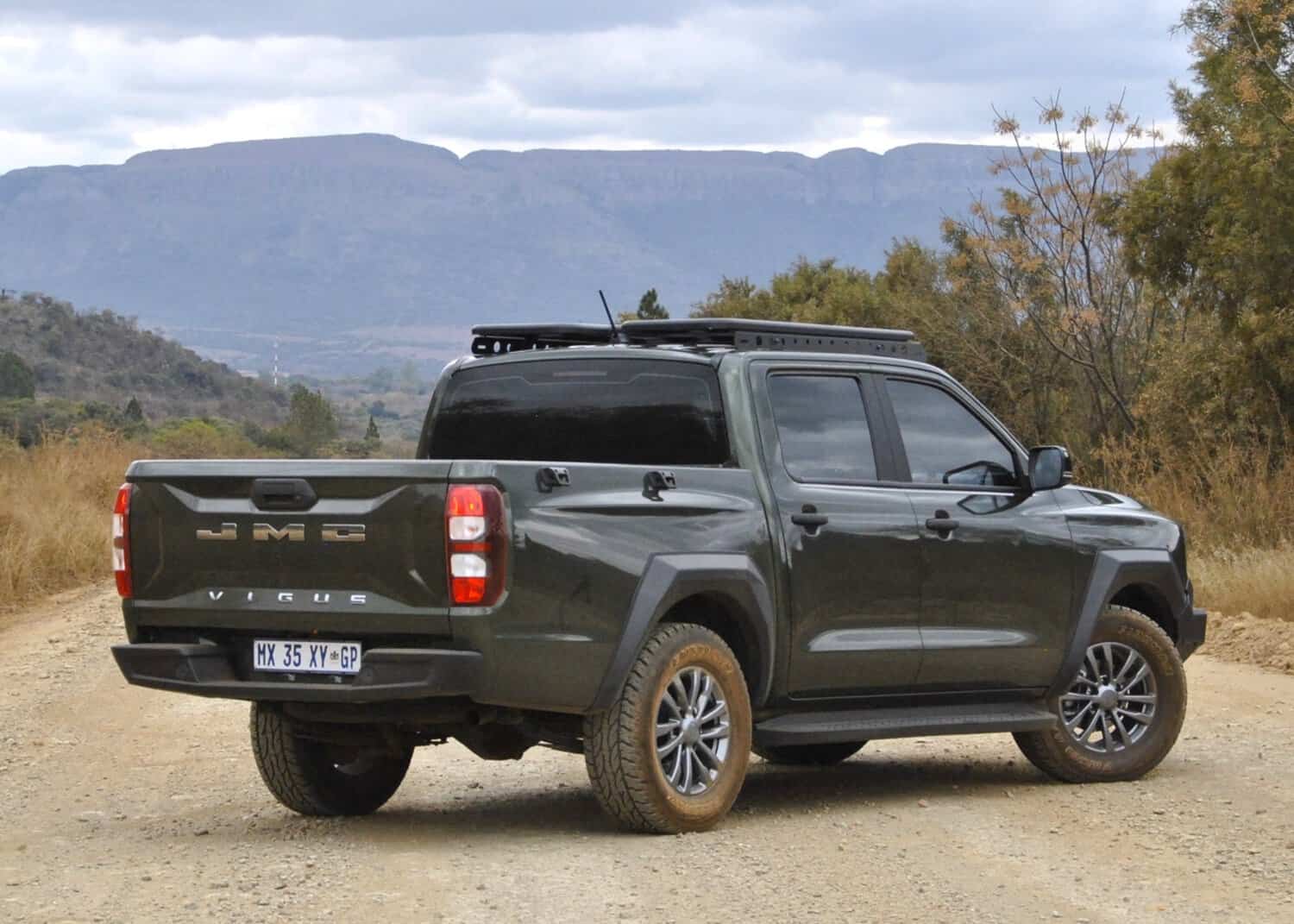
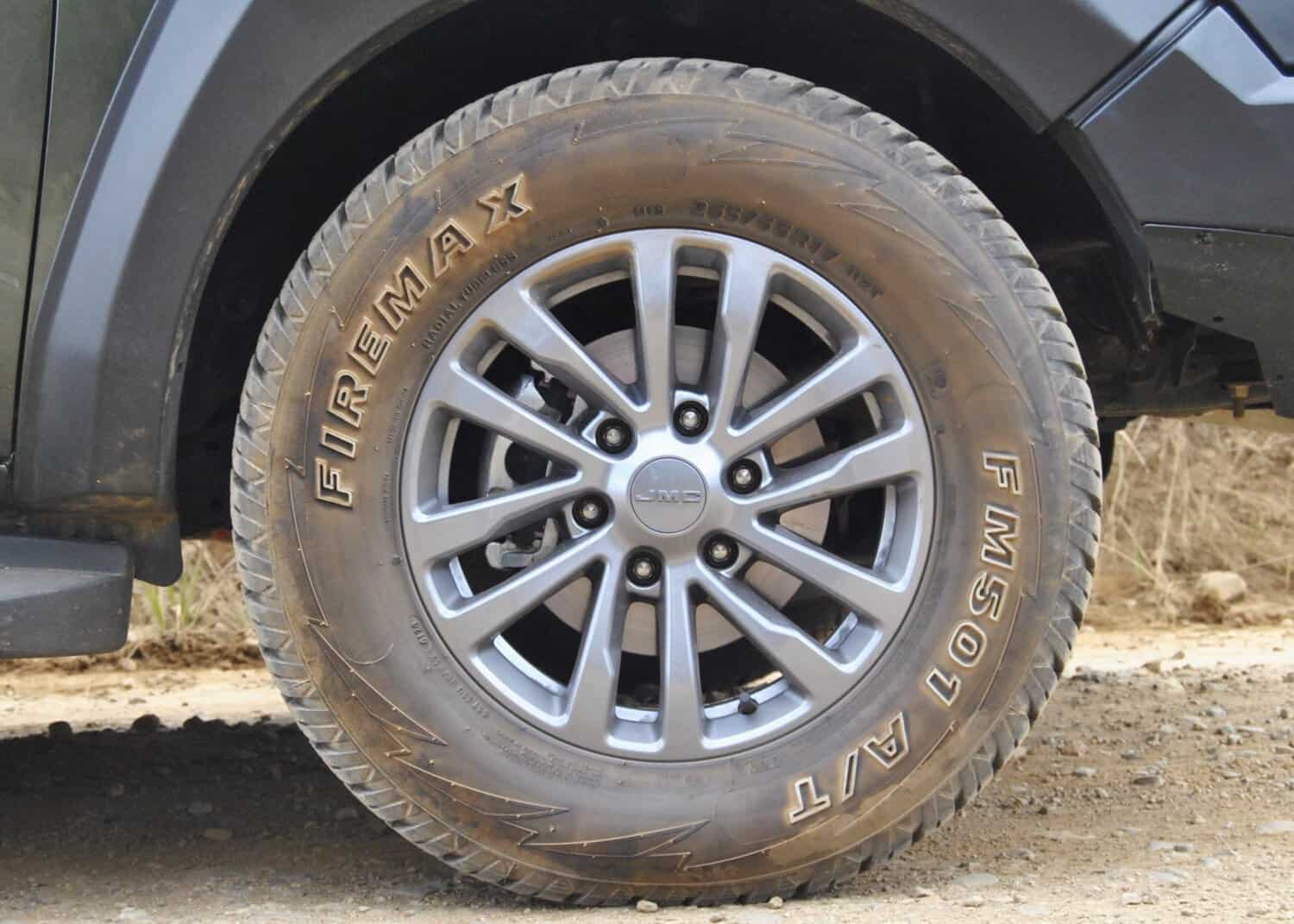
As with its siblings, the 4×4 is fitted with side-steps and 17-inch alloy wheels as standard, but unlike the manual variant, lacked a tonneau cover, which can be fitted as an option.
At the same time, the 4×4 still has 210 mm of ground clearance, a payload identical to that of the 4×2 automatic at 915 kg and the same loadbin dimensions.
While the external mounting anchors on the side of the loadbox remain concerning from a longevity standpoint based on their cheap feel, the main attraction was the mentioned accessories.
Aside from the rugged black plastic cladding around the wheel arches, JMC had fitted a new front bumper, complete with a satin silver skidplate and a pair of recovery points, as well as a steel roof rack.
Add-ons that upped the Vigus’ purposeful looks dramatically, the fittings also proved the most annoying, which will be explained in due course.
Same same inside
Inside, the 4×4 is unchanged from the 4×2, which means the same almost Spartan cabin appearance, as most of the functions reside within the 12.8-inch infotainment display.
Physical buttons and toggle switches still prevail underneath the central air vents on the steering wheel. However, the electric windows opening the wrong way – “up” for open and “down” for closed – still proved irksome.
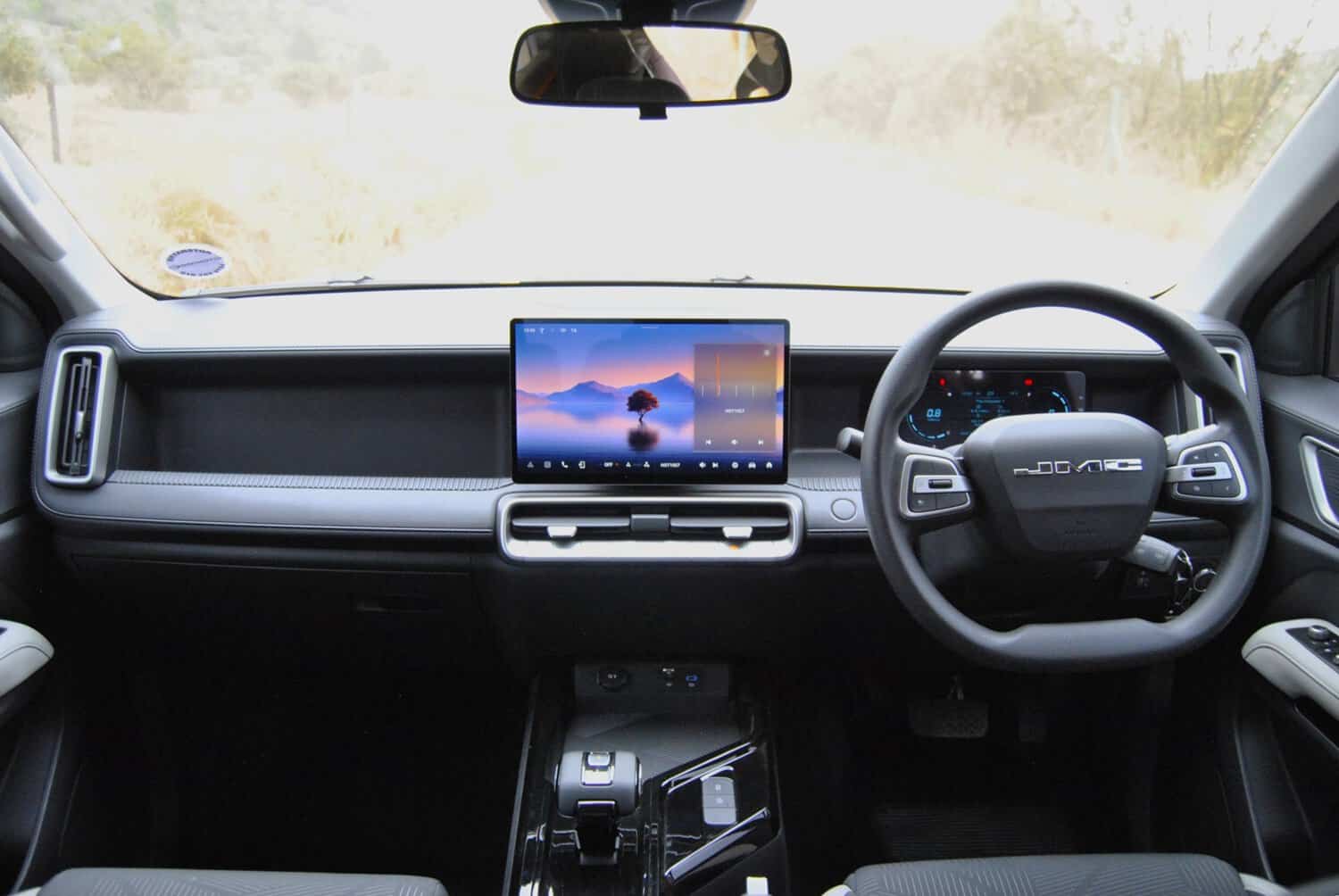
As the Vigus is still more of a workhorse than a leisure bakkie, a role the Grand Avenue will undertake, fit-and-finish is more rugged than plush, as varying degrees of materials feature.
What’s more, the upmarket-looking two-tone black-and-white cloth upholstery will require ongoing attention to keep clean, with the same applying to the smudge-prone piano-key black decorative finish on the centre console.
Given what the Vigus ultimately represents, built quality is still good, with the patterned finish on the passenger’s side dashboard also being a nice touch.
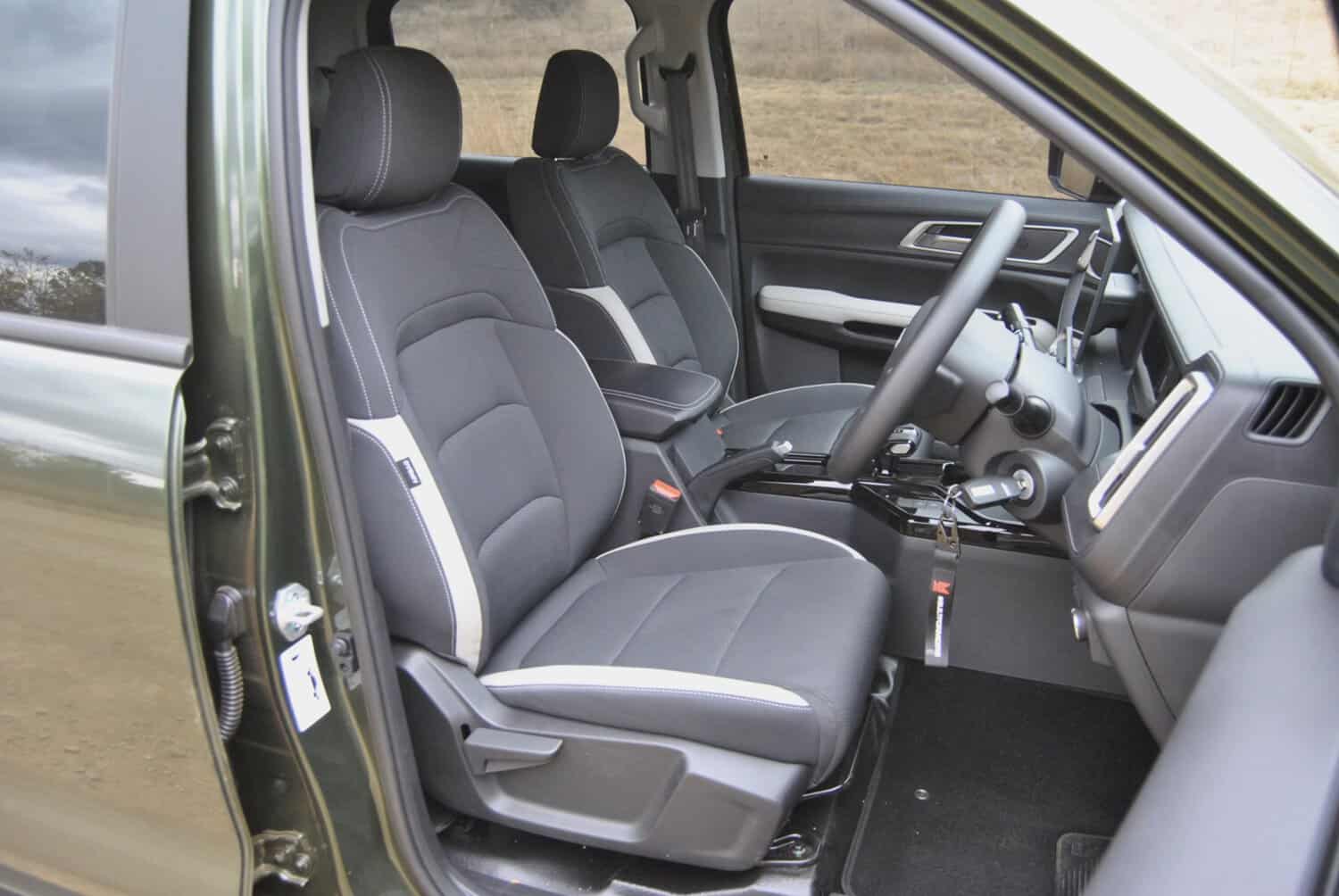
As with its siblings, seat comfort is good, and the freestanding digital instrument cluster recessed far enough into the dashboard not to be obscured depending on the seating position.
For its part, the infotainment display, which incorporates Apple CarPlay and Android Auto, is relatively easy and slick to use, yet the lack of a physical dial for the audio system will be an annoyance for some.
4WD select where?
Bizarrely, the biggest foible involves the location of the four-wheel drive switch. Initially, its absence in the form of buttons or a dial on the centre console led to the belief that two-wheel drive had again been dropped by accident.
Searching around the cabin eventually led to the 2H, 4H, 4L dial’s discovery at the base of the dashboard to the right of the driver.
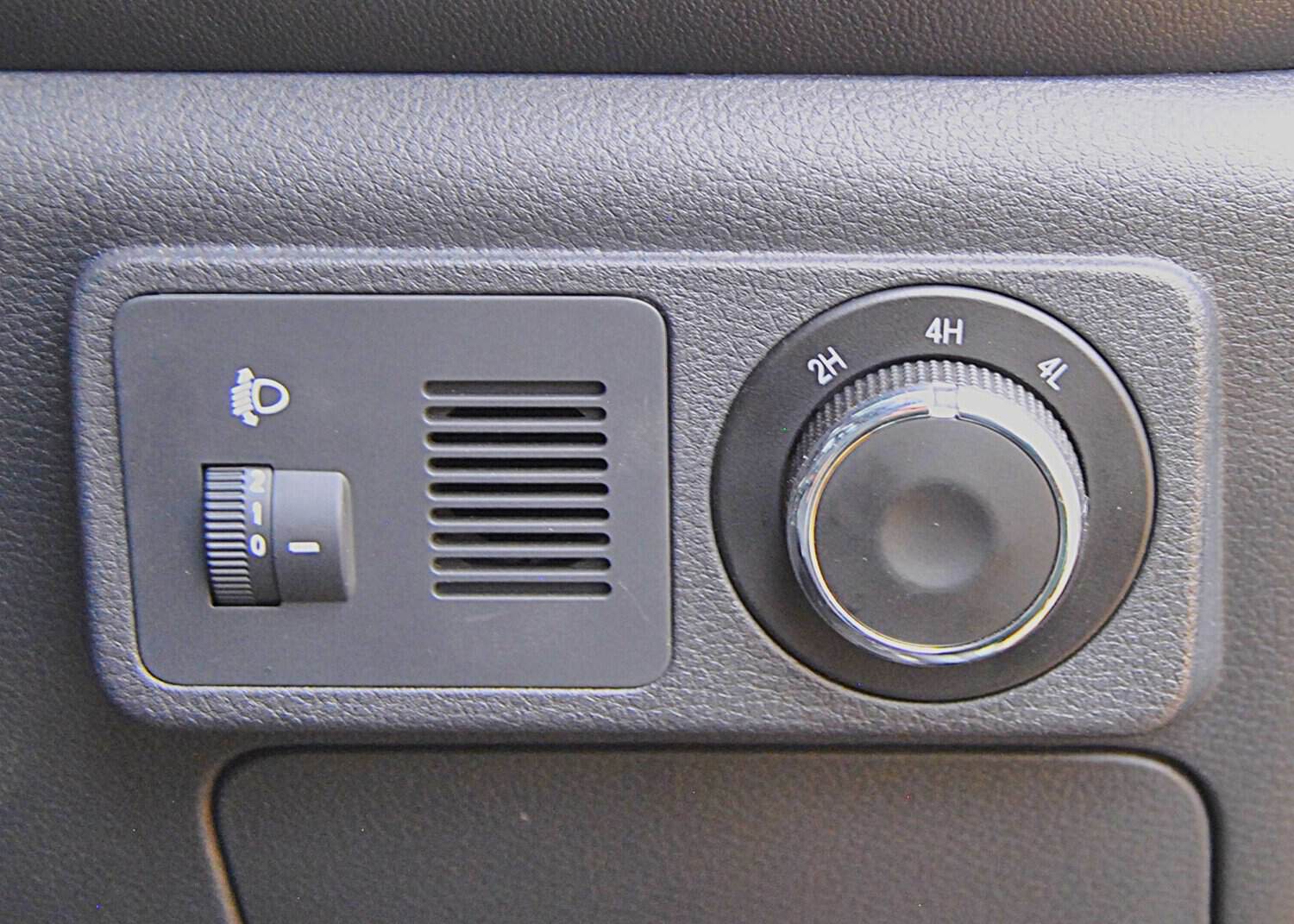
Admittedly placed in said location to avoid cluttering of the centre console, for right-hand markets at least, the switch now resides in an area commonly associated with adjusting the headlights.
Although likely to be seen as unfairly blighting the cabin’s ergonomics, it still stands to reason that perhaps moving the dial to the centre console would avoid inadvertently confusing it for the light switch.
Still spacious
Aside from this, the cabin’s biggest virtue is still space, particularly at the rear with no complaints likely to emerge from a head or legroom standpoint.
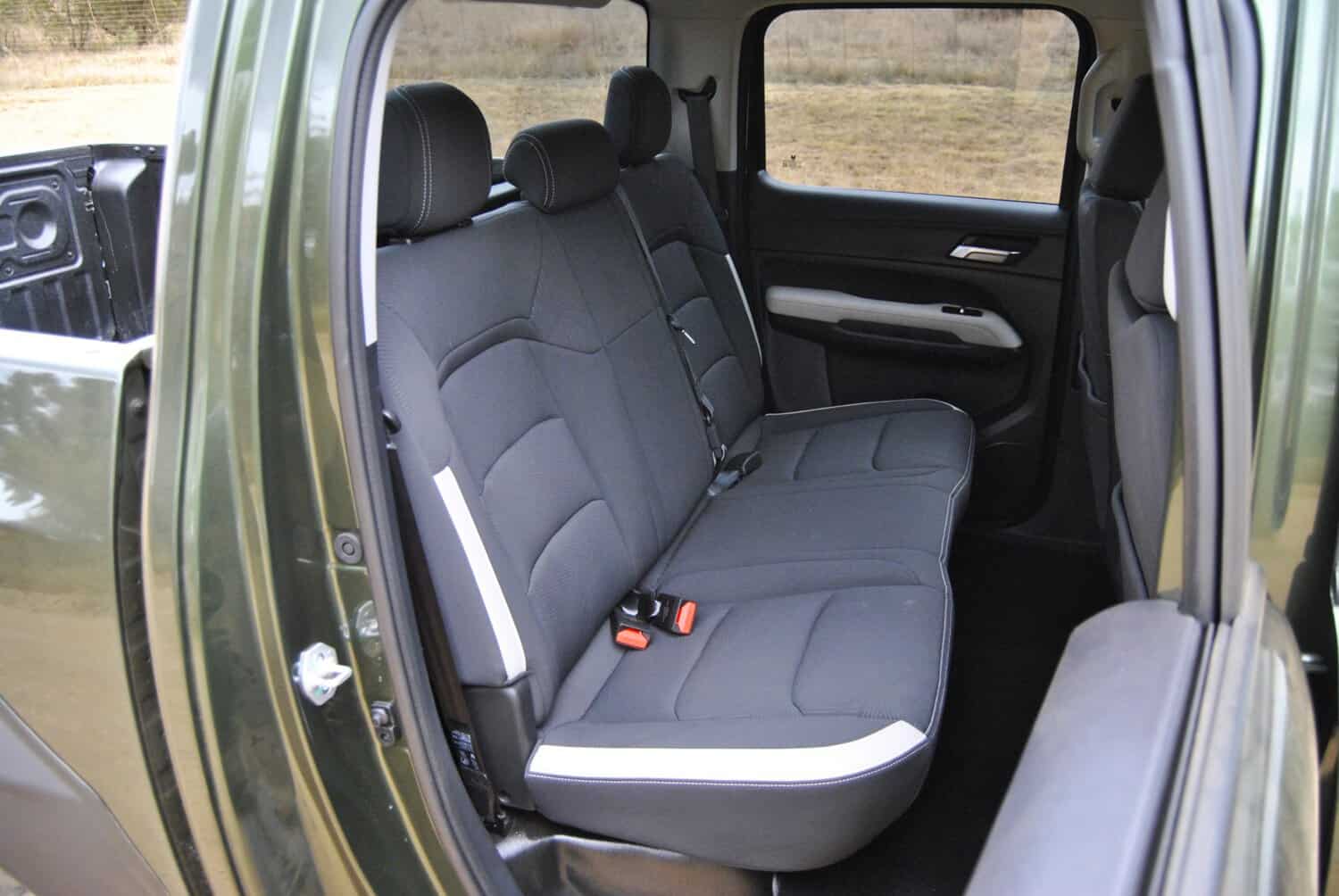
However, the absence of an armrest and rear vents is more difficult to ignore given that the 4×4 is the range’s showpiece.
Spec
What’s more, the 4×4’s specification sheet is identical to that of the 4×2, meaning that, apart from the items already mentioned, the following is fitted as standard:
- folding electric mirrors;
- rain sense wipers;
- electric windows;
- four-speaker sound system;
- single USB port;
- tyre pressure monitor;
- rear parking sensors;
- reverse camera;’
- cruise control;
- four airbags;
- auto lock/unlock doors;
- Hill Descent Control;
- Hill Start Assist
On the move
It is, however, on the move where matters start to get contentious, even more so than the two-wheel drives.
Starting the 4×4 is done by a key inserted into the ignition barrel, as no push-button start system is in evidence.
Up front, the same 2.5-litre turbodiesel engine is utilised with outputs of 123kW/430Nm, paired to the eight-speed automatic transmission.
A combination that proved relatively smooth but prone to hunting from the latter on the move, the inclusion of the four-wheel drive system has resulted in a definitive change.
Now tipping the scales at 1 995 kg versus the automatic’s 1 840 kg, the Vigus feels more lethargic, not helped by the initial low-down lag, and lack of a manual override.
With Road Test Editor Mark Jones behind the wheel, it clocked a 0-100 km/h time of 13.4 seconds at Gerotek, nearly a second slower than the automatic, with the overtaking speed of 60-100 km/h of 7.4 seconds being an additional second slower.
What happened?
As alluded to earlier, the weeklong stay became near unbearable thanks to the roof rack.
While the manual and automatic 4×2 had impressed with refinement and how little noise intruded into the cabin, the steel rack resulted in way too much noise at speed, and a terrible rattle when going slower.
Factoring the roof rack out, the biggest concern was taking the Vigus off-road.
Whereas a nervous feel was noted with the manual, switching to high range four-wheel drive (4H) on an anything but daunting gravel road made the Vigus downright uncomfortable.
While tyre pressure could have, admittedly, played a role, keeping the speed below 60 km/h caused the Vigus to bounce, and the severity of the ruts and bumps overamplified.
On supposedly smoother sections of the road outside Hartbeespoort, the suspension made for a coarse ride not noticed on the 4×2.
While a few 100 kg in loadbin would resolve the matter, the unnerving feel came as something of a disappointment, if, it has to be said, the tyre pressures played a part.
Consumption
Back on the road, the Vigus 4×4 felt more complaint and not as unsettling. However, one of its previous standouts, fuel consumption, took a noteworthy dive.
Whereas the 4×2 manual recorded a best of 7.5 L/100 km and the automatic 7.7 L/100 km, the 4×4 could only muster 8.8 L/100 km after its 483 km stay – still commendable given its added mass and unaiding accessories.
Conclusion
In its basic form, the JMC Vigus 4×4, at R499 900, makes for a still compelling buy as a well-equipped four-wheel drive under half a million rand.
However, it still needs polishing in a few places. While the test unit’s accessories are best left as unticked option boxes, the Vigus 4×4 represents a considerable step-up, as a package, from the Vigus Pro, which has the same price tag in four-wheel drive guise.
Yet, a considerable amount of proving is still needed in a segment that is becoming increasingly congested with already established products from GWM, Mahindra and even Peugeot.
Road Test Data
- Model: JMC Vigus 2.5D 4×4 AT
- Gearbox: 8-speed automatic
- Engine: 2.5-litre turbodiesel
- Power: 123 kW @ 3 000 – 3 400 rpm
- Torque: 430 Nm @ 1 600 – 2 200 rpm
- Licensing Mass: 1 995 kg
- Power to Weight: 62 kW / Tonne
- Power to Capacity: 49 kW / Litre
- 0-100 km/h: 13.48 Seconds
- 1/4 Mile (402.34 m): 19.18 Seconds @ 118.58 km/h
- 1/2 Mile (804.68 m): 30.28 Seconds @ 138.98 km/h
- 60-100 km/h: 7.47 Seconds (in Drive Sport)
- 80-120 km/h: 10.60 Seconds (in Drive Sport)
- 60-140 km/h: 25.39 Seconds (in Drive Sport)
- Claimed Top Speed: 165 km/h
- Fuel Consumption: 7.0 L/100 km Claimed (9.3 L/100 km Test Average)
- Fuel Tank Size: 75 litres
- Fuel Range: 1 071 km Claimed (806 km on Test)
- CO2 Emissions: 186 g/km
- Vehicle Odometer: 5 433 Km
- Test Temperature: 7 Degrees
- Tyres Size: 265/65 R17
- Tyres Make: Firemax FM501 A/T
- Warranty: 5 Year/200 000 Km
- Service Plan: 5 Year/65 000 Km
- Priced From: R499 900
- Test Date: 23 June 2026
- For more information and latest pricing, visit www.jmcsouthafrica.co.za



