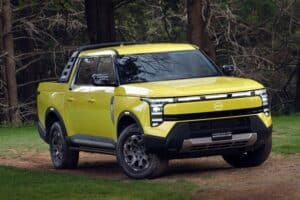
Underneath its polarising exterior resides a more than competent first bakkie attempt.
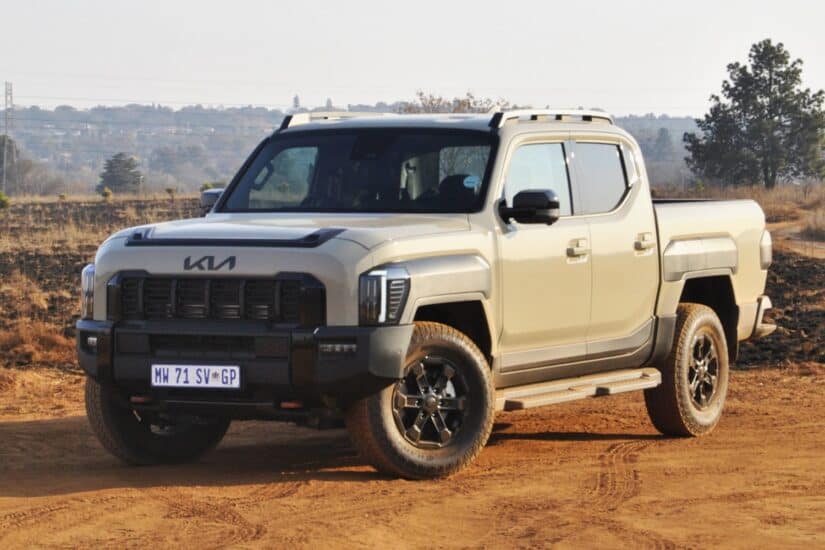
Brutish and polarising styling has been the Tasman’s biggest point of content. Picture: Charl Bosch


Industry heavyweights, media outlets and even people with no knowledge about cars have had their knives out for Kia ever since the high profile launch of the Tasman bakkie in Saudi Arabia two years ago.
It has been tough
With remarks ranging from ugly and hideous to expletive-laden terms, Kia’s long-awaited first time bakkie hasn’t had an easy start.
In its key market of Australia, where the development took place, the Tasman has received what can best be described as coolly.
Projected to sell 20 000 units a year, sales last year amounted to 4 196 units, with discounts of up to $14 000 (R159 581) having no impact.
“We are not satisfied yet. We have a lot of expectations, and we are still in the starting point, and we still have a lot of time, so we will carefully monitor the market, the reactions and early disappointment we have,” Kia’s Senior Vice-President and Head of Global Business Planning, Spencer Cho, told carexpert.com.au.
“We are working on every area in which we can improve the performance of the Tasman. We will provide countermeasures, and we will also have other powertrain choices if we can, and also design changes or improvements or any other offerings for new features.”
Clearer focus for South Africa
First shown at the end of 2024 on South African soil using the actual Saudi show vehicle, the Tasman has had an equally tricky start, as sales had been expected to start in 2025.
This became 2026, but in a reversal of Australia, as more of a niche product than a mainstream bakkie offering.
Excluding the first two months of the year, total Tasman sales stand at 198 units, which, ordinarily, will be viewed as similarly disastrous as in Australia.
The flip side is that the Tasman isn’t under the same pressure in South Africa as Down Under, with Kia South Africa in 2024 mentioning a projected monthly offset of between 50 and 100 units.
New yardstick?
Named after the piece of water that separates Australia and New Zealand, the arrival of the Tasman for the weeklong stay soon turned into a fact-finding mission.
At a shade under R1-million – R999 995 to be exact – the subject of the test, the flagship X-Pro, had an almost similar price tag to The Citizen‘s long-term Ford Ranger V6 Sport.
While admittedly not a direct comparison, it nonetheless provided a suitable yardstick to compare the Tasman with.
The talking point…
Unsurprisingly, the Tasman’s biggest talking point has been its looks, the main area that has been cited as the reason for its tanking sales.
Styled by Karim Habib, whose previous spell at BMW included the E60 5 Series, the F01 and G11 7 Series, the Tasman is a near-military vehicle in appearance, as comparisons have been drawn with it and the Jeep Gladiator.
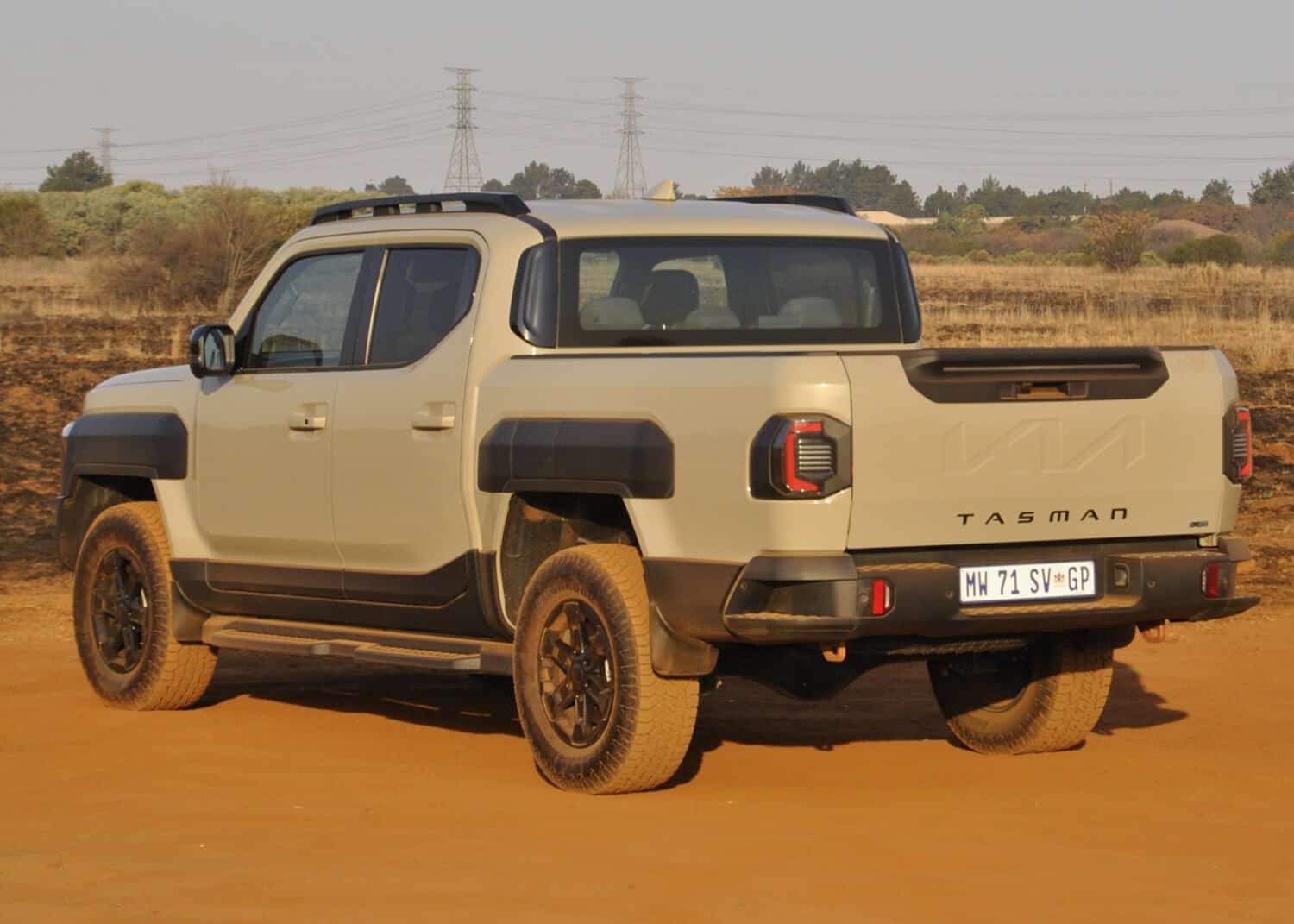
Divisive and polarising, parallels can be drawn with the reception the former design boss, Peter Schreyer, received for the Tiger Nose grille, which was received at a time when Kia was still trying to move away from its cheap and stodgy persona.
Something different and attention grabbing, the Tasman can still be viewed as a better overall execution than the ill-fated Nissan Navara-based Mercedes-Benz X-Class.
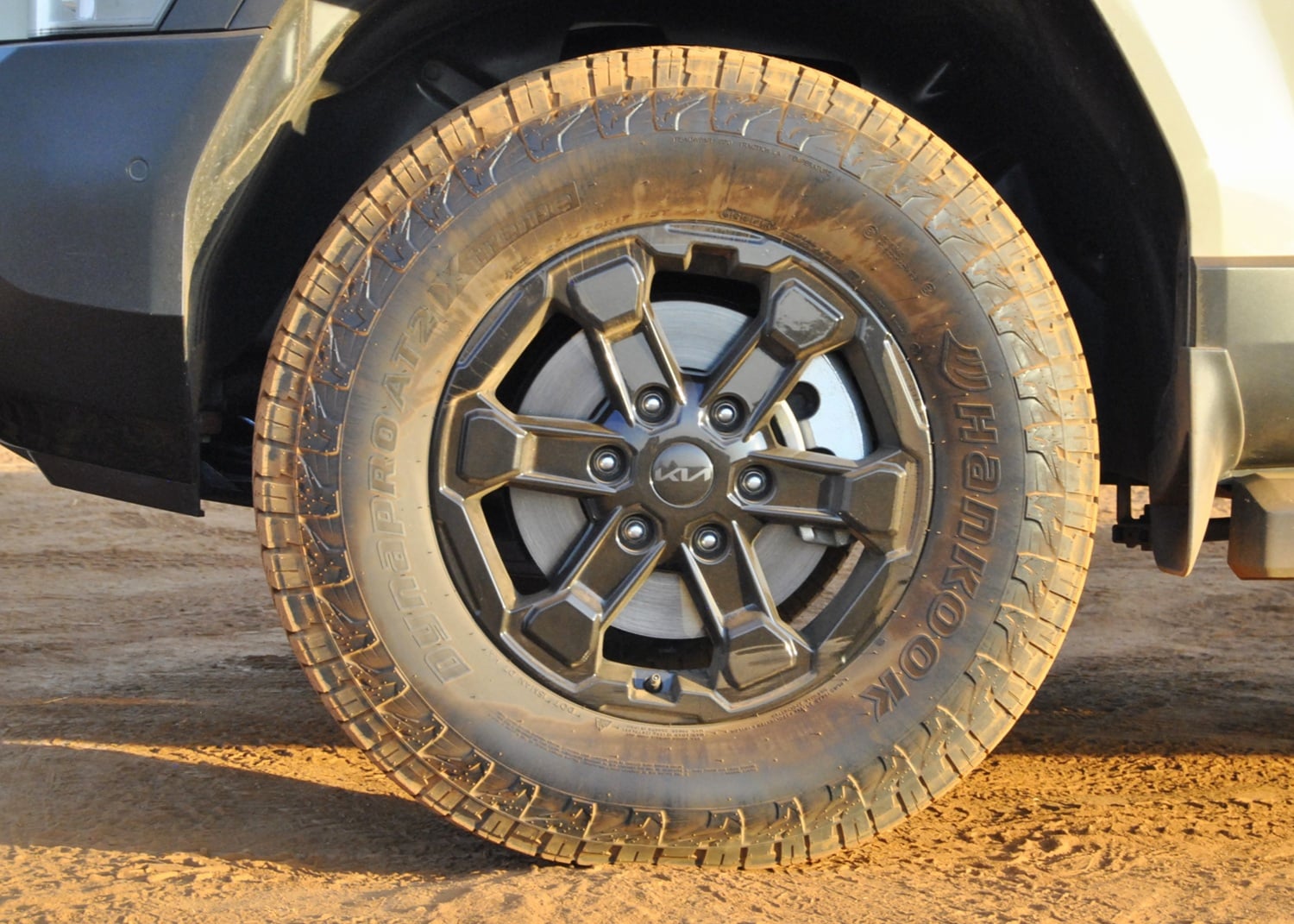
Counting in the test unit’s favour was the black cladding above its wheel arches, which, for an additional R5 004, can be body coloured, but only in Clear White or Tan Beige.
Riding on 18-inch alloy wheels, the oddly positioned LED headlights, inverted U-shaped grille, chunky bumper and rounded rear apron remain an acquired taste. Yet, credit still needs to be given for the Kia, allowing its design team to be daring.
Inside
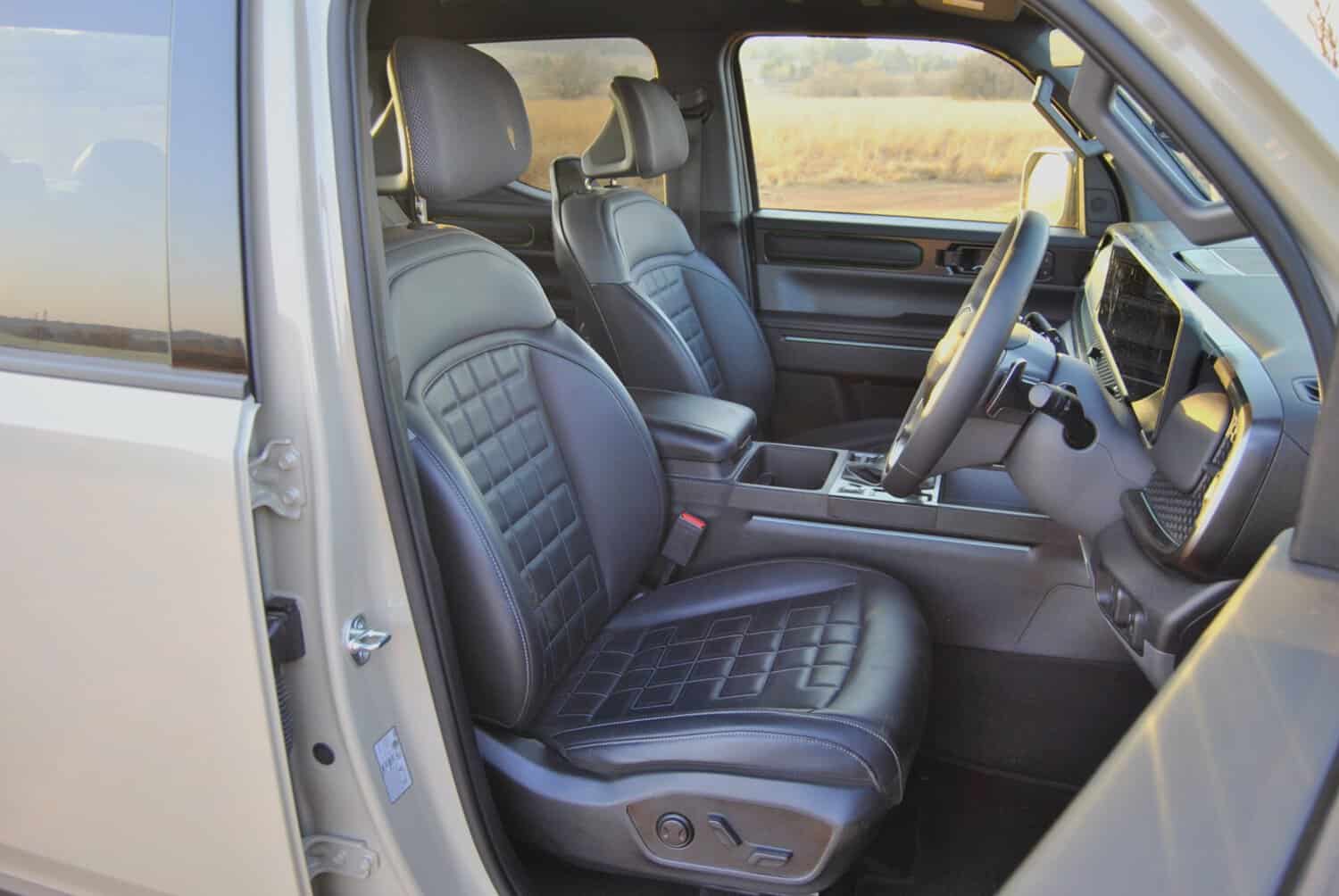
Opening the door is where the controversy largely ends, as the integration of the same design language as the EV range of electric vehicles arguably has the Tasman edging the Ranger out when it comes to feeling more SUV than bakkie.
Aside from the fit-and-finish being a success, even with the irksome touch-sensitive buttons underneath the central air vents, the Tasman’s interior feels premium but also rugged.
That being said, the lack of a volume dial for the superb Harman Kardon sound system disappoints, as does the almost quartic steering wheel, which, awkwardly, accommodates the drive mode selector and off-road Terrain mode buttons at the base of the central hub.
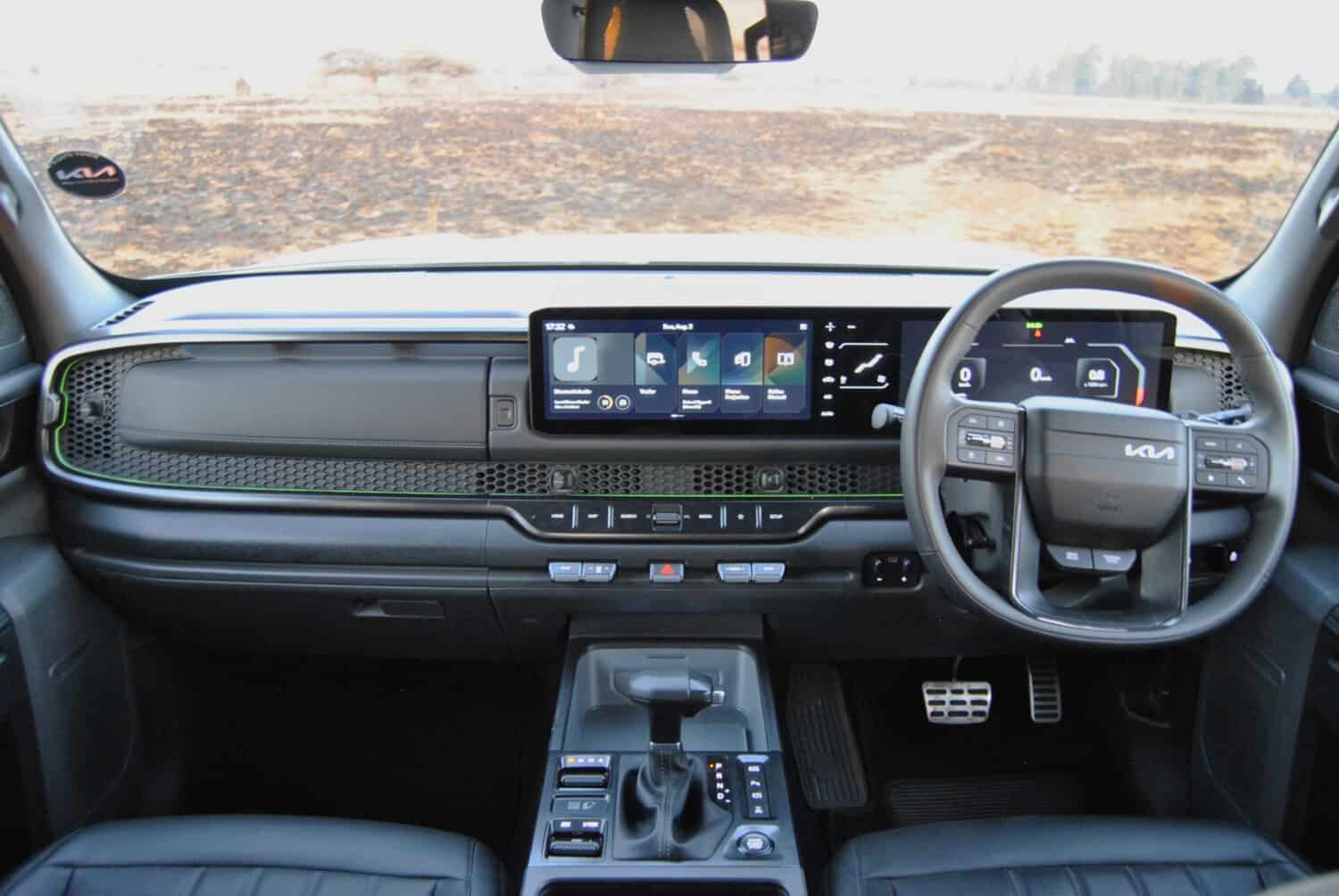
In a surprising move, Kia has opted not to have the Tasman with the column-mounted gear selector for South Africa, favouring a conventional console-mounted gear lever.
While this means the fold-out panel from the console glovebox is absent, cabin space is still good, and the centre console itself is more substantial with not only the lever but also physical scroller dials for the X-Mode and low range transfer case.
Along with the unique inner door handles and plush seats, the Tasman’s effective three displays work and present well, even though the central screen for the climate control takes some time getting used to.
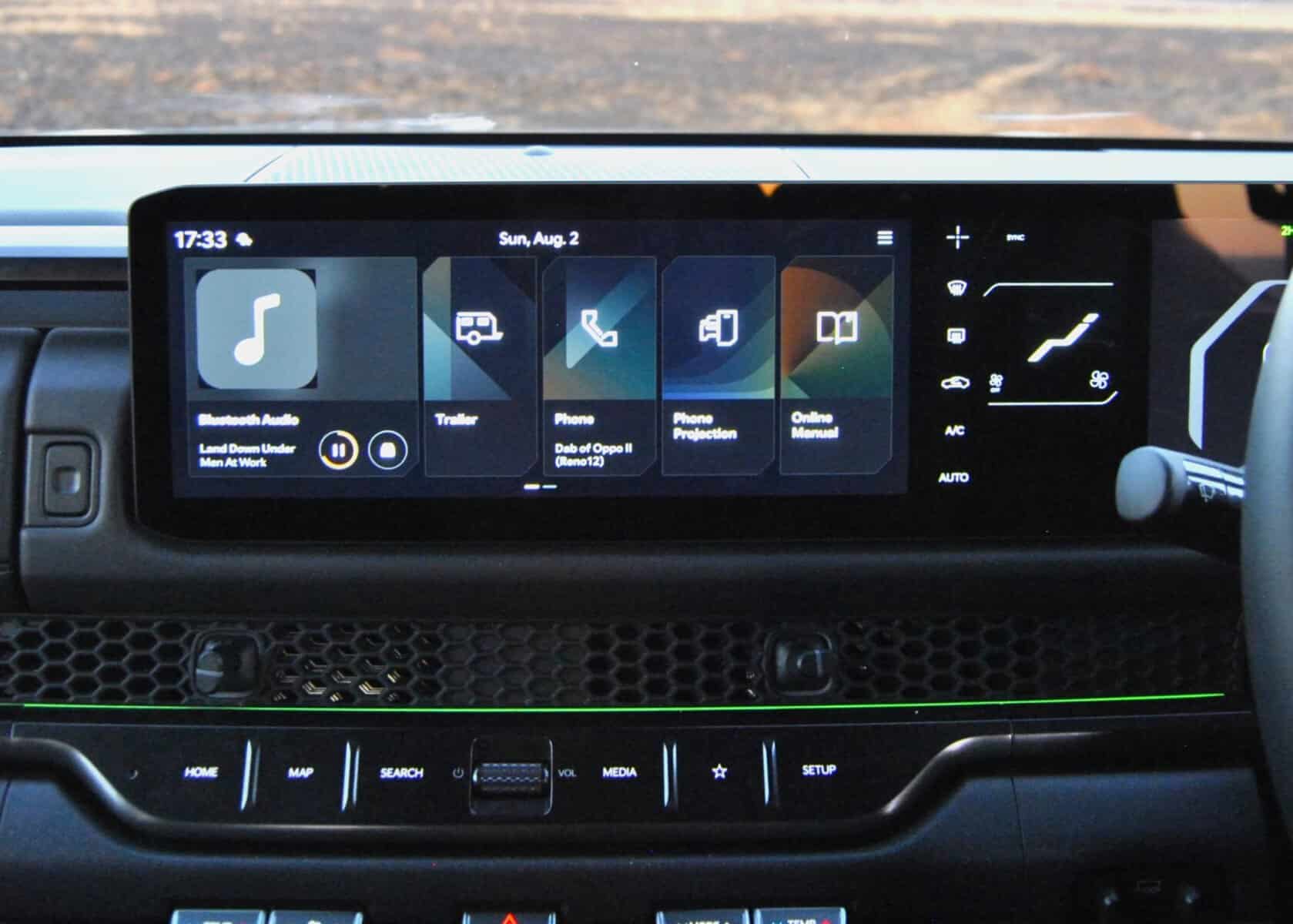
The workings of the 12.3-inch infotainment display is, however, relatively slick and easy to use regardless whether Apple CarPlay or Android Auto is used or not.
As the interior is still welcomely reliant on physical switchgear, ergonomics are sorted, and the inclusion of ambient lighting is a worthwhile touch, in addition to the heated front seats and heated steering wheel.
Another party piece is the remote-opening tailgate – which still needs to be closed manually but can be done with one finger – and the remote engine start.
Practical
Taking care of practicality, Kia has fitted a Honda Jazz-style Magic Seat arrangement at the rear in which the seat cushions can be lifted up for bulkier items or have smaller pieces hidden away in the storage area underneath.
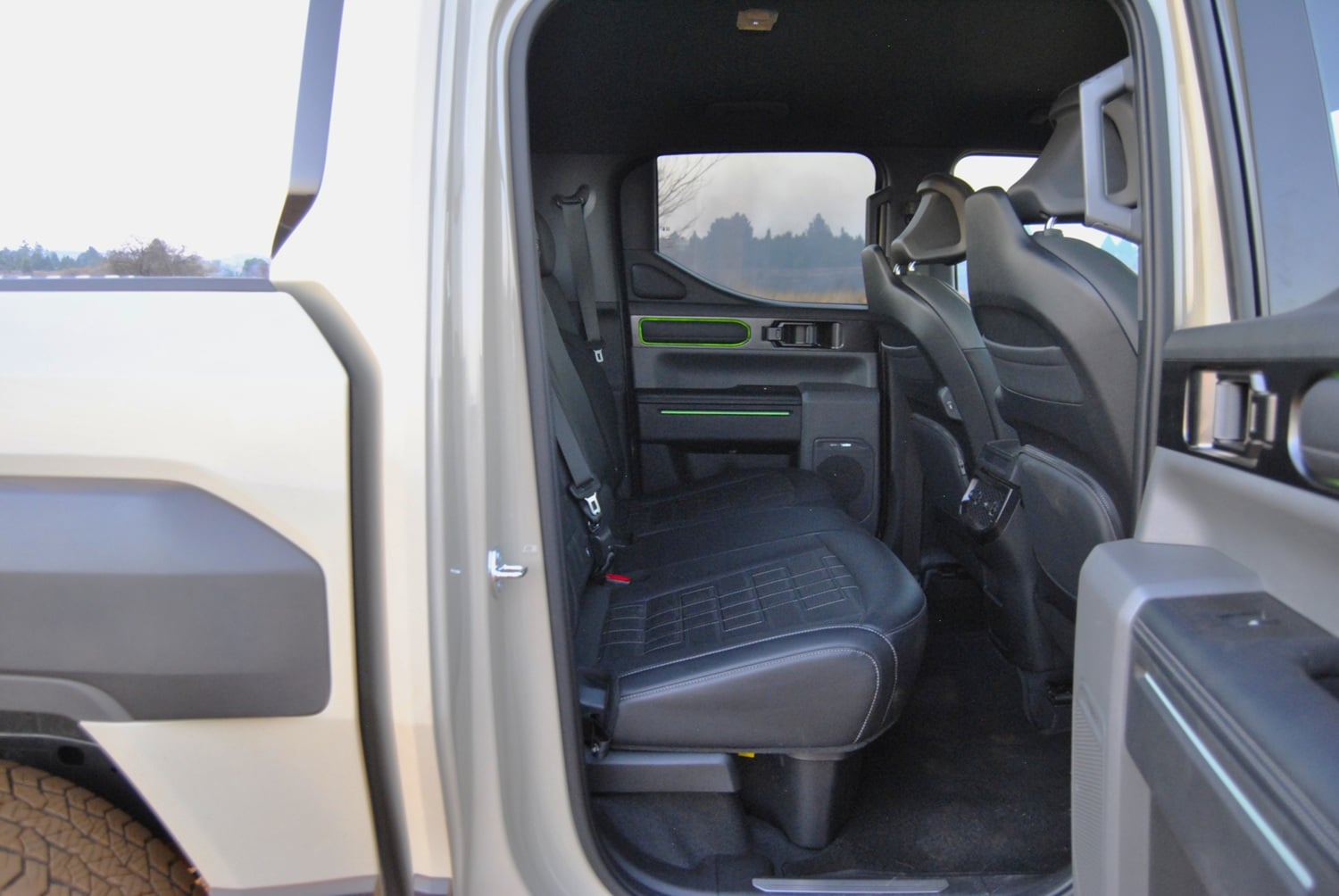
What’s more, the seats can “recline” individually, which nullifies any complaints of the rear quarters lacking in headroom and legroom, something already absent.
Powertrain surprise
On the move is where the Tasman surprises despite initial criticism of it lacking a bigger engine than the 2.2-litre CRDI turbodiesel.
While offered in other markets with a 2.5 T-GDI petrol, the venerable 2.2 has been revised to generate 154 kW instead of the customary 148 kW.
Torque is unchanged at 440 Nm, and although this seems inadequate on paper to cart the Tasman’s rather heavy 2 312 kg kerb mass, the engine doesn’t feel underpowered or wrongly matched with the eight-speed automatic gearbox.
While some low down lag is, admittedly, present, it doesn’t linger around for long whereafter, it becomes lively and not as adverse to being revved as a typical turbodiesel.
Aside from being quiet and refined, the engine feels perkier than what its figures suggest, while being more flexible than the Ranger’s V6, and not in need of the provided Sport mode.
At the same time, leaving the transmission to its own devices results in a slick and effortlessly shifting box that made reverting to the paddle shifters a seldom occurrence.
On the move
Given the Tasman is still being a bakkie, it hasn’t gone the same route as the Nissan Navara by swapping the leaf spring rear suspension for coils.
Although able to haul 1 008 kg, wade 800 mm and tow 3 500 kg, the ride stands out as possibly its biggest highlight.
While firm, which was attributed to the test unit’s tyre pressure monitor showing over three bar for all four wheels, the Tasman feels planted and comfortable as the suspension has been tuned in such a way that no imperfections are noticeable with a sudden surface change.
As with the Ranger, the Tasman’s four-wheel drive system has a 4A setting as its default, which means it can be driven on-road without needing to select 4H.
An electronic locking differential forms part of its off-road hardware, as does Kia’s X-Trek off-road Adaptive Cruise Control system. The claimed ground clearance, for the X-Pro, is 252 mm versus the rest of the range’s 224 mm.
Fuel consumption
Given its weight and supposed lack of power, fuel consumption was expected to suffer on the back of Kia’s 7.8 L/100 km claim.
As it turned out, the weeklong stay over 843 km saw a best of 8.8 L/100 km displayed on the instrument cluster, which included two trips to Gerotek that will be divulged in detail later.
Conclusion
As much as it has been desecrated, largely for its looks, peeling the Kia Tasman’s aesthetics away reveals a more than impressive, well-thought-out and accomplished first attempt at a bakkie that doesn’t feel rushed or undone.
While still set to appeal to a small batch, its merits cannot be overlooked from its dynamics and powertrain, to feeling premium but rugged enough to be a bakkie.
A worthwhile wait, the Tasman, arguably, has what it takes at a price more than competitive of the segment it competes in, yet universal acceptance is likely to only arrive once its main current hindrance is addressed.