SHS model almost R1 per kilometre cheaper than the comparative petrol derivative.
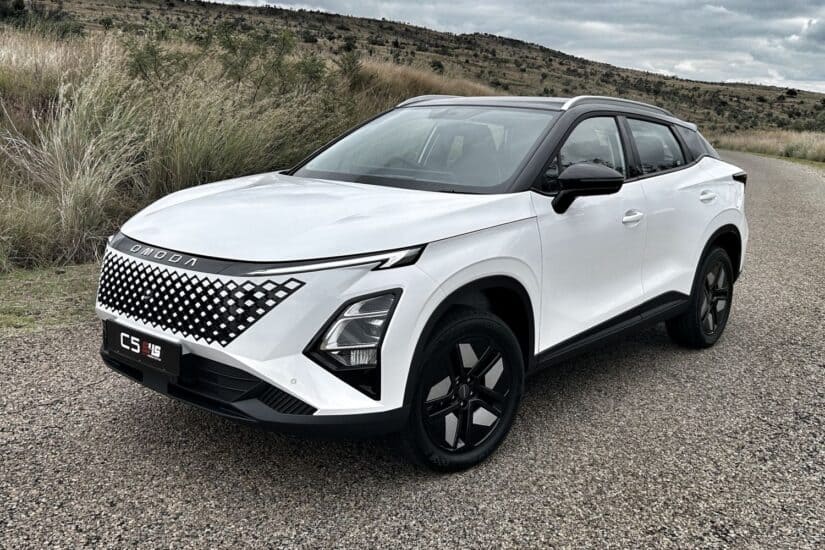
The Omoda C5 SHS was introduced earlier this month. Picture: Jaco van der Merwe


Online search data shows that since the fuel price starting rising amid the Iran war, car buyers have significantly upped their interest in new energy vehicles (NEVs).
Various manufacturers have jumped on the bandwagon by introducing more efficient NEV variants over the last few months. Chery-owned Chinese brand Omoda is one of them with the C5 SHS.
The SHS stands for Super Hybrid System which is the brand’s fancy talk for hybrid electric vehicle or HEV. This is different from a PHEV (plug-in hybrid vehicle) and BEV (battery electric vehicle) by virtue of being self-charging with no capability for connecting to external power. This means that it is a lot easier to compare the HEV’s fuel consumption to that of the Omoda C5 petrol variants as there is now electricity cost calculation involved like with PHEVs.
Omoda C5 SHS vs 1.5T
The Omoda C5 SHS is offered at a special launch price of R469 900 before it will go up to R479 900. For the sake of comparing costs between the HEV with the petrol model, we will use the standard sticker of R479 900.
The model we will compare the hybrid to is the Omoda C5 1.5T 230T Elegance X which was the crossover SUV range’s flagship before the SHS’s arrival. Priced at R465 900, the Elegance X is R14 000 cheaper than the SHS. Now the big question how big a role fuel consumption will play in choosing between the two.
Omoda claims that the petrol variant will sip 6.9 litres per 100km. The Citizen Motoring has had the 1.5-litre on test twice, one with CVT and once with dual-clutch transmission (DCT). As we averaged 8L/100km with the CVT and 10L/10km with the DCT, we will use a very non-scientific yet real life number of 9L/100km.
SHS for the win
Using the April Inland ULP 95 price of R23.26 per litre, the Omoda C5 1.5T will cost R2.10 per kilometre. If you travel an average of 1 000km per month, petrol will cost you R2 100 at the pumps between pay days.
Omoda claims that the SHS will sip 4.9 litres per 100km, which is actually not far off a real-life number. Last year, Road Test Editor Mark Jones and a partner managed to achieve a number of 5.2L/100km in a 906km trek across China.
If you use this number, the costs per kilometre in the Omoda C5 will be R1.21, an 89-cent saving from the petrol model. 1 000km between pay days will work out to R1 214, a R886 saving over the petrol model.
At this rate, it will only take 16 months to pay off the R14 000 premium. If you manage to find one at the launch price, it will be less than five months.