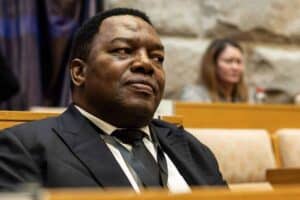
Criminologist Prof Kholofelo Rakubu says prolonged temporary leadership could affect accountability and strategic continuity in policing.
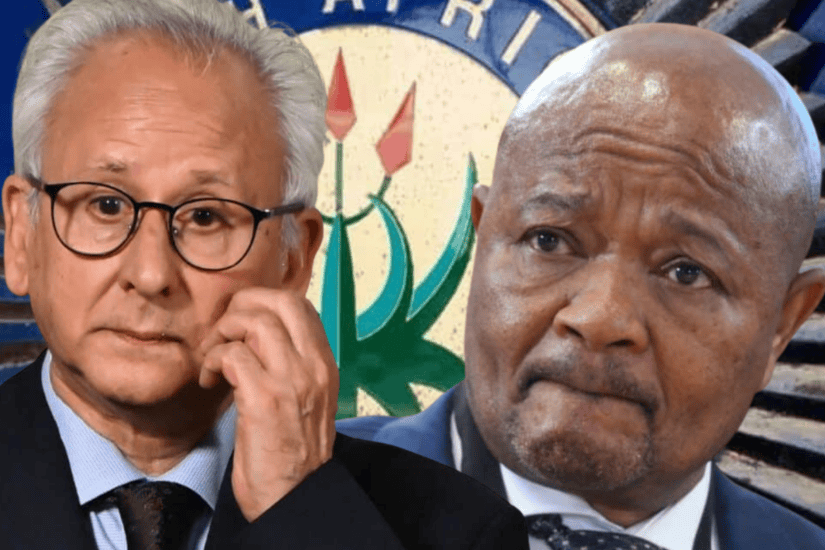
Acting Police Minister Firoz Cachalia and suspended police minister Senzo Mchunu. Picture: Gallo Images/Frennie Shivambu


The revelation on the remuneration of Acting Police Minister Firoz Cachalia and suspended police minister Senzo Mchunu should not be reduced simply to a debate about salaries.
This is the view of criminologist Prof Kholofelo Rakubu, who said the issue raised a much bigger question about governance, accountability, institutional continuity and whether South Africa could afford prolonged uncertainty at the political leadership level of policing.
Remuneration debate extends beyond salaries
According to Rakubu, the payment of these salaries did not, by itself, establish wrongdoing, nor can it be simply argued that this R6.19 million could automatically have been redirected to buying police vehicles, employing officers or fighting crime.
“There are legal and administrative arrangements governing executive remuneration,” she said.
“The criminological concern lies elsewhere: what are the institutional consequences when an exceptional or temporary leadership arrangement continues for a prolonged period?
“South Africa is confronting violent crime, mass shootings, extortion, kidnappings, illegal firearms and increasingly sophisticated organised criminal networks.”
Rakubu said these challenges required continuity of policy, clear lines of accountability and stable strategic leadership.
She said organised crime did not necessarily thrive because a particular minister is absent and one should avoid making that simplistic causal connection.
Leadership uncertainty could affect strategic continuity
However, Rakubu said, organised criminal networks could exploit weak institutions, fragmented authority, inconsistent implementation and periods of institutional uncertainty.
She said when leadership arrangements remain temporary for extended periods, questions arise about who ultimately owns long-term policy decisions, who is accountable for their implementation and whether strategic priorities will survive another leadership transition.
“SA’s policing history should also teach us that repeated changes at senior leadership level can affect institutional memory and strategic continuity,” she said.
“Every leadership transition in the police potentially introduces different priorities, approaches and relationships.”
Some leadership changes are unquestionably necessary, she said, particularly where credible allegations require investigation, or where continued presence could compromise institutional integrity.
‘Institutional resilience’
Rakubu said accountability must never be sacrificed merely for the sake of continuity, but temporary arrangements themselves should not become permanent substitutes for resolving governance questions.
She lamented that for communities confronting violent crime daily, the R6.19 million figure will understandably be difficult to digest and that citizens who experience shortages of visible policing, overstretched detectives and other pressures within the criminal justice system were likely to ask what value they are receiving from simultaneously financing the substantive and acting political leadership arrangements.
She said that makes transparency essential.
“Government should be able to explain not only whether these payments are lawful, but why the arrangement remains necessary, how long it is expected to continue and what mechanisms are ensuring that political uncertainty does not translate into strategic uncertainty within policing,” Rakubu said.
She said ultimately, the issue was bigger than Mchunu or Cachalia.
“It is about institutional resilience. [SA] cannot effectively confront organised and violent crime if temporary governance arrangements become normalised,” Rakubu added.