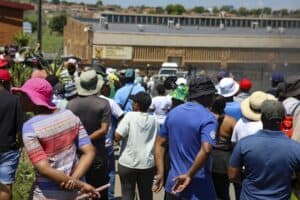
Businesses, transport routes and public facilities are among the areas expected to receive heightened security attention ahead of the march.
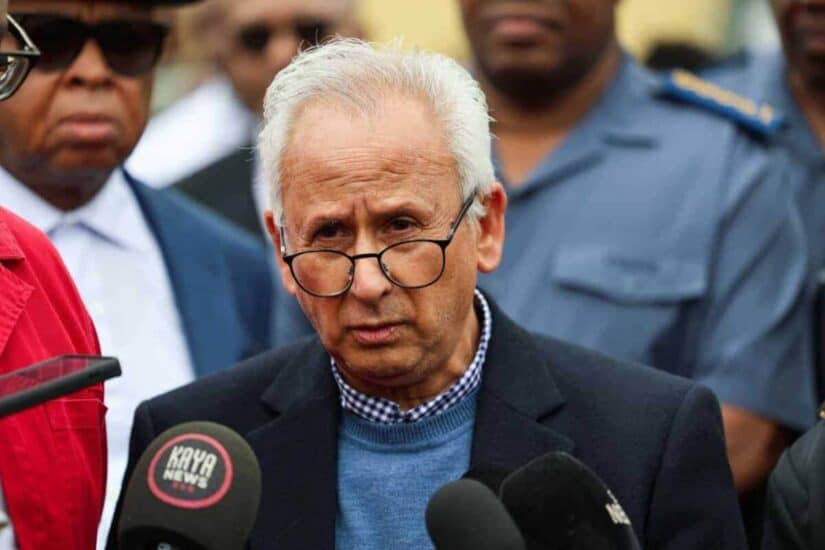
Acting police minister Firoz Cachalia. Picture: Gallo Images/Luba Lesolle


Blocking roads, intimidation of communities, destruction of property, attacks on businesses, looting, violence and any attempts to undermine public order will not be tolerated in the planned March and March protests on 30 June, police warn.
South African Police Service (Saps) divisional commissioner for human resources Bongiwe Zulu has confirmed that officers with critical skills who have applied for leave have been placed on standby ahead of the planned protest on 30 June.
Security agencies prepare for possible unrest
Acting police minister Firoz Cachalia has moved to fortify South Africa’s security ahead of the anti-illegal migrant march, meeting private security leaders to forge a united front against threats of violence and instability.
He met the private security industry on Tuesday evening, police spokesperson Kamogelo Mogotsi said.
The meeting emphasised the importance of combining the capabilities and resources of both the public and private sectors, Mogotsi said.
Representatives of the private security industry welcomed the call for closer collaboration and pledged their support in ensuring any planned protests take place in a safe and lawful environment.
“The industry advised it has already commenced preparations and expressed its readiness to contribute to maintaining public safety,” Mogotsi said.
Private security pledge support
Fidelity Services Group CEO Wahl Bartmann said the company’s national joint operations centre was liaising closely with all relevant authorities to ensure preparedness if unrest occurs.
Bartmann said Fidelity teams were on standby.
“Fidelity has placed helicopter and drone pilots on standby and is prepared to deploy additional resources, including specialised personnel and armoured personnel carriers, where required.
“We will also be closely monitoring public-space cameras within our network to assist with situational awareness and rapid response,” he said.
“We are also prepared to support recovery efforts through both air and ground resources, working in conjunction with the South African Police Service. Identified hotspot areas will be closely monitored by our teams.”
Potential hotspots identified by intelligence
Bartmann said current intelligence indicates that concerns were centred around specific local nodes, transport routes, town centres, business districts, municipal offices and foreign-owned business environments.
“At this stage, KwaZulu-Natal and Gauteng have been identified as potential flashpoint areas,” he said.
“The immediate threat is assessed as localised, but potentially disruptive, with possible impacts including road blockages, delays in staff movement, intimidation of foreign-owned businesses, demands for documentation at workplaces, temporary business closures, retail disruption and pressure on public service sites.”
Workers warned against joining protest action
Martlé Keyter, chief executive at the Motor Industry Staff Association (Misa), has called on all of the organisation’s members not to participate in the protests organised under the banner of March and March on 30 June.
“This action is not protected in terms of labour law,” Keyter said.
“Any absence from work may expose employees to disciplinary action, including possible dismissal, because this is not a legally protected strike,” she warned.
Keyter said Misa did not support violence or unlawful conduct.
“Our union stands firmly against vigilantism and mob justice, which only deepen divisions and place lives at risk. Misa recognises the frustrations driving these protests are rooted in real challenges. High unemployment, crime and the state’s failure to manage borders effectively are undeniable realities,” Keyter said.
“The government has not played a meaningful role in creating jobs or making communities safer and citizens are justified in demanding accountability. However, unlawful protest action is not the solution.
“We understand the anger and frustration, but cannot allow our members to risk their livelihoods by joining an unprotected protest,” she added.
Cachalia said prevention and cooperation were central to safeguarding the country.
Quoting Sun Tzu, a Chinese military general, strategist, philosopher and writer who lived during the Eastern Zhou period, he said: “The supreme art of war is to subdue the enemy without fighting.”
Cachalia added this principle underscored the need for “prevention, cooperation and preparedness” as South Africa braces for the 30 June demonstrations.