The Hawks officer was also questioned about similarities between his affidavit and that of a senior official.
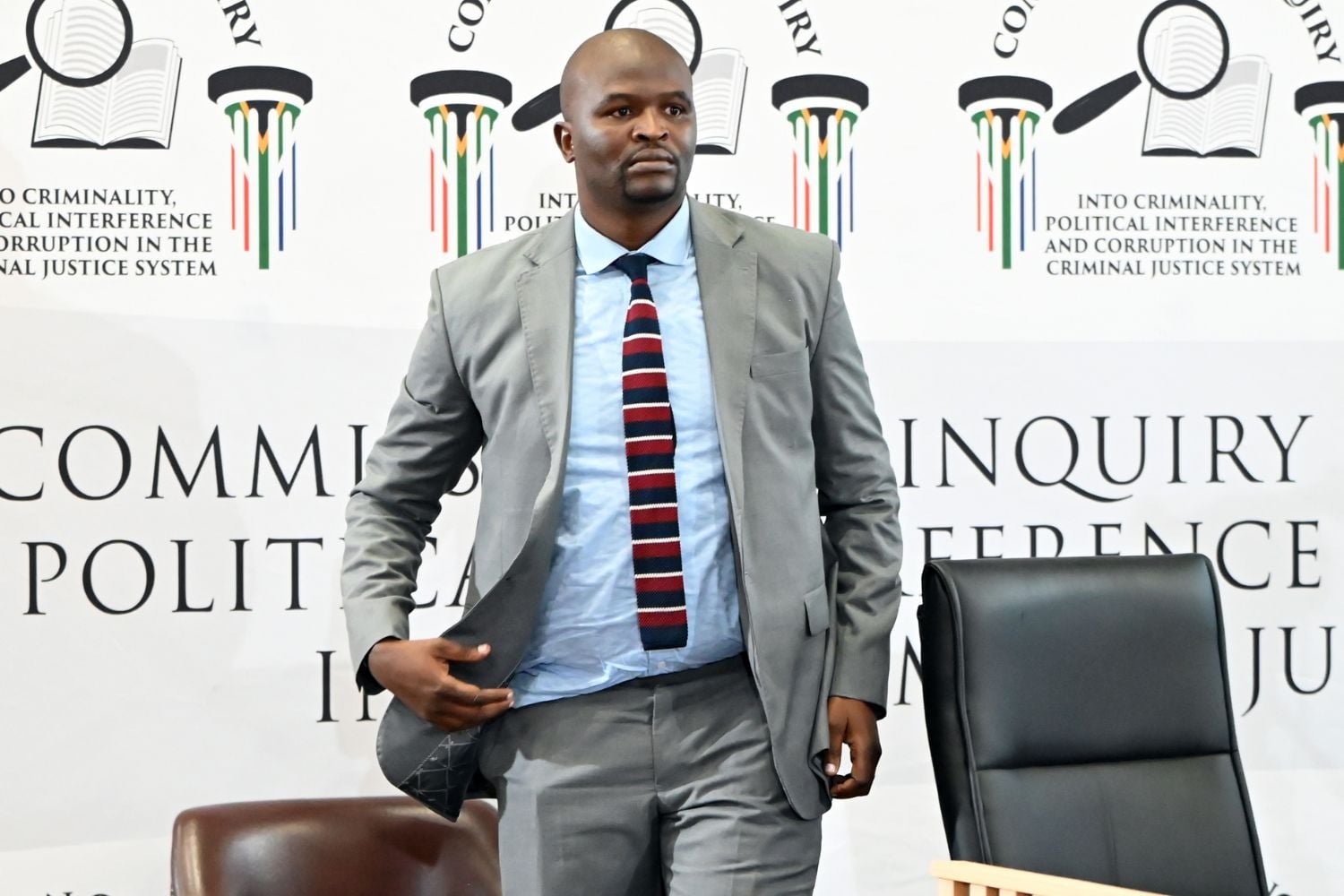
Lieutenant-Colonel Kwazikwakhe Sibiya testifies before the Madlanga commission at Brigitte Mabandla Judicial College in Pretoria on 5 June 2026. Picture: Gallo Images / Frennie Shivambu


Lieutenant-Colonel Kwazikwakhe Sibiya has become the latest Hawks officer to deny any involvement in the theft of a massive cocaine consignment in Port Shepstone, KwaZulu-Natal (KZN).
Sibiya, attached to the Serious Organised Crime Investigation (SOCI) unit within the Directorate for Priority Crime Investigation (DPCI) in Durban, appeared before the Madlanga Commission at the Bridgette Mabandla Justice College in Pretoria on Friday, 5 June 2026.
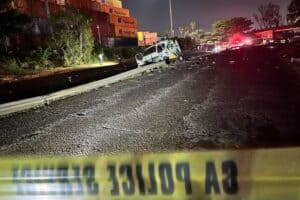
The commission is probing the disappearance of 541kg of cocaine, valued at over R200 million, from the Hawks’ SOCI office in Port Shepstone on 8 November 2021.
Sibiya rejects allegations of involvement
Sibiya, who serves as an officer in the SOCI unit’s South African Narcotics Enforcement Bureau (SANEB) component, rejected any role in the theft.
“I deny the allegations levelled against me,” he told the commission on Friday.
He explained that at the time of the seizure on 22 June 2021, he was a warrant officer temporarily assigned to the Economic Protected Resources (EPR) component within SOCI.
This unit handles cases such as human trafficking, kidnappings, copper theft, and fuel theft.
Sibiya clarified that large-scale narcotics investigations were not his “area of specialisation or primary function”.
He added that he was promoted to captain and only permanently transferred to SOCI in September 2021, before reaching the rank of lieutenant-colonel in December 2024.
Port Shepstone cocaine seizure and disappearance
The drugs had originally been seized in June 2021 at the CHC container depot in Isipingo and later placed in police custody.
Five years since the incident, no arrests have been made.
Allegations have surfaced suggesting that DPCI officers may have conspired to execute the crime.
Sibiya is among several officers implicated, including KZN Hawks head Lesetja Senona, Colonel Gavin Jacob, Warrant Officer Livingstone Mpangase, and Brigadier Campbell Nyuswa.
Testimony presented to the commission highlighted discrepancies in the handling of the cocaine – from its removal from a legitimate cargo container to its transportation and storage.
The drugs were initially taken to the Isipingo police station, which allegedly lacked sufficient storage capacity.
They were subsequently transported over 100km to the Port Shepstone office – on Senona’s recommendation – and stored in a walk-in safe despite the facility lacking an alarm system and surveillance cameras.
The commission also heard that the building had experienced at least seven break-ins between December 2011 and October 2021, prior to the major theft.
Crime scene under scrutiny at Madlanga commission
Sibiya testified that the June 2021 seizure marked both his first drug bust and his first visit to a container depot.
While he acknowledged being aware of national police guidelines for crime scene management, he admitted that these protocols were not followed.
He confirmed that he handled the bags, loaded them onto a police operational response services vehicle, followed the vehicle to Isipingo police station, and assisted in offloading and counting the drugs.
Sibiya defended his actions by stating that he was acting under instructions from senior officers.
However, commission chairperson Mbuyiseli Madlanga challenged this justification, emphasising that only lawful instructions should be followed.
“So you just allow yourself to be used as a pawn whilst prescripts that you are aware of are being flouted?” Madlanga asked.
Although Sibiya maintained that he did not initially perceive any breach of procedures, Madlanga pushed back.
“Your responses were in the affirmative. You cannot now suddenly want to suggest that you were not aware that the prescripts were being flouted.”
Sibiya highlighted his inexperience at the time, saying it was his first container inspection.
“A crime scene is a crime scene,” Madlanga replied.
He further conceded that the Local Criminal Record Centre (LCRC) should have been called by Jacob, who was acting as crime scene commander, to collect fingerprints and photographs.
Affidavit concerns
Under further questioning, Sibiya confirmed that the decision not to secure the container at the depot was made by Jacob.
“You comply [now] and complain later. It remains like that and it won’t change. In the police, if your commander says this is the decision I’m taking, you cannot challenge the commander.
“Obviously, you cannot take an unlawful instruction… [but] it is his decision. He is responsible for it and he will need to explain why did he take the decision.”
Commissioner Sesi Baloyi also raised concerns about similarities between Sibiya’s affidavit and that of Jacob.
“I sit here with an impression that you either copied his statement or you sat down and agreed to what you were going to put in your statements on this issue,” Baloyi remarked.
Sibiya rejected the suggestion.
“I report to Colonel Jacob as a unit commander. Now and then, we’ll have discussions, not to say we are telling each other what to write in your affidavit.
“We might have discussions about the very same issue, but it was not for the purposes of deposing an affidavit.”
Jacob testimony
Jacob also faced intense scrutiny over two days of testimony before the commission regarding his involvement.
Although he testified that he was on “vacation leave,” he still attended the scene.
Jacob acknowledged certain procedural lapses in handling both the crime scene and the drugs, while defending aspects of his conduct.
He further criticised the investigation into the cocaine theft, claiming bias.
“Now I’m being painted to the whole country as though I’m a liar. I’m fabricating things, and I take serious issue.
“There’s a whole lot of investigation that was done that is clearly swayed in a certain direction,” Jacob told the commission on Thursday, 4 June.