The Crime Intelligence official will have to voluntarily agree to an independent medical examination if he wants a postponement.
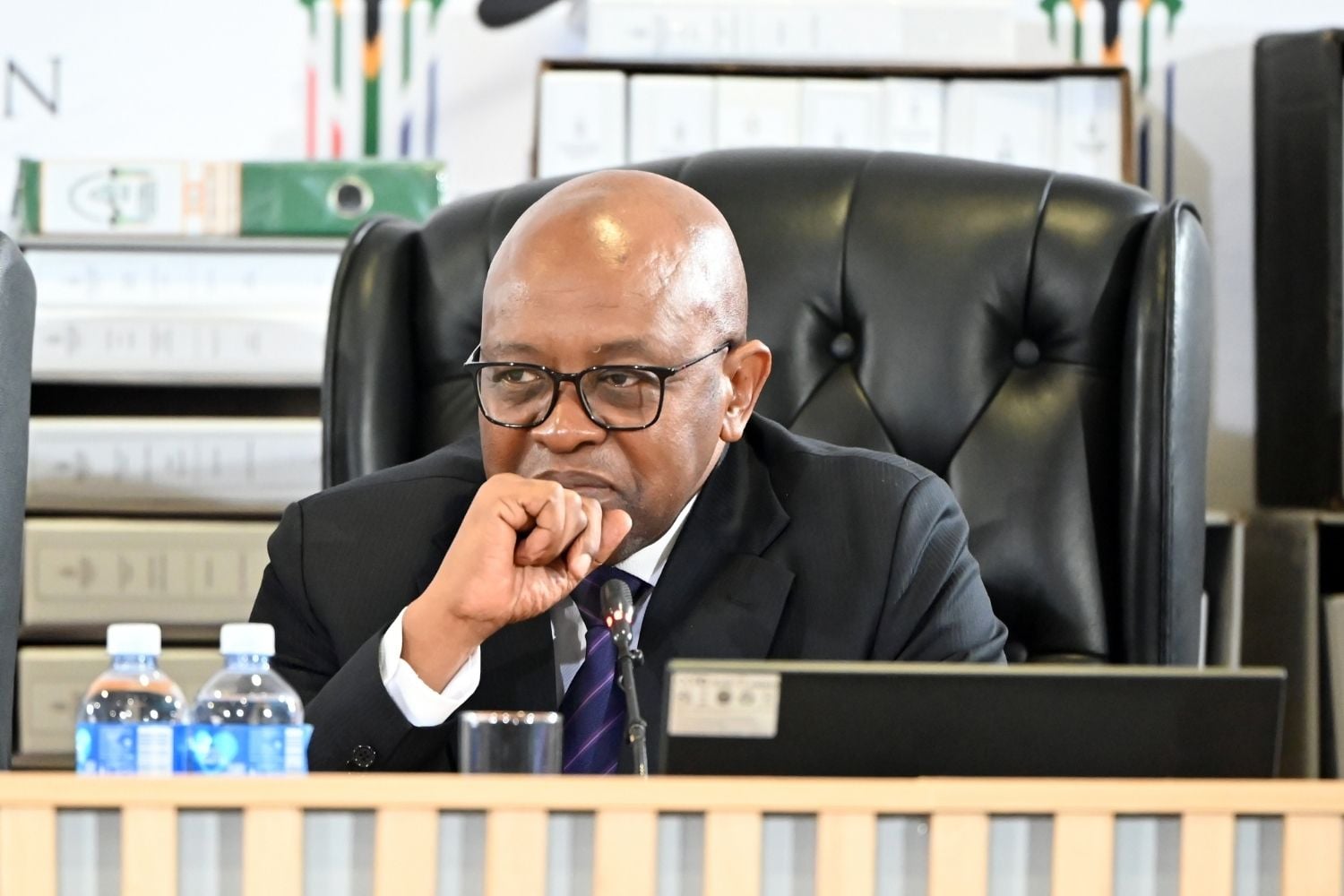
Retired judge Mbuyiseli Madlanga at Brigitte Mabandla Judicial College in Pretoria on 28 August 2026. Picture: Gallo Images/Frennie Shivambu


Suspended Crime Intelligence deputy head Feroz Khan may have to undergo an independent medical examination before the Madlanga commission considers further postponing his testimony.
Khan was expected to appear before the commission at the Brigitte Mabandla Justice College in Pretoria on Tuesday, 1 September 2026.
The senior Crime Intelligence official was originally scheduled to testify on 1 July. However, his appearance was delayed after he was shot in Houghton, Johannesburg, on 28 June. Khan was treated at Milpark Hospital and discharged in mid-July.
The Citizen previously reported on the extent of Khan’s injuries following claims that the attack may have been staged.
Feroz Khan seeks postponement at Madlanga commission
The commission’s chairperson Mbuyiseli Madlanga asked Khan’s lawyer, Muhammed Vally, during Tuesday’s proceedings whether his client would consent to an examination by an independent medical professional.
Vally indicated that the legal team was not opposed to the proposal, but raised concerns about the potential impact of such an examination on Khan’s condition.
“We, in principle, don’t object to having that solution imposed simply because we believe that it is a means to an end,” he told the commission.
The independent doctor, Vally indicated, would first need to consult Khan’s treating doctor to avoid a “further cascade of the current condition”.
Madlanga expressed frustration over previous instances where witnesses had relied on medical grounds to delay their appearances.
“We have practical experience of this, and I’m not saying that’s what’s going to happen, but I wouldn’t be surprised if it comes to the terminal point of what we have been told at this stage, we are told again ‘ah, he will be well in April of 2027’,” the chairperson said.
Evidence leader challenges medical secrecy
Evidence leader Adila Hassim contended that Khan could not rely on medical privacy to the extent that it prevented the commission from determining whether he was genuinely unable to testify.
“It is inappropriate in the circumstances, and we began proceedings talking about ‘the injury’ without specifics as if there has been some sort of ruling that there is confidentiality properly asserted over the nature of the illness that General Khan suffers from,” she argued.
Hassim clarified that the commission was not seeking unnecessary details about Khan’s health, but needed enough information to determine whether his absence could reasonably be justified.
She also told the commission that the public interest outweighed the privacy considerations of senior public officials such as Khan.
“The public interest before the commission right now is not an interest in General Khan’s health as such; it is an interest in understanding why a senior public officer, who is under compulsory process of this commission for the second time to appear, should be excused from appearing, potentially for an indefinite period.”
She argued that Khan’s general condition should be made known, while the specific details of his illness should remain confidential.
Hassim further pointed to another outstanding matter: Khan has yet to submit his statement, which was due on 22 June, to the commission.
“This statement is long outstanding.”
She said the commission had followed up with Khan’s legal team six times, both before and after the 28 June shooting.
According to Hassim, the legal team had made at least three commitments to submit the statement.
“None of these have been honoured.”
Tight deadline
Madlanga stressed the limited time remaining to complete the commission’s work, with its public hearings scheduled to conclude on 2 October.
“We have got weeks of hearings remaining,” Hassim replied.
The chairperson also questioned whether the commission was being placed in a position where it could not properly test the reasons given for Khan’s absence.
“From where we are sitting, it seems that the commission is being held to ransom to say, once you interpose someone other than the treating doctor, then that’s going to aggravate the condition of General Khan.
“So it basically says there’s nothing you can do, just stay the hell out of it,” Madlanga remarked.
Dispute over medical certificate
The commission also heard details about a medical certificate issued to Khan, with Hassim raising questions over an amendment to the document.
According to Hassim, Khan’s treating doctor initially issued a certificate stating that he would be fit to return to work on 30 June.
The certificate was dated 22 May and had been submitted by Khan to Crime Intelligence head Dumisani Khumalo when he requested to go on medical leave.
But Hassim revealed that a second certificate produced on 20 August changed the date to 27 June and included a diagnosis of “extreme stress, depression, and anxiety”.
The information was contained in public papers relating to Khan’s Labour Court challenge against his disciplinary inquiry, which was dismissed on 31 August for lack of jurisdiction.
Vally described the certificate as a “historical medical record” unrelated to the shooting.
Hassim, however, said the doctor who issued the original certificate had made allegations in an affidavit about how the change came about.
The doctor claimed that Khan’s son had asked him to change the date.
At the time, the medical practitioner believed the request related to “some minor bureaucratic difficulties” and did not ask for further details.
According to the affidavit, the doctor warned Khan’s son that changing the certificate could amount to fraud if the original document had already been submitted to the South African Police Service (Saps).
The son subsequently contacted Khan, who allegedly confirmed that the original certificate had not been submitted.
Hassim highlighted Saps, through Khumalo, had asked Khan for further information about his diagnosis rather than asking for the date on the certificate to be changed.
The certificate had already been submitted, the evidence leader insisted.
“It was a lie.”
Hassim argued that the disputed medical history, together with the repeated delays and the outstanding statement, made Khan’s independent medical assessment necessary.
Ruling on voluntary examination
Madlanga ultimately concluded he was not satisfied with the arguments put forward by Khan’s legal team.
However, he declined to force Khan to undergo an independent medical examination and also did not grant an unconditional postponement.
Instead, the chairperson adopted an approach similar to his ruling in the matter involving North West businessman Suliman Carrim.
Khan will have to voluntarily agree to an independent medical examination conducted by a professional jointly picked by his legal team and the commission.
A medical expert report will also have to be produced and submitted to the commission.
Only once that condition is met will the inquiry consider granting the postponement.
“General Khan’s condition must be disclosed, but what must not be disclosed are the details concerning that condition,” Madlanga ruled.
The commission will also set a deadline for Khan to submit his statement.