
Weak SIM registration practices are making it harder for police to trace suspects, while promised reforms remain outstanding.
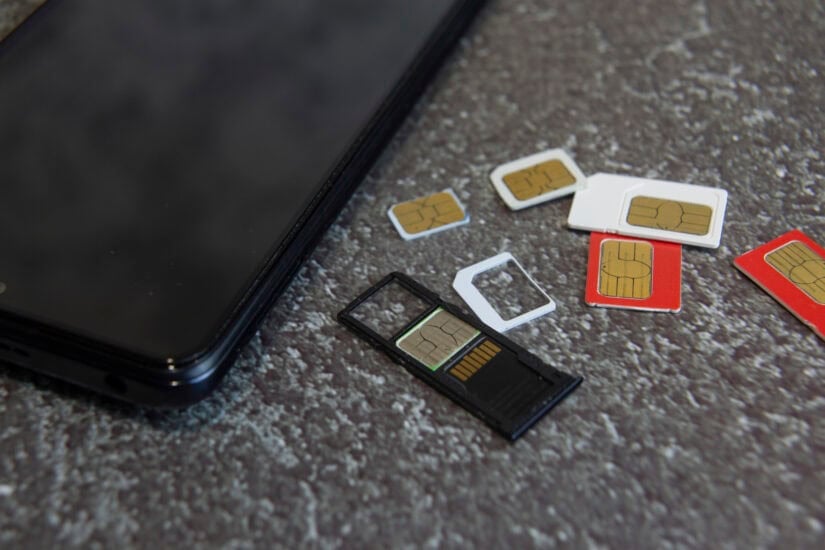
South Africa has recorded thousands of kidnappings, but authorities have yet to demonstrate measurable progress in tackling SIM-related crime. Picture: iStock


Kidnapping has become one of the crimes South Africans fear most. Police recorded 4 638 kidnappings nationally between April and June, with half of them taking place in Gauteng.
Those figures were presented to the Gauteng legislature’s community safety committee last month.
Not every case involves a ransom – police recorded 231 of the national total as ransom-motivated, with many others are tied to hijackings.
But where families are told to pay, the demand usually reaches them by phone.
The committee heard harrowing stories of alleged demands for R5 million in Bekkersdal and R3 million in Roodepoort.
On 14 October, the family of a 35-year-old man snatched in a carjacking in Villiers in the Free State received a R3 million demand the day after he was taken.
When a ransom call comes, everything depends on whose number it is.
A fake registration forces police into a slow, uncertain route – a Section 205 subpoena, call data analysis and reconstructing the handset’s movements.
Justice Minister Mmamoloko Kubayi has promised tougher Rica (Regulation of Interception of Communications and Provision of Communication Related Information Act) enforcement from 1 July, but day 100 – 9 October – passed with no measurable results and no update on fixing Section 40.
Gaps in Section 40, combined with weak registration and distribution practices, have created opportunities for bulk registrations using inaccurate information.
The result is “pre-Rica’d” cards: SIMs registered in bulk against false or borrowed identities before any customer sees them.
Penalties cannot fix that, because penalties need an identifiable offender and an anonymous SIM is built to hide one.
Private investigator Rick Crouch, who has worked alongside the FBI and local police for more than 30 years, said this year that close to 80% of cellphone numbers he encounters in investigations are either not registered, or registered to the wrong person.
He said pre-registered SIM cards could be bought on any street corner and government, while acknowledging this, was “not serious about enforcing it”.
Kubayi committed to addressing these systemic weaknesses through enhanced enforcement led by the SA Police Service (Saps), the National Prosecuting Authority and other agencies working together.
That commitment was welcome and overdue. The difficulty is the public has no way to measure it.
The only baseline is a poor one: 27 investigations into SIM-related crime since 2020 producing one arrest and no convictions.
In August, police in Delft arrested a suspected unauthorised Rica agent found with hundreds of SIMs from all four major networks. Arrests like that matter.
But isolated cases are not a record of enforcement and no consolidated figures on investigations, arrests, charges or blacklisted distributors have been released, meaning that assessing actual progress is not possible.
The state has acknowledged as much, conceding gaps in Section 40 have allowed bulk registrations based on inaccurate information and that this has limited law enforcement’s ability to trace suspects.
The department undertook to finalise a draft legislative proposal for stakeholder engagement by June. Four months later, nothing has been published.
The Rica Amendment Bill already before parliament deals with surveillance safeguards, not SIM registration, and does not address this flaw.
The law should be amended to require facial biometric registration: a selfie with a liveness test, matched to the photo on the ID document, then checked against a government database.
This three-pronged approach gives police a reliable ID to link to a SIM. The technology is mature, used in several African and Asian markets and cheap relative to the security gain.
South Africa left the Financial Action Task Force greylist over a year ago and is now in an 18-month mutual evaluation, with key submissions due this year, the technical compliance assessment expected to be finalised this month and an on-site visit scheduled for March.
Treasury has told MPs the new methodology asks not only whether the rules exist, but whether they work. The minister herself linked progress on Rica to these preparations.
A prosecutor cannot achieve results in combating financial and other crimes as long as the Rica weaknesses remain.
To make meaningful progress, the department of justice should publish its Section 40 amendment for comment before parliament rises for the year, ending bulk registration on another person’s behalf.
The amendment should make real-time identity verification at activation and sealed, tamper-evident packaging, a legal obligation on every operator, reseller and distributor, so the safeguards the industry has volunteered become the standard.
The department should publish enforcement figures every month – investigations opened, arrests made, charges laid and distributors blacklisted – to send a clear message that it will not countenance widespread non-compliance with Rica.
The minister’s 1 July commitment was the right one. More than a hundred days on, the department should still publish its Section 40 amendment for comment before parliament ends and begin releasing monthly enforcement figures.
The families waiting beside a phone are entitled to demand more urgency.