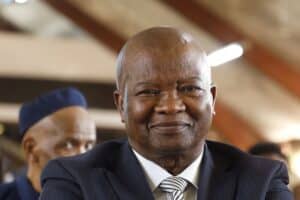



'People are losing trust because things that they want government, the system, to deliver to them, just aren't being delivered'
 Elections 2026
Surrounded by bodyguards, Nelson Mandela attends a rally near Cape Town, during his campaign for the South African Presidency in 1994. Picture: George Hallett/Autograph


As South Africans prepare for local government elections next week, growing frustration with political leaders and poor service delivery has raised concerns about whether voting can bring meaningful change.
Dr Mbongiseni Buthelezi, CEO of the Nelson Mandela Foundation, told The Citizen that people are increasingly losing faith in democratic institutions because their basic needs go unmet.
“People are losing trust because things that they want government, the system, to deliver to them, just aren’t being delivered,” Buthelezi said.

LIVE interactive map, latest news, multimedia and more!
View MapHe explained that citizens expected reliable public services, including quality education, accessible healthcare, and safer communities. The failure to deliver on these expectations has fuelled voter frustration and growing distrust in politics, leading some voters to choose not to participate in elections altogether.
Not voting has consequences
Buthelezi acknowledged that frustration with political parties was understandable but warned that not voting could have serious consequences.
“People think a protest by not voting is punishing the party. It is actually allowing another party to govern.”
Young people, in particular, are increasingly turning to online activism and alternative forms of political participation because they do not believe voting would necessarily improve their lives.
However, Buthelezi argued that voting still matters. He suggested that South Africans address voter disengagement by holding elected representatives accountable to the communities they serve.
Coalition governments under scrutiny
The increasing importance of coalition governments has added another challenge to the state of South African politics.
Coalitions were meant to bring competing interests together, but too many had been shaped by “dirty deals” that did not serve citizens.
“I’m not terribly hopeful,” Buthelezi said. “I think we’re going to find ourselves in another phase of some instability.”
However, the Government of National Unity (GNU) is viewed more positively, with Buthelezi suggesting that participating parties provide checks on one another.
The challenge that now remains is finding ways to stabilise coalition governments while ensuring political leaders are held accountable.
Mandela’s legacy of hope
Reflecting on former president Nelson Mandela’s legacy, Dr Buthelezi noted that Mandela had become disappointed with the quality of political leadership toward the end of his life. His concerns stressed the gap between the democratic values that shaped South Africa’s transition and the reality of governance that many citizens experience today.
“I can imagine that he would be bitterly disappointed with how we’ve squandered our freedom in some ways,” he added.
Buthelezi emphasised that Mandela’s belief in hope was not simply about remaining optimistic but about taking action to bring about change.
“Hope was not a feeling. Hope was an attitude,” He said. “It meant you got up and did something about the problems you see every day.”