
New Spotify data shows Tyla has racked up more than 7 billion streams as the Basadi in Music Awards return to Joburg this Women's Day weekend.
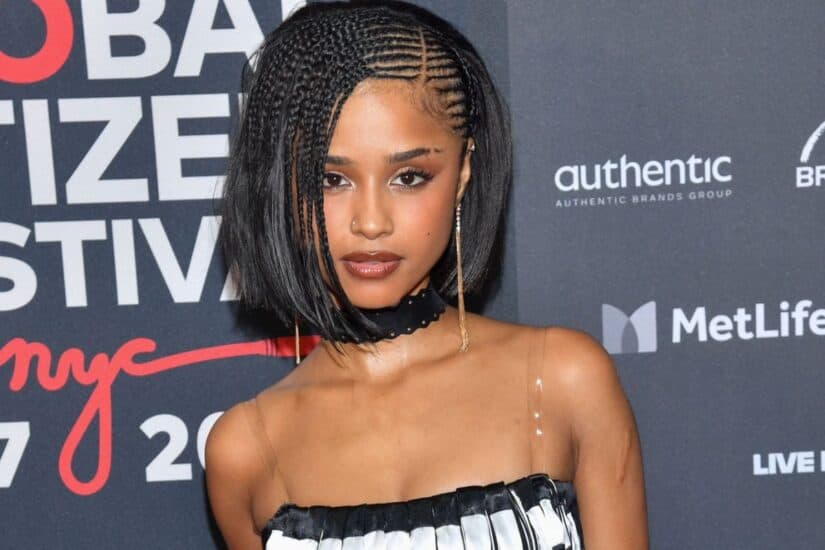
Tyla at the Global Citizen Festival 2025 in New York City. Picture: Facebook/Global Festival


It’s fitting that this year’s Basadi in Music Awards land on the same weekend as fresh proof of just how far South African women have taken the country’s sound.
As the fifth edition of the ceremony unfolds at the Joburg Theatre in Braamfontein on 7 and 8 August, new listening data from Spotify puts hard numbers behind a story South African audiences have long felt in their bones: women have been driving the nation’s music both at home and abroad.
At the centre of that story is Tyla.
According to Spotify, whose data covers listening on the platform since its 2018 South African launch, the Water hitmaker is the country’s most-streamed female artist, its top female artist among international audiences, and the female artist with the widest reach on global playlists.
Across those categories, Spotify says her catalogue has generated more than 7 billion streams – a figure that puts her not just at the top of the local pile, but among South Africa’s most consequential musical exports of any gender.
Lineage that runs from Makeba to amapiano
Spotify frames Tyla’s dominance as the latest chapter in a much older story. The platform’s release traces a line from Miriam Makeba, who carried South African stories to the world decades before streaming existed, through Brenda Fassie’s cultural influence, and on to today’s crop of global names, including Tyla and Busiswa.
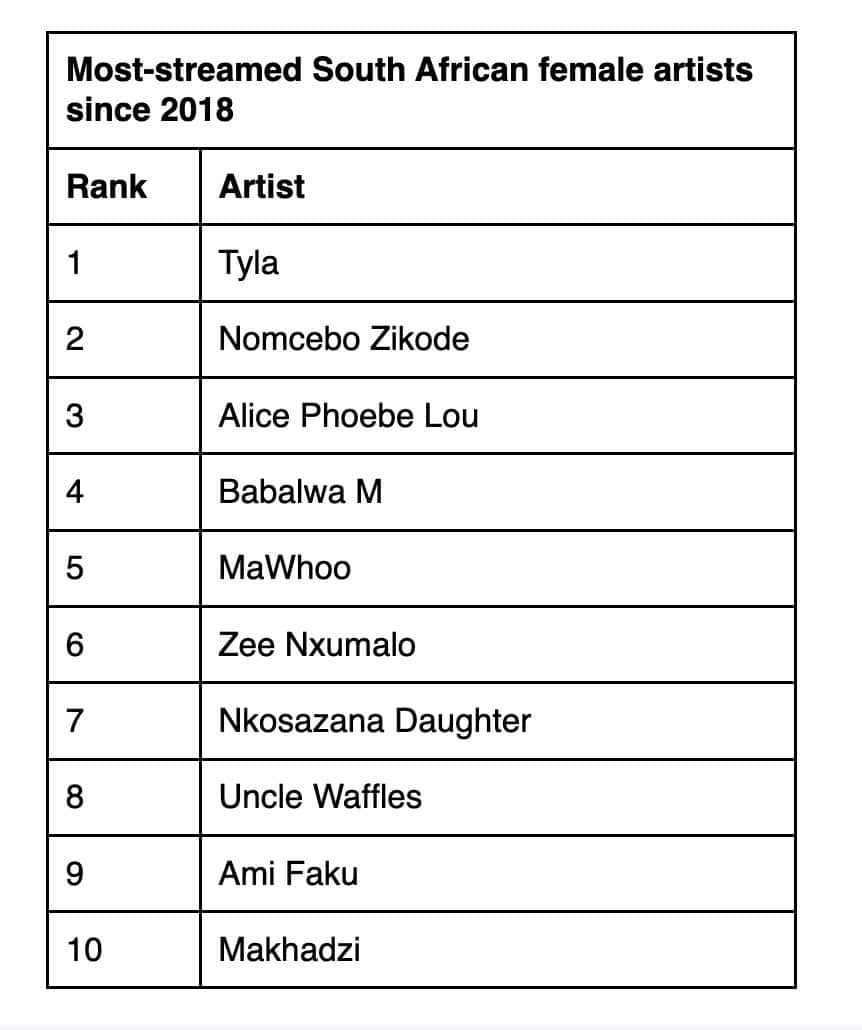
That lineage shows up in the data too. Behind Tyla on Spotify’s most-streamed female artists list since 2018 sit Nomcebo Zikode, Alice Phoebe Lou, Babalwa M, MaWhoo, Zee Nxumalo, Nkosazana Daughter, Uncle Waffles, Ami Faku and Makhadzi. It is spread across amapiano, gospel-tinged pop, folk, and Afro-pop, reflecting just how wide the net of “SA women in music” really is.
Who’s rising fastest
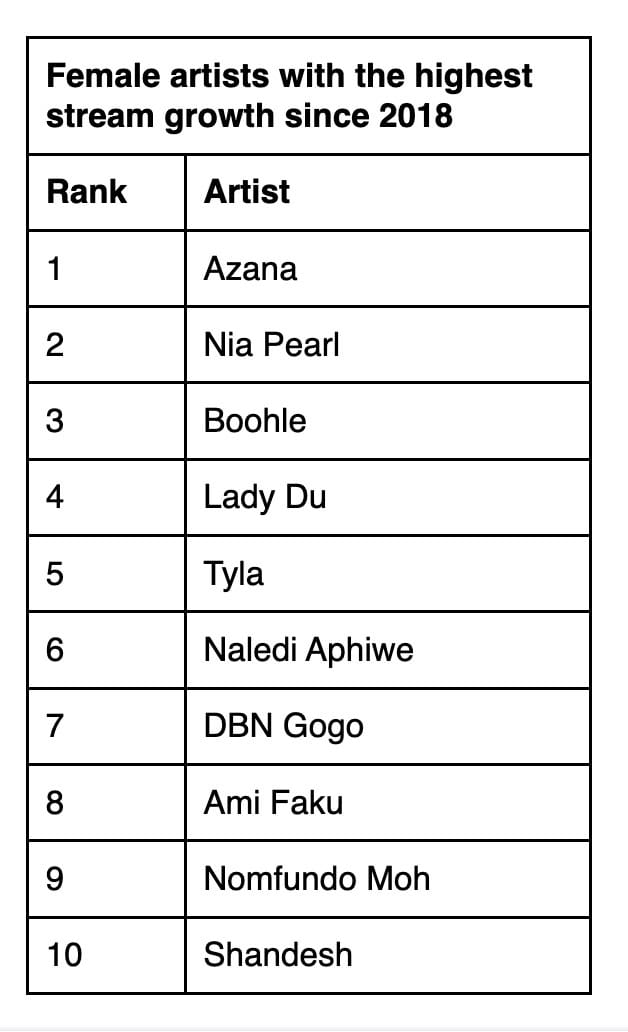
Beyond who’s biggest, Spotify’s figures also point to who’s growing quickest. Azana, Nia Pearl, Boohle, Lady Du and Tyla herself lead the list of female artists with the sharpest stream growth since 2018, followed by Naledi Aphiwe, DBN Gogo, Ami Faku, Nomfundo Moh and Shandesh – a list dominated by amapiano and dance acts riding the genre’s global surge.
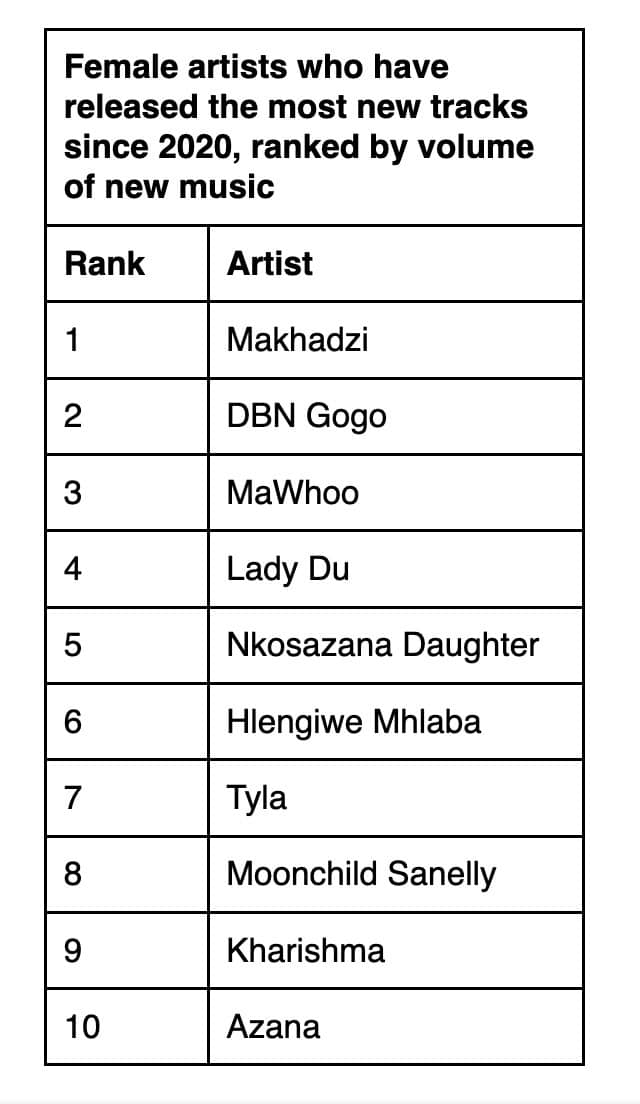
Prolific output matters too. Makhadzi tops the ranking for most new tracks released by a female artist since 2020, ahead of DBN Gogo, MaWhoo, Lady Du and Nkosazana Daughter – with Tyla, Moonchild Sanelly, Hlengiwe Mhlaba, Kharishma and Azana rounding out a top 10 that shows even the genre-hopping global stars are keeping up a steady release schedule.
Local languages, global ears
Not every marker of impact is about international reach.
Spotify’s release highlights Nomcebo Zikode, Ami Faku, Nkosazana Daughter, Babalwa M and MaWhoo as the artists driving the most streams of music performed in South Africa’s indigenous languages – evidence, the platform argues, that audiences are choosing songs rooted in local culture and language even as some of those same tracks cross over internationally.
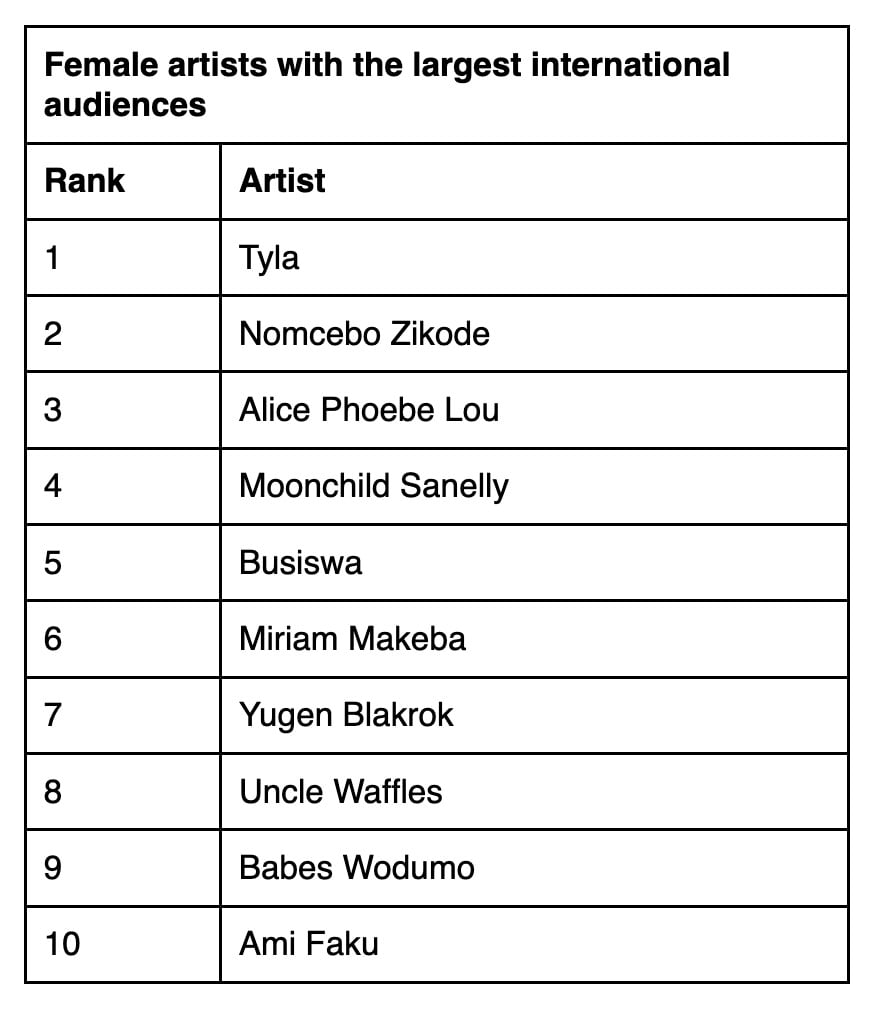
For international audience size specifically, Tyla again leads, followed by Nomcebo Zikode, Alice Phoebe Lou, Moonchild Sanelly, Busiswa, Miriam Makeba, Yugen Blakrok, Uncle Waffles, Babes Wodumo and Ami Faku – a list that spans a living legend, genre-benders and amapiano’s biggest crossover names in one breath.
The story behind the headline numbers
Spotify says more than 780 South African female artists are currently available on the platform, with nearly 700 of them streamed by audiences outside the country over the past year.
Closer to home, 645 female artists were streamed by South African listeners in the same period – numbers Spotify positions as proof of both the depth of local talent and a growing local appetite for women-led music across genres.
Fitting backdrop for the Basadi weekend
The timing lines up neatly with the Basadi in Music Awards, now in their fifth year, which return to the Joburg Theatre on 7 and 8 August under the theme “REWIND” – a nod to the ceremony’s own five-year history of honouring women in South African music.