
5G coverage is rising, but most users still rely on 4G.

South Africa’s telecom sector has poured billions into expanding 5G and fibre networks, but a new report suggests many consumers are seeing little benefit. Photo: iStock


South Africa’s telecom sector has poured billions into expanding 5G and fibre networks, but a new report suggests many consumers are seeing little benefit, with customer satisfaction falling, network performance under pressure, and rural communities still lagging behind.
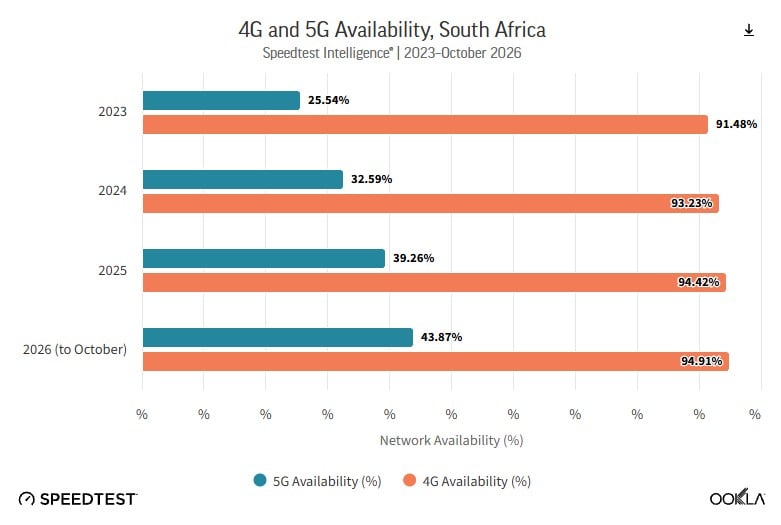
A study by Ookla found that while 5G coverage has surged across the country, adoption remains relatively low and significant disparities persist between urban and rural areas.
Key takeaways
- 5G coverage is rising, but most users still rely on 4G.
- Mobile speeds improved slightly as more consumers moved to 5G.
- Urban areas far outperform rural regions on connectivity.
- Fibre is growing, but broadband speeds remain largely unchanged.
- Customer satisfaction continues to decline across mobile and fixed networks.
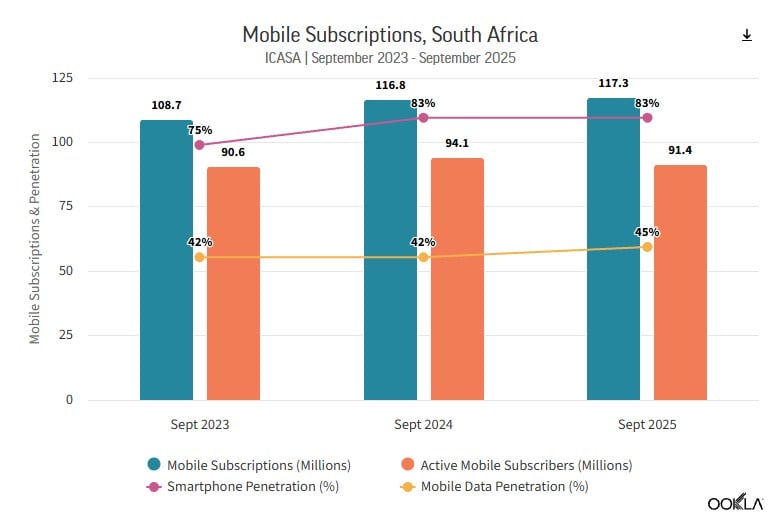
According to the report, 5G coverage increased from 14.4% of locations in 2023 to 47% by October 2026, while national population coverage reached 58%. Yet 5G accounts for only around 18% of mobile connections.
Network rollout
The findings suggest that network rollout is outpacing customer uptake, despite telecom operators accelerating investment following South Africa’s 2022 spectrum auction.
More concerning, however, is that mobile network performance is showing signs of strain.
5G
While overall mobile download speeds rose modestly to 55.71Mbps, Ookla found that both 4G and 5G speeds have declined over the past nine quarters.
5G download speeds dropped by 26.4%, from 205.19Mbps to 150.98Mbps, while 4G speeds fell by 11% to 32.7Mbps. The report attributes this partly to growing network usage.
The digital divide also remains stark.
In provinces such as Gauteng and the Western Cape, 5G has become increasingly available, but rural coverage averages just 30.7% nationally and falls as low as 7% in the Eastern Cape.
Customer sentiment
At the same time, customer sentiment is deteriorating.
“The priority should be to expand broadband infrastructure in underserved areas, improve service quality in urban areas, and introduce more affordable packages to address customer friction and reverse the NPS decline.”
The report found that customer satisfaction scores for both mobile and fixed broadband services have fallen steadily since 2024, reflecting concerns around affordability, coverage and service quality.
Fibre
Meanwhile, South Africa’s fibre market continues to grow rapidly, with subscriptions increasing 19.3% year-on-year to more than 3.26 million.
Despite that growth, the country ranks only 116th globally for fixed broadband performance and trails several African peers, including Egypt, Algeria, Ghana and Mauritius.
The report’s conclusion is blunt: South Africa’s telecom sector is expanding, but unless operators improve affordability, network quality and rural access, faster infrastructure alone may not be enough to win over consumers.