Being "properly" driven is where the Giulia QV show its real potential despite its advancing age.
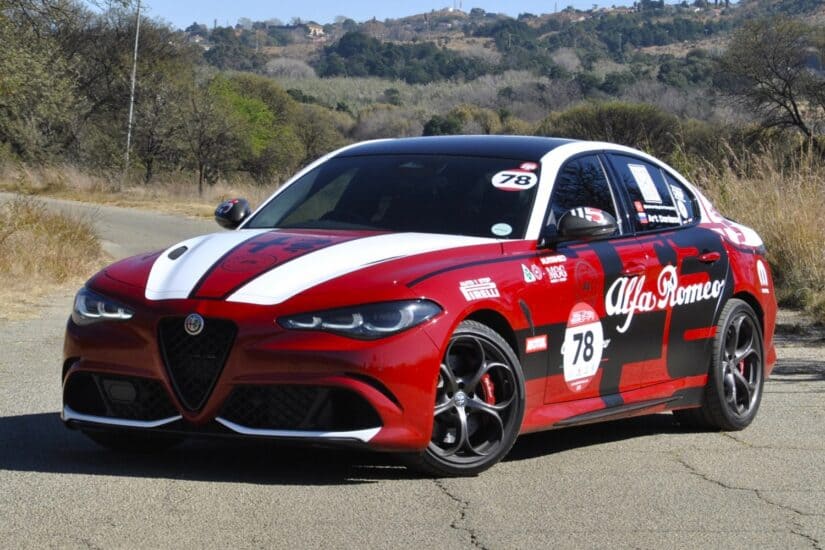
Clad in its Simola Hillclimb attire, the Giulia QV still makes for an evocative piece of design. Picture: Charl Bosch


The Alfa Romeo Giulia, in both normal and performance Quadrifoglio Verde (QV) versions, has been around since 2015.
No more EV-only future
Since then, only subtle changes have been made to the exterior and interior in 2020 and 2023 respectively.
Dynamically unchanged and in a line-up now spanning two variants, the Giulia is anticipated to receive at least one more rework within the next 18 months.
This comes after its almost finished replacement, supposed to have debuted this year, was put on ice after parent company Stellantis’ backtracking on its electric vehicle-only mandate.
Back in 2021, the conglomerate confirmed that Alfa Romeo would produce only EVs from 2027, a move it formally overturned last year.
Lifecycle extended
This means that the current Giulia, and for that matter its Stelvio sibling, will remain in production until at least next year in readiness for their replacements arriving in 2028.
As such, the Guilia will be 13 years old when it goes out of production. As a response to the prolonged lifecycle, order books re-opened in February, with no closing due until at least the end of 2027.
In addition, the next generation’s move towards a reported hybrid powertrain has also assured the future of the Ferrari co-developed 2.9-litre bi-turbo V6, which will live on in the QV and Stelvio Q.
Straight from success
This, together with Alfa Romeo’s recent exploits at the Simola Hillclimb, which involved a number of class wins, prompted a reunion with QV similar to the Stelvio Q that also competed at the Knysna showpiece.
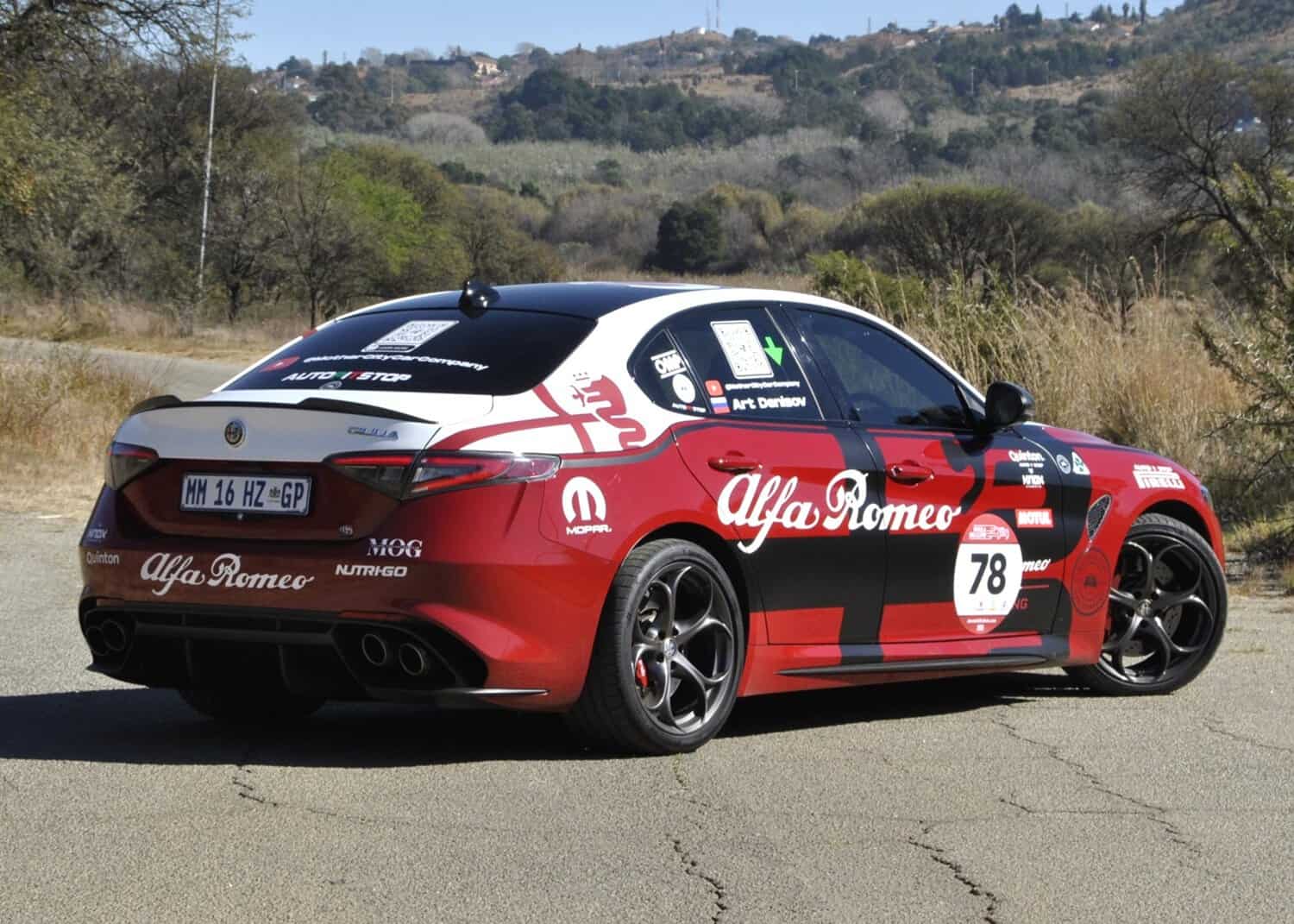
Arriving in its full Simola suite – even retaining the race number – the QV’s shorter than normal three-day stay was to involve no visits to Gerotek.
In fact, it clocked a 0-100 km/h of 4.5 seconds when tested by Road Test Editor Mark Jones back in 2017.
At the same time, the unit’s almost 30 000 km reading on its odometer and desire not to put its heavily strung to the test even more after the pounding it received at Simola, resulted in the three-days being a gentler affair, but with boxing gloves on instead of mittens.
The looks
While the various stickers and wrap did spoil a gander at the QV’s true aesthetic, an opposite reaction was that it also suited it given what the four cloverleaf logos on its front wings represent.
As part of the last round of updates in 2023, the Giulia received the same 3+3 LED headlight arrangement as the now pre-facelift Tonale, a restyled grille, new front bumper and, unique to the QV, carbon mirror caps plus carbon detailing on the grille.
At the rear, the design of the diffuser has been changed as per the revised bumper, while the light clusters have been darkened.
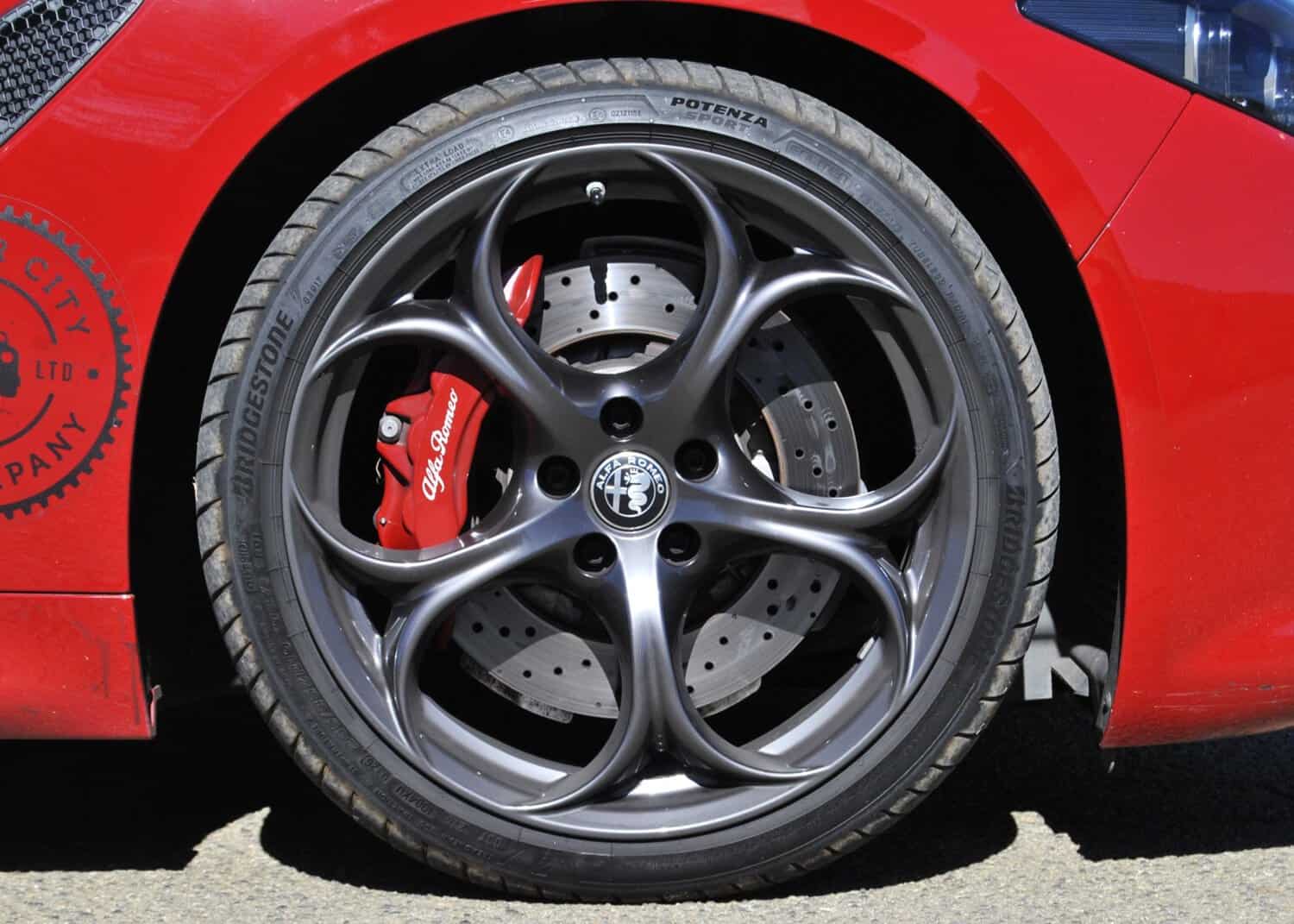
Finally, the 19-inch tele-dial alloy wheels follows the example of the Stelvio Q’s 20-inches by receiving a so-called “burnished” finish.
As much as the usual stereotypical descriptive terms for any Alfa Romeo are likely to be resorted to when it comes to styling, steering away from them in the QV proves especially difficult.
Its Simola suite aside, it simply looks “fit-for-purpose” and even more aggressive than the Stelvio Q sampled in April.
Along with its quad exhaust outlets, subtle carbon bootlid spoiler and rectangular lower air dam, there is little escaping the fact that the QV means and promises nothing but performance, with typical Italian theatrics thrown in.
Focused on the driver
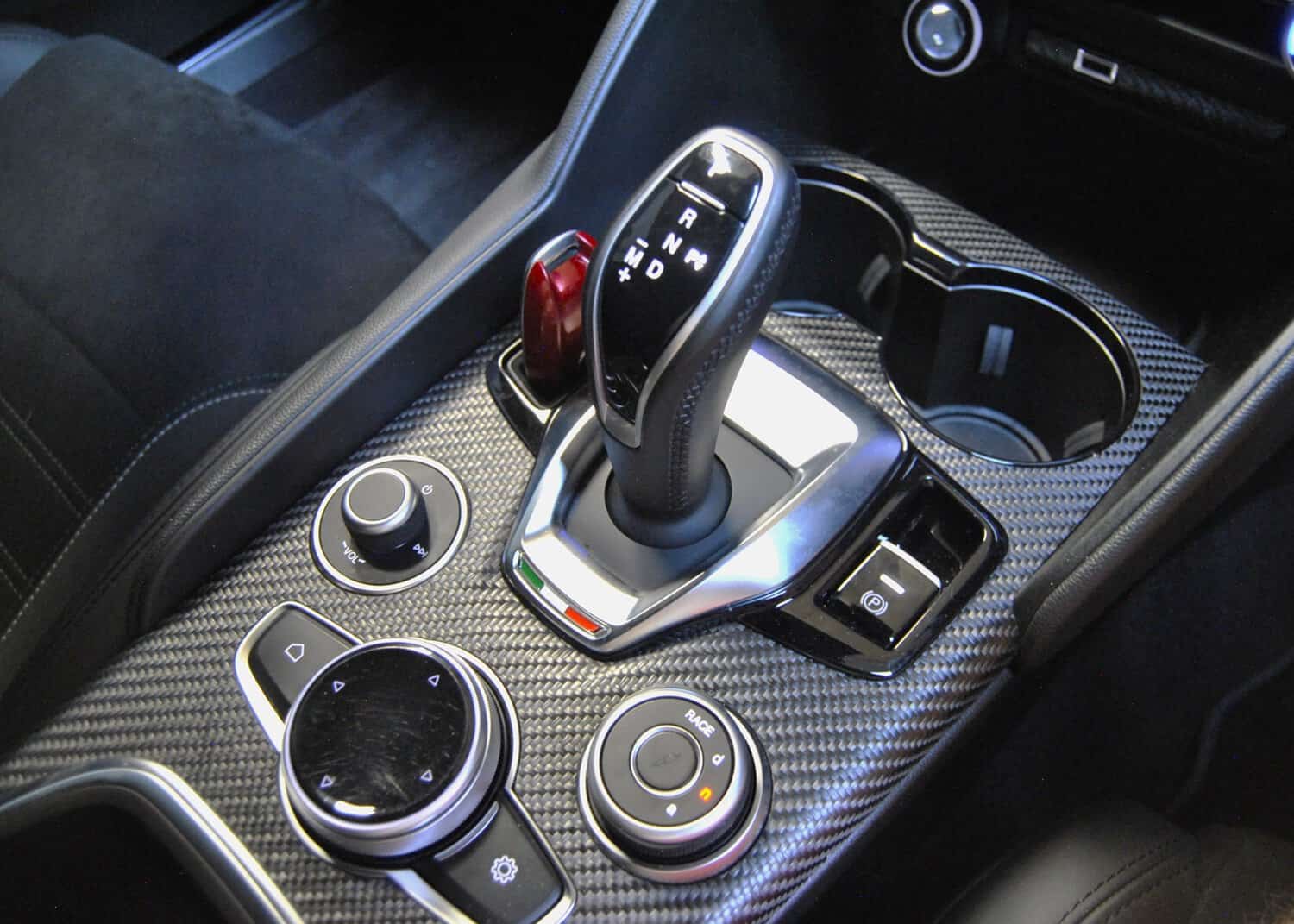
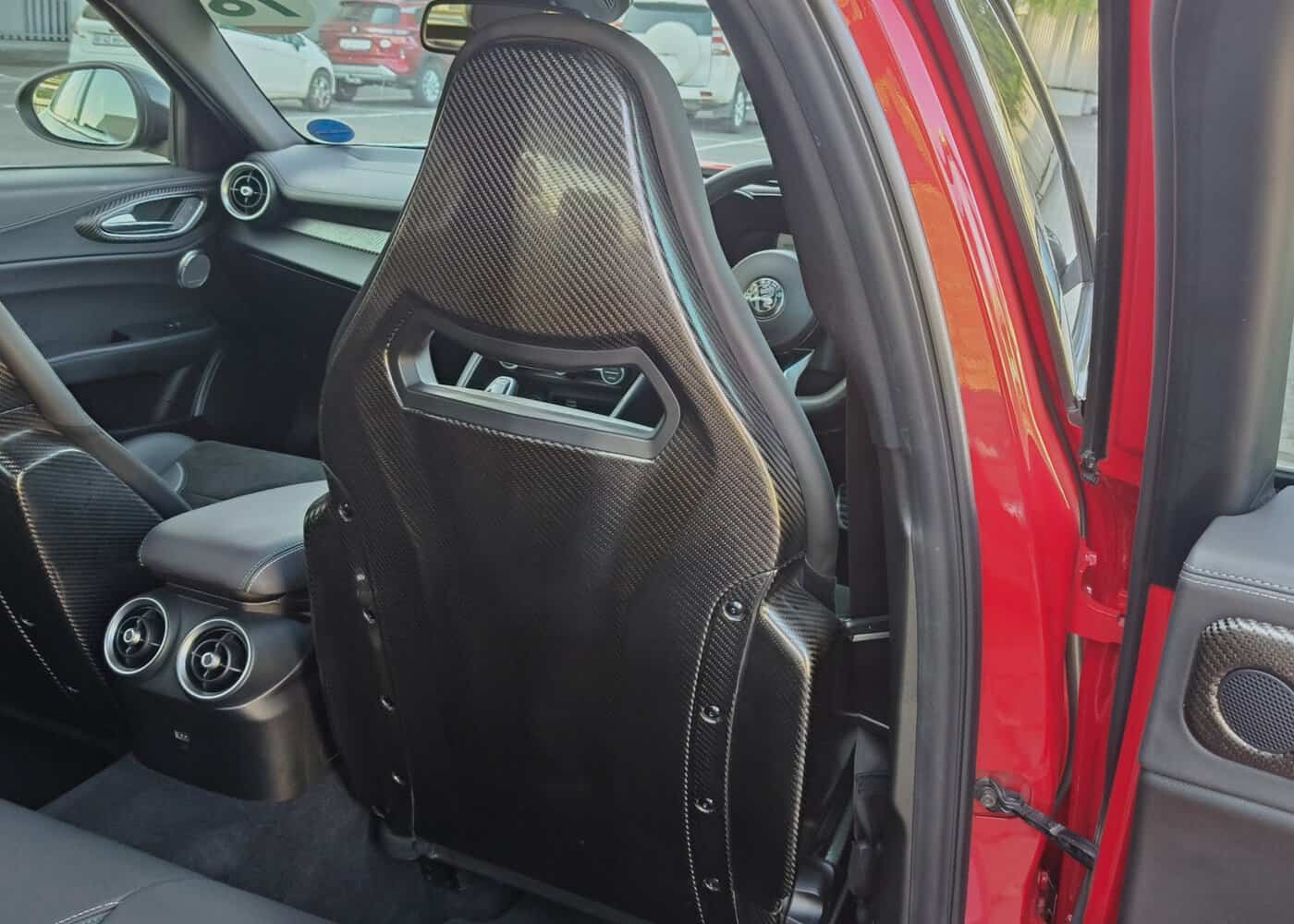
Inside, the spectacle doesn’t stop as the QV’s overdramatic approach to performance comes not only with more, real, carbon fibre on the dashboard, doors and steel steering, but also for the shells of the front seatbacks.
As with the Stelvio Q, the magnesium paddle shifters affixed to the steering column remains, as does the seats being wrapped in Alcantara and the red starter button on the wheel itself.
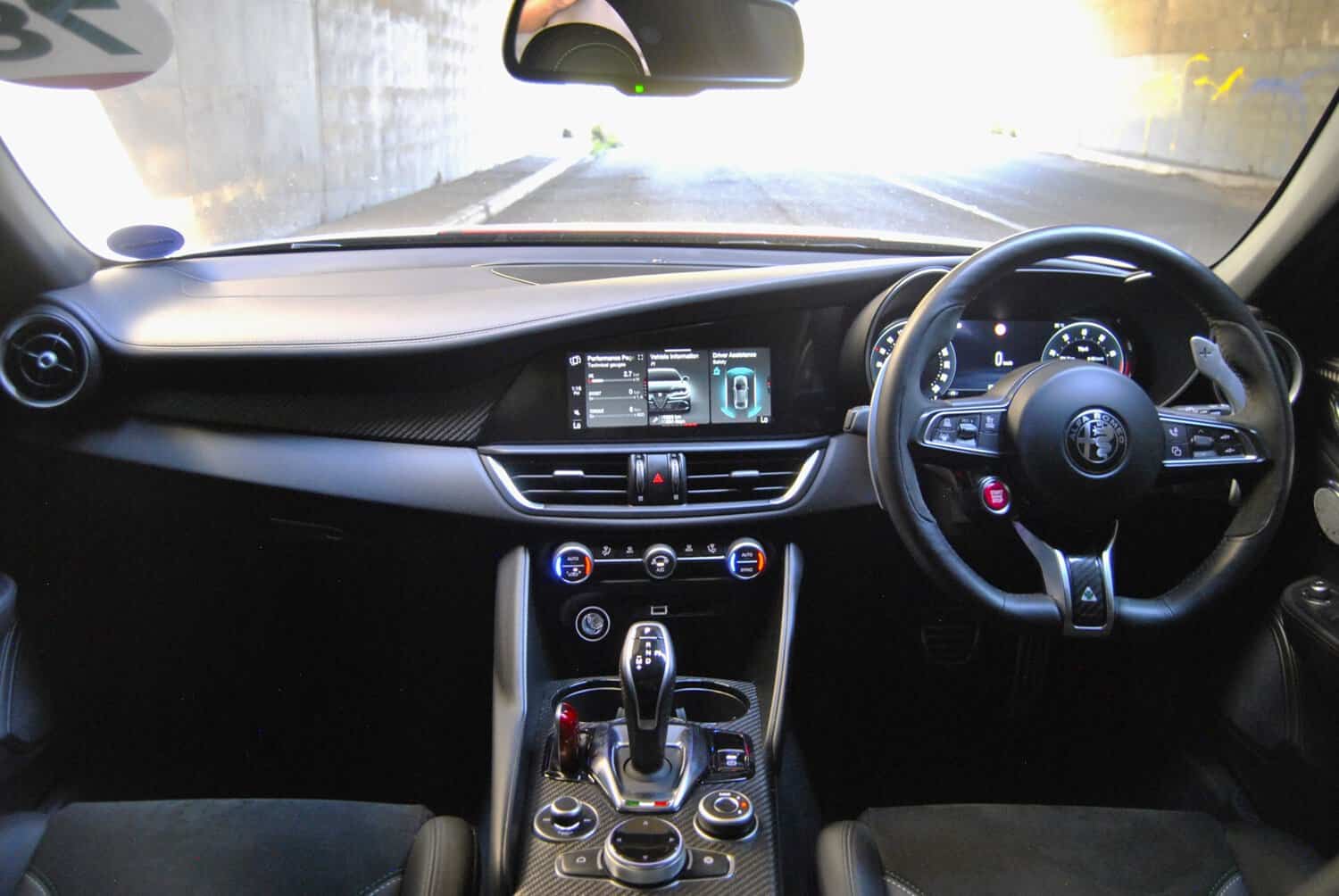
Compared to its exterior makeover three years ago, the only change made to the interior has been the periscope-style 12.3-inch instrument cluster taken from the Tonale.
Predating the infotainment system being upgraded from 8.4 to 8.8-inches in 2019, the simple and harsh truth is that the interior feels the Guilia’s age despite it being ergonomically sound.
Aside from physical switchgear, the BMW iDrive-like scroller dial for the infotainment system has been retained, making navigating the system a lot easier that using the touchscreen interface.
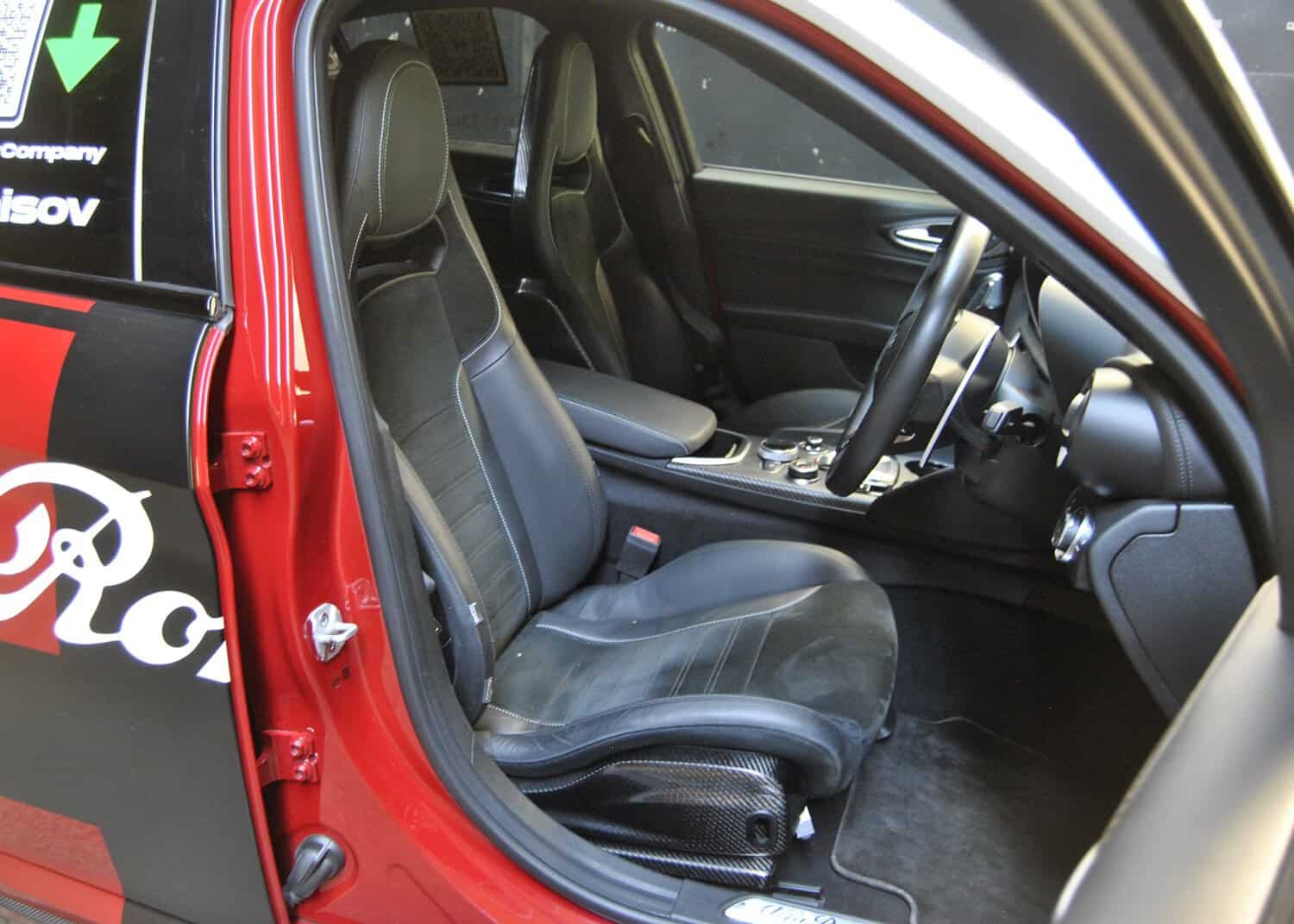
What’s more, the driving position is near perfect and the seats not only snug, but also comfortable without being overly “race car” hard on the cushion front.
While fit-and-finish still felt premium, with a good mix of leathers and carbon, the punishment it received over nearly 30 000 km had resulted in an unwelcome rattle from the dashboard.
However, given what it has been subjected to, and having known beforehand, this points to an isolated case instead of being “standard” on any new Giulia standing at an Alfa Romeo dealership.
Not that practical…
As with the Stelvio Q, the Giulia’s most immediate issue is not the – still annoying – volume dial for the audio system to the far left of the driver, but compromised rear passenger practically.
Whereas legroom proved no issue, headroom will leave those taller in stature feeling a bit short changed.
Opposite to the Stelvio Q, the Guilia QV’s front seats are manually adjustable, which some are likely to frown upon considering its price tag of over R2-million.
For the love of the drive
Admittedly, and in the shrewdest possible sense, practicality will be of little consideration to most QV owners at the push of the starter button.
While the pre-2023 updated 2.0-litre Veloce had shown its mantle compared to the comparative Stelvio, the Giulia QV does the exact same with the Stelvio Q.
The first mainstream rear-wheel drive Alfa Romeo sedan since the 75 exited production in 1992, the QV’s lower centre of gravity makes it feel closer to the road and more “at one” with the driver than the elevated Stelvio.
Still no lightweight at 1 695 kg, the stereotypical “theatre sensation” can also be amplified more than in the Stelvio in terms of driveability.
As with its sibling, the Ferrari V6 is laggy low-down and needs to be almost needs to be encouraged to show its real self.
This it does with not too much further asking. Leaving the DNA drive mode selector in “N” or Normal mode, the Giulia QV is almost docile and its suspension firm, but not so that it becomes rock hard or uncomfortable.
Switching the tempo up, though, sees it come alive in a more brutal way of delivery than the four-wheel drive Stelvio.
At the same time, the soundtrack makes it feel more visceral and the steering so sharp that it inspires confidence to push the envelope a bit more.
Switch it to “D” or Dynamic and, as the saying goes, everything changes. Whereas the Q4 four-wheel drive system in the Stelvio Q is rear biased, the “security” of being saved when pushing too hard is lost in the Giulia QV.
Simply put, it becomes violent in an intoxicating matter that sees a three-figure speed flashing up on the speedometer rapidly. As such, care will have to be taken.
Once a balance is found, though, the Guilia hunches down to annihilate once’s perspective of speed as the low-down lag disappears and the power delivery upped to near tunnel vision levels.
Aside from the engine’s 375kW/600Nm, the eight-speed automatic gearbox has been calibrated almost perfectly, as it remains effortless and smooth and Drive, but shows a rapid and direct turn of shifting when using the paddle shifters.
Using the shifters in Normal mode also impressed as, by their sheer nature, leaving them entirely amounts to an injustice considering their upliftment in overall driver engagement.
Akin to an almost analogue feel, once back to its “sedate” mode, the Giulia feels nimble and refined in a manner of any typical sports sedan, yet with the lingering sensation of wanting to provoke it to show where its real success lies.
Consumption
As for fuel consumption, the Giulia QV won’t be bought for frugality when compared to the Veloce
That being said, the three-day tenure over 413 km resulted in an indicated best of 10.8 L/100 km. However, with more vigour, this rapidly rose to more well above 13.0 L/100 km.
Conclusion
In simple terms, the Alfa Romeo Giulia QV won’t be for everyone and will find it hard to sway the opinion of any RS, AMG or M committal
What it, however, has is a unique feel and way to performance that could only be explained and understood when behind the wheel.
At, R2 039 500 its asking price is steep considering not only its age, but also its lack of some modern features and tech compared to some of its rivals.
However, for the thrill of the drive and how a sports sedan should feel, it is simply too hard not to be wowed in a manner of complete of awe.