The early signs look good for Volkswagen's eagerly awaited, and vitally important, incoming entry-level SUV.
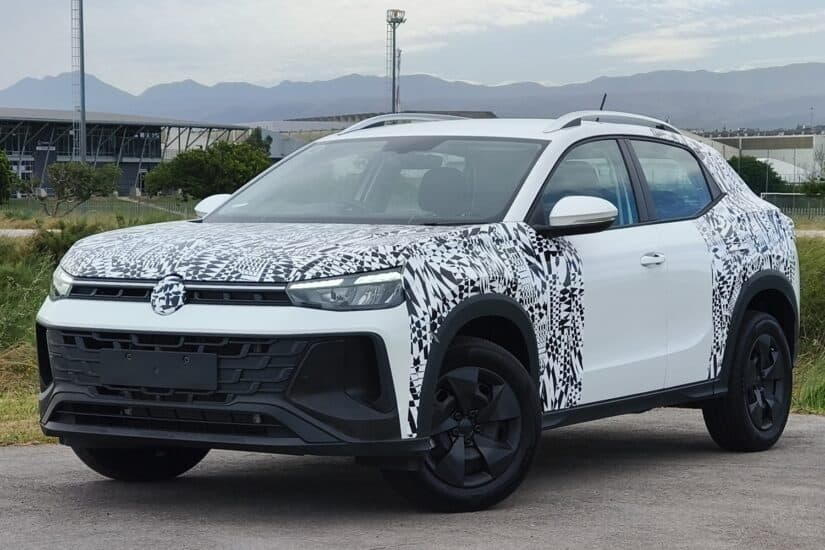
Tengo will have its disguise fully removed in 2027. Picture: Charl Bosch


A project first announced almost three years ago, local production of the Volkswagen Tengo officially started on Monday, 9 November, ahead of the start of sales in March next year.
Record investment now seeking returns
Known at the time as the “third model” in reference to it being made alongside the Polo and Polo Vivo, the Tengo forms part of a joint venture between Volkswagen Group Africa, Skoda India and Volkswagen do Brasil that saw R4-billion being invested into the facility located in the town formerly known as Uitenhage two years ago.
A project, at the time, shrouded in uncertainty following South Africa’s now seemingly resolved energy and economic challenges, the Tengo will also be exported similar to the Polo, albeit to mainly African markets instead of Europe of Australasia.
Third of the third
Its name chosen by a public vote last year, the Tengo will be available in three trim levels and two engine options, with pricing to be announced in January next year.

Based on the same MQB A0 platform as the Polo and Polo Vivo, it will be positioned below the T-Cross in Volkswagen’s SUV product line-up, and complete the joint venture product roll-out after the Skoda Kylaq in India and the Tera in Brazil.
Its approval having resulted in a month shutdown of the plant in April last year for the installation of assembly lines, robots and upgrades to the paint and body shops, Volkswagen provided the media with a first preview of the Tengo last week, which included a drive of the prototype units.
Tested to extreme
Known internally as Project 240, the Tengo’s late arrival had been intentional to allow Volkswagen ample time to set it up for South African and African market conditions.

Since being announced, a total of 140 pre-production mules have been made, with 41 prototypes subjected to a combined 2 646 000km of real-world testing over a 42 week period in various terrains and conditions.
Tested extensively for quality, durability and reliability, the Tengo will have a projected local content of 42% and, at the very least, a four-star Global NCAP crash rating Volkswagen says could potentially have already exceeded this based on its own tests.
Tengo vs Tera: What has changed?
Mechanical
At the same time, the Tengo’s relations with the Tera hasn’t resulted in it being lightly altered to cut costs.
Instead, it shares a number of components with Polo with the result of it being manufactured on the same assembly line without the need for a dedicated section of its own.
While elements from the Tera remain, Volkswagen claims a 75% parts number match with the Polo, though the exhaust system, brakes and fuel tank are all unique to the Tengo.
What’s more, the rear axle is new and the engines re-calibrated to run on lower quality fuel or so-called dirty fuel up to Euro 3 emissions regulations.
For South Africa, though, both engines will adhere to Euro 6 standards.
Exterior
Opening the doors reveals more changes, though not as extensive as the exterior.
The area where component sharing isn’t immediately noticeable, the front bumper, lower air intake and grille are all Tengo specific and not shared with the Tera.
Along with new wheel arches and headlights, the mirrors are modelled on those of the Taigo and the roof itself taken directly from the Polo.
Whereas the doors and bonnet are revised pieces from the Tera, the roof rails are also from the Taigo and have been re-designed to be functional and not simply an aesthetic add-on.
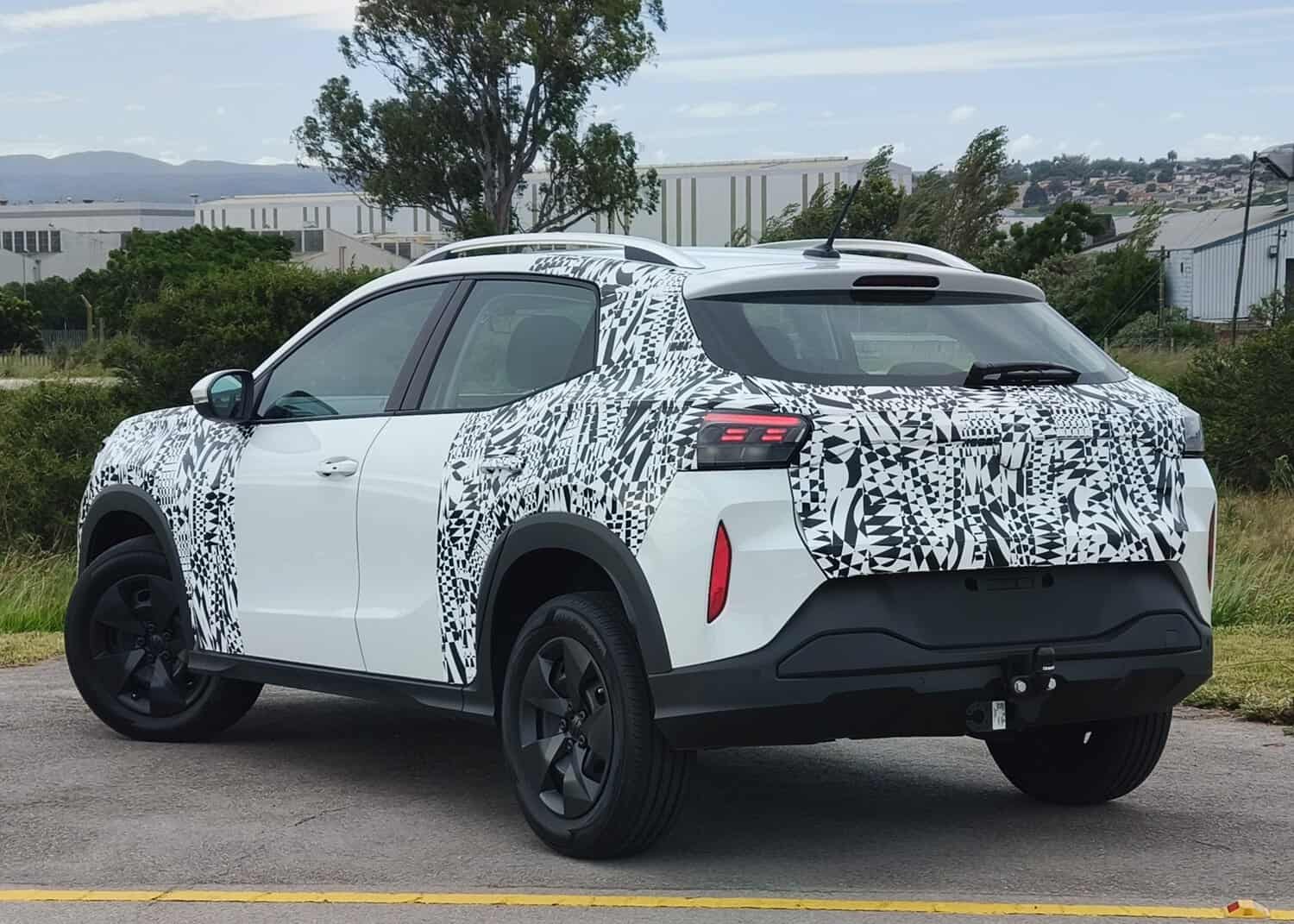
At the rear, both the bumper and imitation skidplate are new, as are the three designs for the 16-inch wheels. An optional 17-inch has been set aside from the range-topping model.
In total, eight colours have been approved, all devised specifically for South Africa and Africa:
- Pure White;
- Reflex Silver;
- Smokey Grey;
- Clearwater Blue;
- Moonstone Grey;
- Reef Blue;
- Deep Black Pearl;
- Wild Cherry Red.
As a stylistic easter egg, the rear window will have the outline profiles of the CitiGolf, current Vivo and the Tengo, and a retro Volkswagen typeface at the base of the windscreen inspired by the Type 2 Kombi.
Three further additions is a “See You Soon” decal below the door handle, “trip on mode” on the parcel shelf and a concealed Volkswagen logo within the seat fabric on Life variants.
Interior
As with its exterior, the Tengo’s interior has undergone similar changes, albeit on a smaller scale.
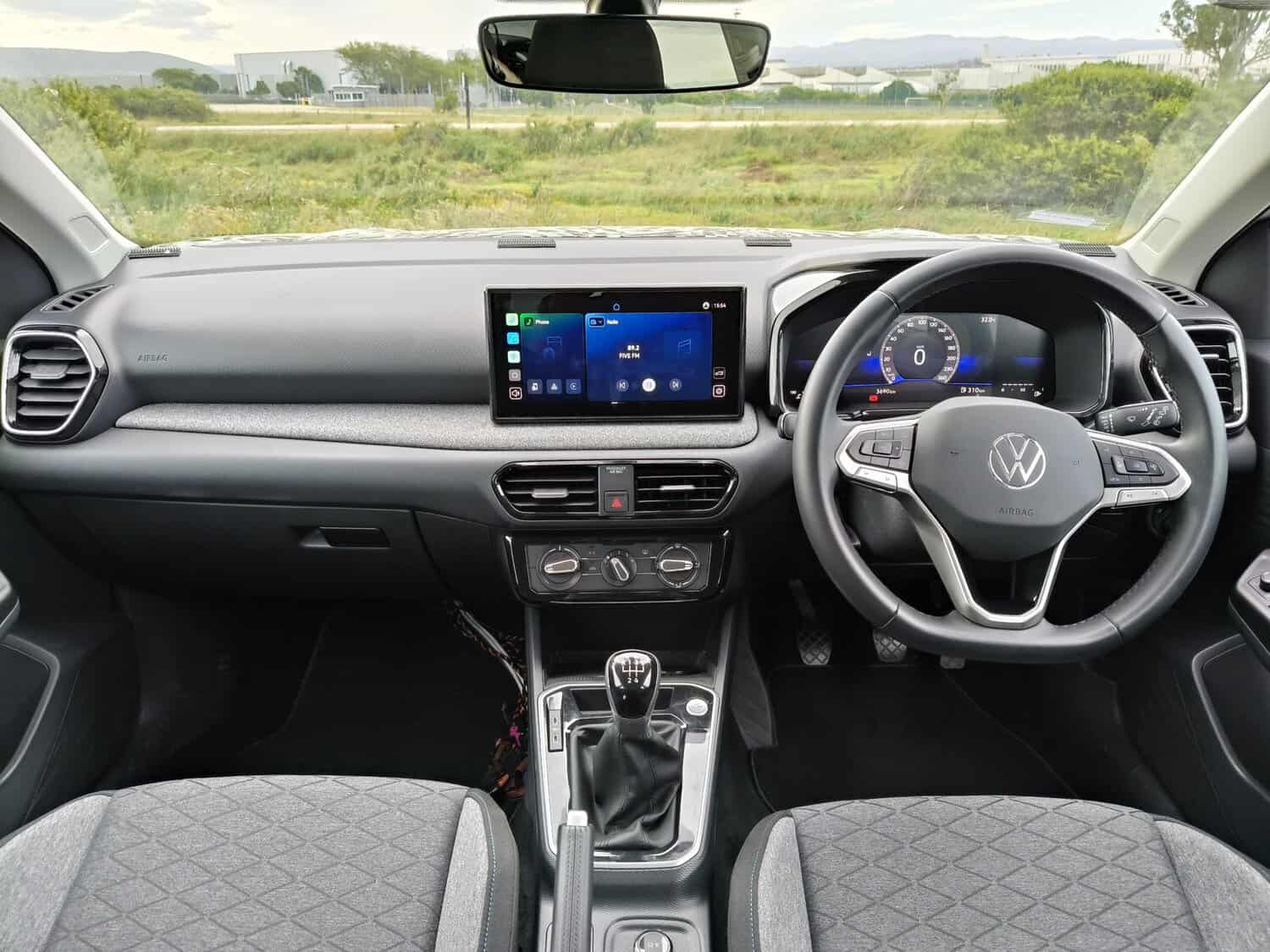
Aside from requiring a new dashboard to make it right-hand drive, the grained and textured material finishes are new. However, the steering wheel is taken from the Polo.
Carried over from the Tera is the 10.1-inch infotainment display, but modified for the local market. The same applies to the centre console, which has a 25-watt wireless smartphone charger pad versus the Tera’s 10-watt.
Trim levels
In terms of spec, the base or L1 variant will have the Trend nomenclature and the mid-spec L2 the Life designation. Initially, only these grades will be available at launch.
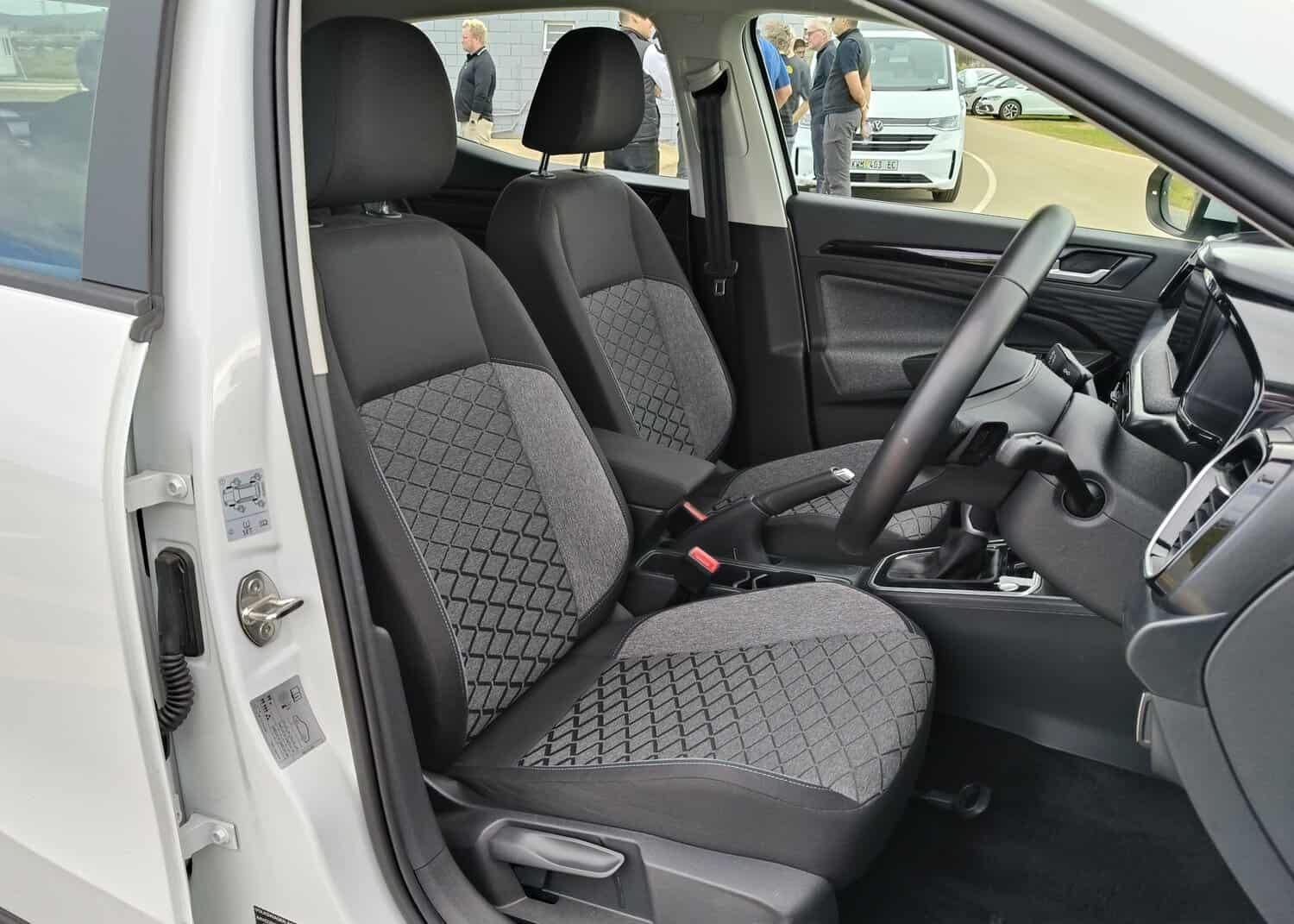
Joining later, the L3 will carry the Style name and have the option of the black appearance. Not considered, for now, is an R-Line derivative.
Safety
While final specification is still to be revealed, Volkswagen has confirmed the following safety and driver assistance systems across most grades as a means of obtaining the four-star Global NCAP rating.
These include:
- auto on/off headlights;
- rain sense wipers;
- six airbags;
- tyre pressure monitor;
- front and rear parking sensors;
- reverse camera;
- Adaptive Cruise Control;
- ABS and EBD;
- Electronic Stability Control;
- Hill Start Assist;
- Automatic Emergency Braking;
- Front Assist.
Engine choices
On the power front, the same EA211 engines as the Tera will be used; the 1.0 TSI outputting 85kW/200Nm and the normally aspirated 1.6 that produces 81kW/152Nm.
Aside from its lower fuel quality tune, the latter will be paired to an optional six-speed Tiptronic gearbox as an alternative to the five-speed manual – the former combination being a unique to the Tengo.
As for the TSI, it will only be mated to the Tiptronic ‘box and not the seven-speed DSG that features on the Polo, T-Cross and Taigo.
Short drive
A visit of the plant, which included witnessing the tests the Tengo had been subjected to, concluded with the first drive of a pair of prototypes.
Equipped only with the 1.6-litre engine, the blast around Volkswagen’s test track amounted to a largely favourable first impression.
That being said, the Tiptronic felt resoundingly sluggish and the transmission prone to holding on the selected gear for too long. Again, though, this will likely to be resolved now that production has started.
The opposite, however, applies to the manual. Despite a high clutch bite point, rowing the five-speed ‘box is a pleasure as the clutch itself is light and the engine more than willing to rev.
While likely to require a bit more input and encouragement on the Highveld, the combination of the manual and free-breathing engine surprised, even in pre-production form.
Ride quality on the bumpy at places test track also impressed, as did quality of the disguise-free interior considering the Tengo’s price placing below the T-Cross, which currently starts at R399 900.
Conclusion
As much as a clearer picture will only emerge at its launch next year, the wait for the Volkswagen Tengo, on face value and after the drive, appears to have been worth it.
Although price will the deciding factor as to whether it lives up to Volkswagen’s expectations, the first signs are not only encouraging, but point to a possible game-changer against the Chinese onslaught.