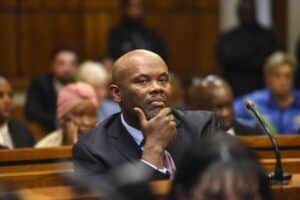
Among the alleged admissions contained in Mazzotti's affidavit was the manufacturing of cigarettes 'off the books'.
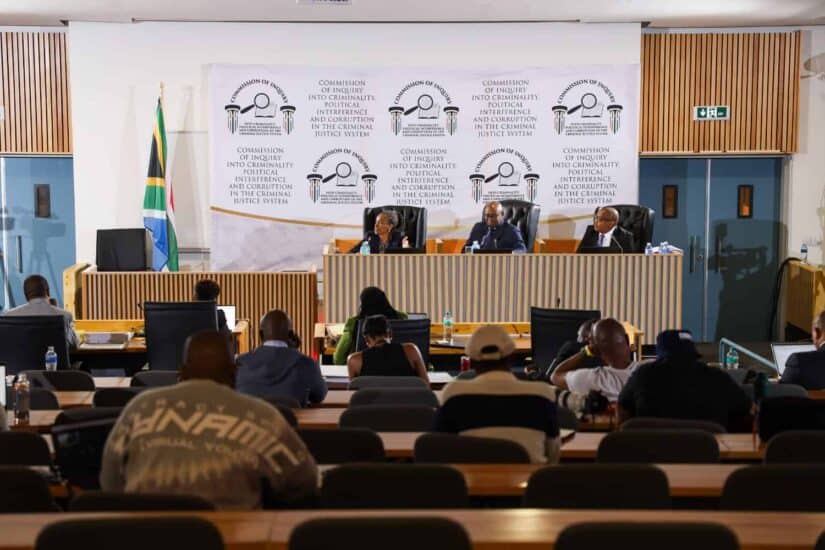
General overview at the Madlanga Commission of Inquiry at Brigitte Mabandla Judicial College in Pretoria on 22 September 2025. Picture: Gallo Images/Luba Lesolle


Allegations of illicit tobacco trading involving Carnilinx have come under renewed scrutiny at the Madlanga commission following alleged admissions made by the company’s CEO, Adriano Mazzotti.
The commission resumed hearings on Friday, 3 July 2026, at the Brigitte Mabandla Justice College in Pretoria.
Although senior Crime Intelligence official Major-General Feroz Khan was expected to testify, proceedings continued in his absence due to his hospitalisation following a shooting incident on 28 June.
Khan, who has headed operation intelligence support within Crime Intelligence since 2017, has been repeatedly mentioned by multiple witness at the commission.
His alleged links with several figures – including Carnilinx director Mohammadh Sayed, EFF leader Julius Malema and criminally accused tenderpreneur Vusimuzi “Cat” Matlala – have drawn particular attention.
Concerns raised over ongoing investigations
Evidence leader Adila Hassim cautioned that some aspects of the testimony may need to be heard behind closed doors.
This was necessary to protect active investigations and ensure the safety of individuals who could be implicated.
Before addressing those matters, Hassim introduced a “voluntary submission” from Mazzotti, received by the commission’s legal team the previous evening.
In his letter, Mazzotti raised objections to claims made in an affidavit by commission investigator Tshepo Nyatlo, arguing that they were damaging to Carnilinx.
The Carnilinx founding member argued allegations of illegal tobacco trading were harming the company’s “business, reputation and commercial standing”.
He maintained that Carnilinx operates legally under a licence issued by the South African Revenue Service (Sars).
“Like every legitimate participant in the regulated tobacco industry, Carnilinx has a direct commercial interest in ensuring that illicit trade is effectively addressed.
“Illicit trade undermines compliant manufacturers, deprives the fiscal of significant revenue, and distorts lawful competition,” Mazzotti said.
He further dismissed Nyatlo’s claims as being based on media reports and what he described as “historical regulatory matters”.
Watch the Madlanga commission below:
Adriano Mazzotti affidavit on Carnilinx-Sars settlement
Central to the dispute is a May 2014 affidavit Mazzotti submitted to Sars, which was presented by Hassim during proceedings.
Mazzotti explained that the affidavit was intended to disclose past tax compliance issues and facilitate the regularisation of Carnilinx’s tax affairs.
He explained that the company and Sars held opposing views throughout the process.
He also stated that he subsequently discovered that details “purportedly” stemming from his affidavit were leaked in the media.
“Carnilinx is not in possession of the versions presently relied upon or quoted by various media organisations and is accordingly unable to verify their authenticity, completeness or accuracy.
“Nor have the affidavits relied upon in media reports or the versions presently circulating publicly been published in full.
“Carnilinx is, therefore, unable to determine whether the quotations attributed to the affidavit accurately reflect the original document, whether they have been reproduced completely or whether they have been presented out of context.”
Mazzotti rejected any suggestion that the affidavit proves Carnilinx’s unlawful conduct or involvement in organised crime.
He also denied the allegations contained in Nyatlo’s submission.
“Carnilinx respectfully submits that portions of the affidavit appear to conflate historical regulatory matters, unresolved tax disputes, media reports and industry commentary with evidence of present-day criminality. Those concepts should be carefully distinguished.
“Historical regulatory matters and ongoing tax administration processes cannot, without more, establish present-day criminal conduct.
“Likewise, unresolved tax disputes cannot be equated with findings of fraud, tax evasion or organised criminal activity.”
Madlanga commission highlights serious allegations
Hassim pushed back against Mazzotti’s characterisation of the issues as purely historical.
She emphasised that the commission’s focus extends beyond the company itself to individuals linked to it.
“It’s not just about Carnilinx as an entity, it’s about Mr [Mohammed ‘Mo’] Sayed, who’s a director of Carnilinx. So, it relates both to findings against Carnilinx of illegal tobacco trading, not based on media reports.
“Our evidence is based on Mr Mo Sayed’s alleged conduct and at no point have we ever said that there are proven criminal cases and charges against Mr Sayed. But there are very serious allegations.”
She outlined several alleged admissions contained in Mazzotti’s affidavit, including non-compliance with customs and tax regulations, unaccounted cash income and the manufacturing of cigarettes “off the books”.
“What’s important about this is that we’re no longer talking about tax and non-compliance.
“This affidavit has moved off tax and non-compliance at this point. It’s talking about fraud and corruption,” the advocate said on Friday.
According to Hassim, the affidavit also references unlawful tobacco imports and alleged surveillance of former Sars officials Johann von Loggerenberg and Ivan Pillay.
Payments and legal consequences
Further disclosures include the acquisition of confidential Sars documents in exchange for cash, as well as payments totalling R800 000 to a legal adviser.
Hassim stated the affidavit indicates these payments were made under the belief that officials could be influenced.
“It’s clear from the affidavit, and it’s explained by Mr Mazzotti, that the cash payments were made on the belief that Sars officials were being paid off and that by making these cash payments to these legal advisors, they would assist in resolving Carnilinx’s problems with Sars.
“But I must also say that in the affidavit, Mr Mazzotti also says the following: that he believes he was naïve to think the Sars officials could be bought. He’s very careful to say that.”
Hassim also pointed to a section of the affidavit in which Carnilinx expressed willingness to accept legal consequences as part of a settlement process.
She quoted that the agreement would “culminate in the company accepting criminal liability in a criminal court together with civil liability in respect of legislation administered by Sars, relying on the fact that it has cooperated with Sars, disclosed its wrongdoings of the past, did not waste the state’s time, effort and resources in doing so and demonstrated genuine remorse”.
“That’s really is the crux of the purpose of this affidavit,” Hassim remarked.
The affidavit further states that Carnilinx “unlawfully and wrongfully” acquired at least two tonnes of tobacco per week over a sustained period.