A food supplier in Mpumalanga spent several years supplying the health and education departments before relations deteriorated.
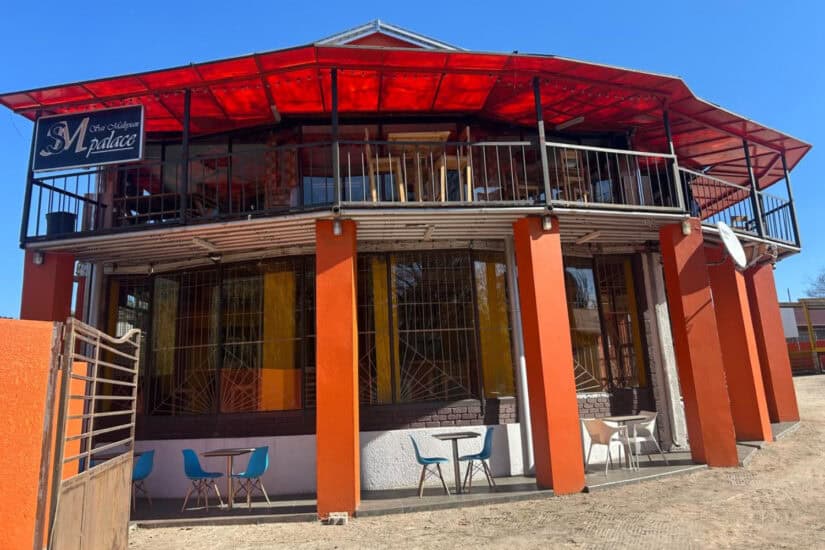
The now closed SM Palace in eMalahleni. Picture: Supplied


A businessman is in the process of rebuilding his life after a rollercoaster relationship with the Mpumalanga government.
Profitable food supply contracts turned into rotten legal battles that left Alex Masilela fighting for millions from the province while he watched his business crumble.
Once providing food to more than 8 000 children and having signed deals to supply seven hospitals, he was shut out of both the education and health departments.
Masilela was eventually forced to shut down his dream restaurant, SM Palace, in eMalahleni as his R15 million claim against the government hung in legal limbo.
His pleading on social media eventually caught the attention Small Business Development Deputy Minister Jane Sithole who lamented that his case was not an isolated one.
Food supply double blow
Through his company Ngiyasebenza Food and Projects, Masilela initially entered into a food supply contract with the education department in July 2013.
This was later extended to 2016 and again beyond 2020, before the global health panic intervened.
A delivery in March 2020 valued at R509 000 went unpaid by the education department, but this was not the first time he had been shortchanged by the provincial government.
Court papers seen by The Citizen show that Masilela was in October 2017 appointed to supply perishable and non-perishable food to the Department of Health for three hospitals.
The contract was extended in November 2018 to include four more hospitals, but Masilela’s court affidavit alleges that health officials refused to accept his deliveries, having purchased stock elsewhere.
“The members of the defendant’s staff, at the hospitals and institutions as aforementioned, had purchased perishable and non-perishable foods from persons and/or entities that were not appointed and/or accredited vendors of the defendant, in contradiction of the plaintiff’s appointment,” the affidavit states.
Masilela argues that the department “neglected to communicate sufficiently, effectively and constructively” with his company, resulting in it suffering claimed losses of R12.7 million.
The Mpumalanga government has repeatedly been asked for comment on the matter, but no response has yet been forthcoming.
Long legal processes
In February 2021, Masilela’s legal team contacted the department to inform it that legal proceedings were pending. A summons was served on the provincial government in April 2021.
In responding documents, the department disputed the claims, arguing the contracts violated procurement regulations.
“Save for admitting the name of plaintiff, defendant has no knowledge of the rest of the contents hereof, does not admit same and puts to the plaintiff to the proof thereof.
“The aforesaid extension of the contract is void ab initio as it did not comply with section 217 of the constitution and other procurement legal prescripts.
“Plaintiff by its own admission alleges that it has been prevented from delivering the goods to various hospitals and institutions, meaning that attempted performance has not been accepted by the defendant,” the September 2021 plea by the department read.
The matter continued through to the Mpumalanga High Court, which in June 2023 ordered the health department to present a discovery affidavit to Masilela’s legal representatives.
Court documents show the department failed to comply, with a pre-trial meeting held in May 2024.
Minutes of the meeting show the merits and quantum of the health contract were still in dispute, and that although pleadings were agreed to be closed, both parties wanted to amend their pleas.
Education contract false start
Surprisingly, while still locked in a legal dispute with the Mpumalanga government, Ngiyasebenza Food and Projects had its initial education food supply contract re-awarded in April 2024.
However, it was short-lived, as by November 2024 the company was only receiving partial payment and by January 2025, the department refused to accept deliveries.
Masilela is suing for unpaid invoices for November and December 2024, as well as expenses and damages for January through to March 2025, for a total of R2.8 million.
A January 2025 mediation meeting was cancelled, but in May 2025, the education matter was placed on the unopposed motion roll in the Mpumalanga High Court, with several postponements since delaying an outcome.
Both claims remain before the court, but the process drained Masilela’s resources, and he places his losses at R15 million, not counting the loss of his restaurant.
“My life is a mess. Life is difficult for me. I’ve closed down the restaurant and at any time the bank will start with their procedure to recover,” Masilela told The Citizen.
Deputy minister intervenes
In social media posts, Masilela is seen requesting legal assistance to see the case through, which is where Sithole heard of his plight.
In a letter sent to Mpumalanga Premier Mandla Ndlovu and seen by The Citizen, Sithole compelled the province to honour what was owed.
“Honourable Premier, Mr Masilela deserves more than continued silence and further assurances.
“While payment cannot restore everything he has lost, settling the amounts lawfully owed to him is an essential first step towards accountability and redress.
“I trust that your office will now treat this matter with the urgency and seriousness it warrants,” the deputy minister wrote.
In response, the premier responded in a letter dated 30 September.
“The province is currently engaging with Mr Masilela and the relevant stakeholders with a view to understanding the circumstances surrounding the outstanding payments and finding an amicable and sustainable resolution to the matter,” Ndlovu wrote.
Sithole told The Citizen that governments at all spheres were hampering the growth of businesses, and that small business owners were not financially equipped for long legal battles.
She said her office was dealing with several similar cases across the country and would take the issue of chronic non-payment by service providers to the president’s desk.
“The bottom line is that government is not paying small businesses when they have completed work. Small businesses in South Africa are dying, small businesses are drowning, small businesses are not succeeding, and government cannot be a contributor to killing small businesses.
“When a small business takes government to court, it will drain them, it will ruin them, they lose everything,” Sithole concluded.